

Precision medicine is defined as a healthcare approach that tailors disease prevention and treatment to each person's unique genetic makeup, environment, and lifestyle. Unlike standard care, which applies the same treatment to everyone with the same diagnosis, precision medicine asks why two patients with identical symptoms often respond to the same drug in completely different ways. The answer almost always lives in their biology. Rare diseases affect approximately 30 million Americans collectively, yet few have FDA-approved therapies. That gap is exactly what precision medicine is working to close.
What is precision medicine and how does it work?
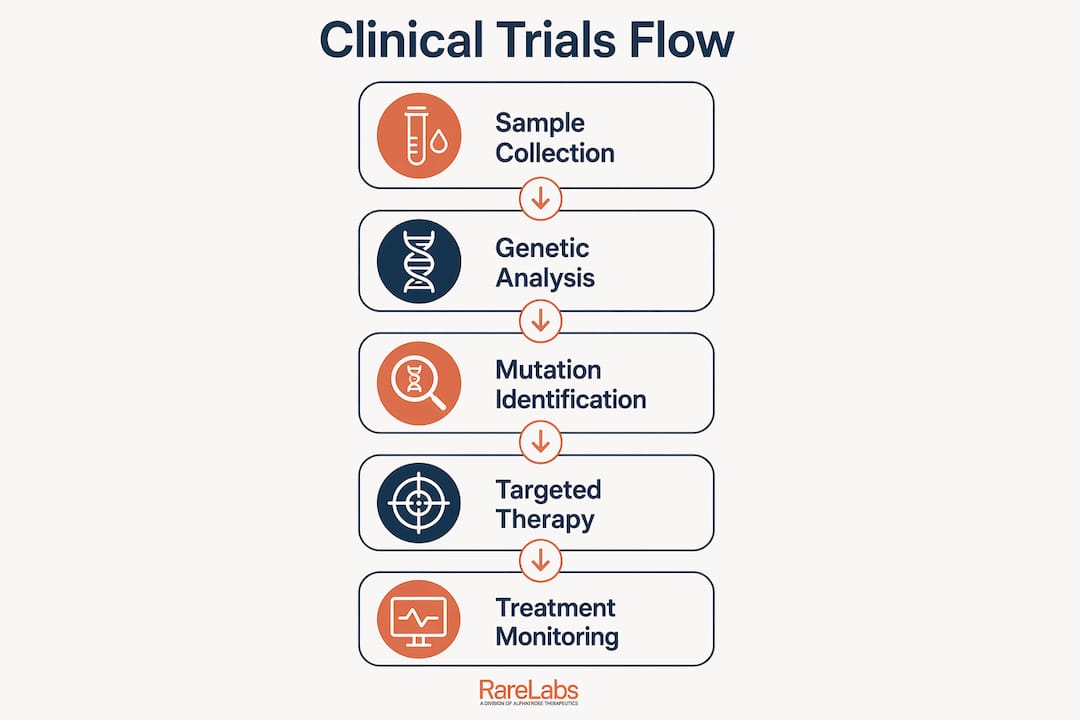
Precision medicine works by collecting and analyzing detailed biological data about a patient, then using that data to guide diagnosis and treatment decisions. The core inputs are genomic data, molecular profiles, clinical history, and environmental factors. Together, these create a picture of disease that goes far beyond symptoms alone.
The most important tool in this process is Next-Generation Sequencing (NGS). NGS is the gold standard for clinical decision-making in diseases with a genetic component. It reads a patient's DNA rapidly and at scale, identifying mutations that standard lab tests would miss entirely.

Once a mutation is identified, clinicians can match it to a targeted therapy. That therapy works on the specific molecular mechanism driving the disease, not on the disease category as a whole. The result is fewer adverse effects and a higher chance of meaningful response.
Pro Tip: If you or a family member has received a diagnosis that doesn't fully explain your symptoms, ask your physician about NGS-based genetic testing as a next step. It often reveals answers that standard panels miss.
Precision medicine also differs from what many people call "personalized medicine." Precision medicine focuses on biological subgroups identifiable through molecular data, not just individual patient preferences. That distinction matters clinically. A patient's tumor may share a molecular signature with tumors from patients who have a completely different cancer type. Precision medicine treats the signature, not just the organ.
Why does precision medicine matter for rare disease patients?
Rare diseases present the clearest case for precision medicine. Between 7,000 and 10,000 distinct rare diseases exist, each affecting fewer than 200,000 people in the United States. That fragmentation makes traditional drug development nearly impossible to justify economically.
Approximately 80% of rare diseases have a genetic component. That figure explains why genomic data is not optional in rare disease care. It is the starting point for every meaningful clinical decision.
The challenges in rare disease drug development are real:
- Small patient populations make it hard to recruit enough participants for traditional clinical trials.
- Biological complexity means each disease may have dozens of genetic variants, each requiring a different therapeutic approach.
- Limited commercial incentive discourages large pharmaceutical companies from investing in conditions that affect only a few thousand people.
- Diagnostic delays are common. Patients with rare diseases wait an average of several years before receiving an accurate diagnosis.
Despite these barriers, precision medicine has produced meaningful breakthroughs. Antisense oligonucleotides, known as ASOs, are one of the clearest examples. The FDA has approved 13 ASOs since 1998, many targeting rare genetic conditions. ASOs work by binding to specific RNA sequences and altering how a gene is expressed. They can be customized to a patient's exact mutation, making them one of the most direct expressions of precision medicine in practice.
Hopeatrarelabs applies this exact logic. The firm builds patient-specific disease models using induced pluripotent stem cells (iPSCs) and CRISPR gene editing, then screens thousands of FDA-approved drugs and custom ASOs against those models. The goal is to find a viable therapy for a patient who has no approved treatment options. You can read more about personalized rare disease treatments and how this process works in practice.
How are clinical trials evolving to support precision medicine?
Traditional clinical trials are built for large populations. Precision medicine requires something different. When a therapy targets a specific genetic mutation, the eligible patient pool may number in the hundreds or fewer. Standard trial designs simply do not work at that scale.
Three trial designs have emerged to address this problem:
-
Basket trials enroll patients based on a shared molecular feature, regardless of tumor type or disease category. A patient with a BRAF mutation in lung tissue and a patient with the same mutation in colon tissue may both qualify. The trial tests whether the mutation, not the organ, predicts response.
-
Umbrella trials take the opposite approach. They enroll patients with the same disease but test multiple targeted therapies simultaneously, assigning each patient to a treatment arm based on their molecular profile. This design generates data on several therapies at once.
-
N-of-1 trials are the most individualized design available. N-of-1 trials allow rigorous individual-level experimentation in conditions too rare for population-level studies. A single patient receives alternating treatments in a controlled sequence, and the results apply directly to that patient's care decisions.
Basket and umbrella trials bypass the limitations of traditional large-scale designs by focusing on molecular features rather than disease labels. That shift is fundamental. It means a therapy can earn evidence of effectiveness for a small subgroup without requiring thousands of participants.
Statistical methods are also evolving. Bayesian models and synthetic controls help researchers draw conclusions from small datasets without sacrificing scientific rigor. These tools are now standard in rare disease trial design.
Pro Tip: When evaluating a clinical trial for a rare condition, ask whether the trial uses a basket, umbrella, or N-of-1 design. These structures are specifically built to generate meaningful data for patients like you, even when the eligible population is very small.
What are the real benefits and challenges of precision medicine?
The benefits of precision medicine are concrete and measurable. Patients receive diagnoses that reflect their actual biology, not just their symptoms. Treatments are matched to the mechanism driving their disease. That matching reduces the trial-and-error cycle that wastes time and causes unnecessary side effects.
AI models process vast multi-omics datasets to identify biomarkers and predict disease risk in ways that no human analyst could manage alone. Multi-omics means combining data from genomics, proteomics, metabolomics, and other molecular layers simultaneously. AI finds patterns across those layers that point toward both diagnosis and treatment.
Precision medicine shifts clinicians from reactive treatment to proactive, integrated care. That shift changes the entire relationship between patient and physician. Instead of waiting for a condition to worsen, clinicians can act on risk signals identified in molecular data before symptoms appear.
The challenges are equally real:
- Data integration across hospital systems, labs, and registries remains technically difficult. Interoperable systems that share genomic and clinical data are still not universal.
- Accessibility is uneven. Genomic testing and precision therapies are more available in academic medical centers than in community hospitals.
- Cost remains a barrier. Targeted therapies, especially gene therapies and custom ASOs, carry high price tags that insurance coverage does not always address.
- Ethical considerations around genetic data privacy require careful handling. Patients need to understand how their data will be stored, shared, and used.
Rare disease research pioneered open data sharing and international registries that accelerate treatment discoveries. That collaborative model is now spreading to broader medicine. The rare disease community proved that sharing data across institutions produces faster answers than any single center working alone. Families and foundations interested in accelerating rare disease therapy can find practical guidance on how to engage with this ecosystem.
Genetic counseling also plays a growing role in helping patients interpret complex genomic results. For families navigating neurodevelopmental conditions, resources on genetic counseling for autism illustrate how precision medicine principles apply across a wide range of genetic conditions.
Key Takeaways
Precision medicine is most effective when genomic data, adaptive trial designs, and AI-driven analysis work together to match each patient to the therapy that fits their specific biology.
| Point | Details |
|---|---|
| Genomics drives diagnosis | NGS identifies mutations that standard tests miss, making it the foundation of precision medicine. |
| Rare diseases are the proving ground | 80% of rare diseases have a genetic component, making them the clearest case for genomic-guided care. |
| Trial design has evolved | Basket, umbrella, and N-of-1 trials generate rigorous evidence for small patient populations. |
| AI is not optional | AI processes multi-omics data to find biomarkers and predict risk at a scale no human analyst can match. |
| Access gaps remain | Precision therapies are more available at academic centers, and cost and data privacy remain real barriers. |
Why rare disease research is medicine's most important laboratory
I have spent years watching precision medicine move from a concept discussed at conferences to a clinical reality that changes individual lives. The part that surprises most people is where the real progress comes from. It is not oncology, despite all the headlines. It is rare disease research.
Rare disease research is a model for medicine's future because it forces researchers to manage biological complexity with almost no margin for error. When your patient population is 200 people worldwide, you cannot afford to be wrong about the mechanism. You cannot run a 10,000-person trial and average out the noise. You have to understand the biology precisely, or you have nothing.
That discipline has produced tools and frameworks that now benefit all of medicine. N-of-1 trials, Bayesian statistics, open international registries, and patient-as-data-source thinking all came from the rare disease world. The rest of medicine is catching up.
My honest view is that patients who understand this have a real advantage. They know to ask for genomic testing early. They know that a negative result from a standard panel does not mean there is no answer. They know that personalized research can accelerate answers in ways that waiting for a large trial never will. The patients who push hardest for precision medicine approaches are the ones who tend to find answers first.
— John
How Hopeatrarelabs puts precision medicine to work for rare disease patients
Hopeatrarelabs was built specifically for the patients that standard drug development leaves behind. The firm creates disease models from a patient's own cells using iPSCs and CRISPR, then runs parallel screens across thousands of FDA-approved drugs, custom ASOs, and gene therapy candidates.
The process is transparent, scientifically rigorous, and built around urgency. Families do not have years to wait for a large trial that may never happen. Hopeatrarelabs compresses that timeline by working directly from the patient's biology. If you are a patient, family member, physician, or foundation looking for a path forward on an undiagnosed or ultra-rare condition, explore what Hopeatrarelabs offers and see whether a personalized disease model could open a new treatment direction.
FAQ
What is the definition of precision medicine?
Precision medicine is a healthcare approach that uses a patient's genetic, environmental, and lifestyle data to tailor disease prevention and treatment to that individual. It differs from standard care by targeting the biological mechanism driving a specific patient's disease rather than applying a one-size-fits-all protocol.
How does precision medicine differ from traditional medicine?
Traditional medicine applies treatments based on population averages. Precision medicine identifies the molecular subgroup a patient belongs to and selects therapies proven effective for that subgroup, reducing adverse effects and improving response rates.
Is precision medicine effective for rare diseases?
Precision medicine is especially effective for rare diseases because approximately 80% of rare diseases have a genetic component that genomic tools can identify and target. FDA-approved therapies like ASOs demonstrate that customized molecular treatments can work even when patient populations are very small.
What role does genetics play in precision medicine?
Genetics is the foundation of precision medicine. Next-Generation Sequencing reads a patient's DNA to identify mutations that drive disease, and those mutations guide every subsequent decision about diagnosis, drug selection, and therapy design.
What is a precision medicine example in practice?
Antisense oligonucleotides are a direct example. The FDA has approved 13 ASOs since 1998, many targeting rare genetic conditions by binding to specific RNA sequences and correcting how a gene is expressed at the molecular level.