

Personalized treatment is defined as the practice of tailoring medical therapy to an individual's unique genetic makeup, lifestyle, and environmental factors rather than applying a single standard protocol to all patients. The field is formally known as precision medicine, a term established by the National Institutes of Health to describe care informed by large data sets including genomes and electronic health records. Where traditional medicine asks "What works for most people?", precision medicine asks "What works for this person?" That shift matters most for people living with genetic and rare diseases, where a one-size-fits-all approach routinely fails. This article explains how personalized treatment works, where it delivers the strongest results, and how you can engage with it as a patient or caregiver.
How does personalized treatment work?
Personalized treatment works by collecting and analyzing biological data that is unique to each patient, then using those findings to select or design the most appropriate therapy. The core data types come from multi-omics: genomics (your DNA sequence), proteomics (the proteins your cells produce), and metabolomics (the small molecules your metabolism generates). Personalized medicine has become a practical clinical tool in oncology, cardiology, pediatrics, and critical care precisely because integrating these data layers reveals patterns that a single blood test never could.
One of the most mature technologies within this field is pharmacogenomics, the study of how your genes affect your response to drugs. A patient carrying a variant in the CYP2D6 gene, for example, may metabolize certain antidepressants or pain medications far too quickly or too slowly, making a standard dose either useless or dangerous. Pharmacogenomics testing catches that before the first prescription is written.

Beyond genetics, clinicians now incorporate environmental exposure data, lifestyle factors like diet and exercise, and digital health data from wearables. A continuous glucose monitor feeding real-time data into a care plan is a simple example of this integration in practice. The result is a treatment profile that reflects who you actually are, not who the average trial participant was.
Pro Tip: Before your first appointment with a precision medicine specialist, gather your full family medical history going back at least two generations. Patterns of early-onset disease, unusual drug reactions, or undiagnosed conditions in relatives are data points your clinician needs.
Key technologies enabling personalized care
- Genetic sequencing: Whole-genome or whole-exome sequencing identifies disease-causing variants and guides targeted therapy selection.
- Biomarker testing: Blood or tissue tests detect specific proteins or mutations that predict treatment response.
- Induced pluripotent stem cells (iPSCs): Patient cells are reprogrammed into disease-relevant cell types to model how a specific condition behaves in that individual.
- CRISPR gene editing: Used in research and emerging therapies to correct or study specific genetic mutations at the molecular level.
- Digital health integration: Wearable devices and electronic health records supply longitudinal data that refines treatment decisions over time.
Personalized treatment vs. traditional medicine: benefits and limits
The most cited benefit of precision medicine is improved drug safety. Pharmacogenomics can reduce adverse drug reactions by up to 30% compared to conventional prescribing. That figure represents real patients spared from hospitalizations, organ damage, and treatment abandonment caused by predictable but previously undetected drug incompatibilities.
A second major benefit is therapeutic precision. Targeted therapies attack specific molecular drivers of disease rather than broadly suppressing a system. That specificity generally means fewer off-target effects and better quality of life during treatment.
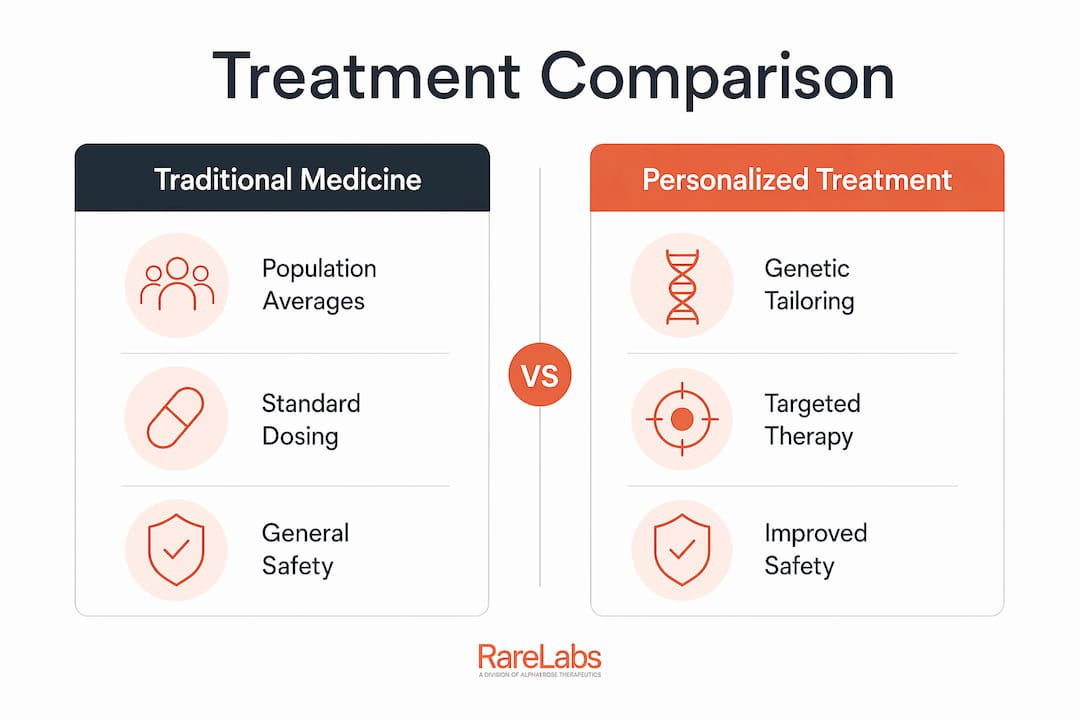
One misconception worth correcting directly: personalized medicine often groups patients into biologically similar subgroups rather than creating a fully unique therapy for every individual. A drug approved for patients with a specific BRAF mutation treats a subgroup, not one person. That is still a massive improvement over treating all cancer patients identically, but it is not the bespoke tailoring the term sometimes implies.
The limitations are real and should not be minimized. Even with an identified genetic mutation, immediate approved therapies may not exist, often pushing patients toward clinical trials or off-label drug use. Infrastructure gaps, high testing costs, and unequal access to genomic specialists compound the problem for patients outside major academic medical centers.
| Feature | Traditional Medicine | Personalized Treatment |
|---|---|---|
| Treatment basis | Population averages | Individual genetic and molecular profile |
| Drug selection | Empirical trial and adjustment | Biomarker or mutation-guided selection |
| Side effect prediction | Limited | Pharmacogenomics-informed risk reduction |
| Availability | Widely accessible | Concentrated in specialized centers |
| Rare disease utility | Low | High, especially for mutation-specific cases |
Where is personalized treatment most effective?
Oncology is the clearest proof of concept. Personalized cancer therapies target specific mutations, with HER2-targeted therapy in breast cancer and BRAF-inhibitor treatment in melanoma as two well-documented examples. Both therapies work because clinicians first confirm the mutation is present, then prescribe accordingly. Patients without those mutations receive different protocols entirely.
Cancer immunotherapy extends this logic further. Targeted immunotherapies match treatment to tumor biology and patient immune response, allowing the immune system to attack cancer cells with far greater specificity than chemotherapy achieves. The result is improved quality of life alongside measurable survival gains in several tumor types.
Rare diseases represent the frontier where personalized medicine matters most urgently. Rare diseases affect 25–30 million Americans collectively, yet most have no approved treatment. Precision medicine provides the molecular insights needed to identify what is actually driving a patient's disease, which is the prerequisite for designing any therapy at all. For families navigating an undiagnosed genetic condition, mutation-specific therapy is often the only rational path forward.
Beyond oncology and rare diseases, personalized approaches are advancing in:
- Cardiology: Genetic testing identifies patients at elevated risk for inherited arrhythmias or familial hypercholesterolemia before a cardiac event occurs.
- Pediatrics: Neonatal genomic screening catches metabolic disorders early enough for dietary or pharmacological intervention to prevent irreversible damage.
- Geriatrics: Polypharmacy management uses pharmacogenomics to reduce dangerous drug interactions in elderly patients taking multiple medications.
- Critical care: Real-time biomarker monitoring guides sepsis treatment protocols based on individual inflammatory response patterns.
How can patients access personalized treatment?
Accessing personalized treatment starts with building a complete clinical picture. Patients need to share comprehensive, longitudinal data including family history, lifestyle factors, and wearable device data to enable effective personalized therapies. A clinician working with incomplete information cannot make precision decisions, regardless of the technology available.
The practical steps below apply whether you are exploring options for a common condition or searching for answers on a rare genetic disease.
- Document your family history in detail. Record diagnoses, ages of onset, and unusual drug reactions across at least two generations. Patterns of early-onset neurological disease, unexplained organ failure, or recurrent miscarriage are all clinically relevant signals.
- Request genetic testing through a qualified specialist. A medical geneticist or genetic counselor can order appropriate panels and interpret results in clinical context. Direct-to-consumer tests like 23andMe provide ancestry data but are not substitutes for clinical-grade sequencing.
- Find a precision medicine specialist or center. Major academic medical centers including Mayo Clinic, Cleveland Clinic, and Johns Hopkins operate dedicated precision medicine programs. For rare diseases, disease-specific centers of excellence often have the deepest expertise.
- Ask about clinical trial eligibility. ClinicalTrials.gov lists active studies by condition and mutation type. Many personalized therapies reach patients first through trials, and participation also contributes to the science.
- Engage with patient advocacy organizations. Groups like the National Organization for Rare Disorders (NORD) and Global Genes connect patients to specialists, trials, and emerging research relevant to specific conditions.
Pro Tip: When meeting a new specialist, ask specifically: "Is there a genetic or biomarker test that would change your treatment recommendation?" If the answer is yes, pursue that test before committing to a protocol.
The step-by-step process for finding rare disease treatments follows a similar logic: identify the molecular driver, map available therapies, and close the gap through research when no approved option exists.
Key takeaways
Personalized treatment works because it matches therapy to the individual's molecular profile rather than population averages, producing better outcomes and fewer preventable side effects.
| Point | Details |
|---|---|
| Core definition | Personalized treatment tailors therapy to genetics, lifestyle, and environment rather than applying standard protocols. |
| Pharmacogenomics benefit | Genetic-guided prescribing reduces adverse drug reactions by up to 30% compared to conventional methods. |
| Rare disease relevance | 25–30 million Americans have rare diseases; precision medicine provides the molecular insights needed to develop any therapy at all. |
| Common misconception | Personalized medicine groups patients into molecular subgroups, not fully unique individual therapies. |
| Patient action | Sharing complete longitudinal health data, including family history and wearable data, is the prerequisite for effective personalized care. |
Precision medicine is practical now, not just promising
I have spent years watching the conversation around personalized medicine shift from "someday" to "right now, for the right patient." The change is real, but it is uneven in ways that matter enormously to families dealing with rare genetic diseases.
The part that frustrates me most is the expectation gap. Patients arrive having read about CRISPR or iPSC technology and expect a treatment to materialize within months. The science is genuine. The timeline is not. The success of personalized medicine depends on a participatory ecosystem involving patients, providers, regulators, and biopharma partners working in parallel. When any one of those groups is missing or slow, patients wait.
What I have found actually moves things forward is patient data literacy. Families who arrive with organized genetic reports, detailed symptom timelines, and documented drug responses get faster, better answers. That is not a criticism of families who do not have those things. It is a call to build that capacity deliberately, because the system rewards it.
The other underappreciated factor is collaboration across the rare disease ecosystem. Isolated clinicians working without access to molecular pathology, genetic counseling, and research networks cannot deliver precision medicine regardless of their intentions. The infrastructure matters as much as the science. Organizations like HIPPRA are working to close that gap by connecting patients, providers, and stakeholders in coordinated care strategies.
My honest assessment: personalized treatment is the most significant shift in medicine in a generation. For rare disease patients, it is not optional. It is the only framework that takes their biology seriously.
— John
How Hopeatrarelabs supports personalized rare disease research
For families and physicians navigating ultra-rare or undiagnosed genetic conditions, finding a viable treatment path requires more than a standard clinical workup.
Hopeatrarelabs builds patient-specific disease models derived directly from a patient's own cells using iPSC technology and CRISPR gene editing. The team then runs parallel treatment screens across thousands of FDA-approved drugs, custom antisense oligonucleotides (ASOs), and gene therapy candidates to identify options that have a real biological basis for working in that specific patient. The process is transparent, scientifically rigorous, and designed for conditions where no approved therapy exists. Explore the RareLabs Knowledge platform to search rare disease research and discover what personalized therapy options for rare diseases may apply to your situation.
FAQ
What is personalized treatment in simple terms?
Personalized treatment is medical care tailored to an individual's genetic makeup, lifestyle, and environment rather than a standard protocol applied to all patients. The formal term for this approach is precision medicine.
How does personalized treatment differ from standard care?
Standard care applies treatments proven effective for the average patient in a clinical trial. Personalized treatment uses genetic and molecular data to select therapies most likely to work for a specific individual, reducing trial-and-error prescribing.
Is personalized treatment effective for rare diseases?
Precision medicine is particularly valuable for rare diseases because it identifies the molecular driver of a condition, which is the necessary first step toward any targeted therapy. Rare diseases affect 25–30 million Americans, most of whom have no approved treatment under conventional approaches.
What genetic tests are used in personalized medicine?
Whole-genome sequencing, whole-exome sequencing, and targeted gene panels are the most common. Biomarker blood tests and tumor molecular profiling are standard in oncology. A medical geneticist or genetic counselor determines which test is appropriate for a given clinical question.
Can anyone access personalized treatment today?
Access depends on the condition, location, and available infrastructure. Oncology patients at major cancer centers have the broadest access. Patients with rare or undiagnosed genetic diseases often need specialized research programs, clinical trials, or organizations like Hopeatrarelabs to find viable options outside the standard care pathway.