
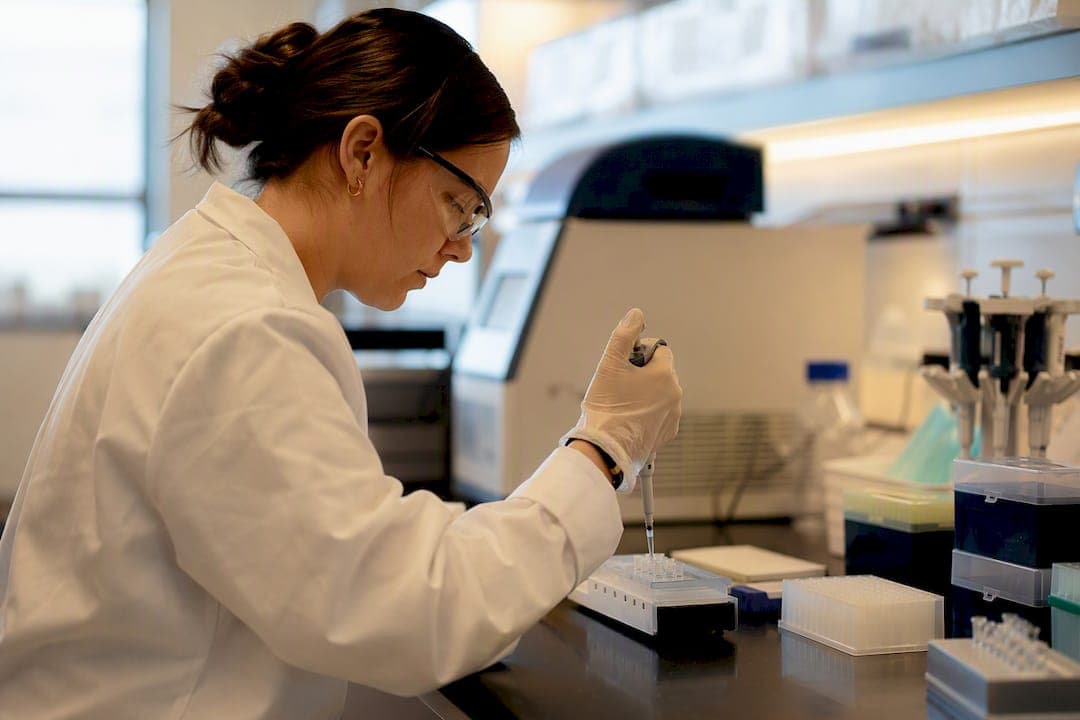
Molecular diagnosis is the use of laboratory methods that examine DNA, RNA, and proteins to identify a disease, confirm a diagnosis, or guide treatment. It's how a lab moves from "the patient seems sick" to "here's the exact virus, mutation, or genetic variant responsible," as defined by the NCI Dictionary of Cancer Terms.
A few things worth knowing right away:
- What it looks at: DNA, RNA, and proteins pulled from blood, tissue, or other bodily fluids.
- What it's used for: diagnosing disease, choosing the right drug, and tracking how well a treatment is working.
- How it's done: mainly through PCR-based amplification, DNA/RNA sequencing, and hybridization techniques, with results interpreted against standards from groups like ACMG, and labs held to CLIA and CAP requirements.
Key Takeaways
Molecular diagnosis identifies disease by analyzing DNA, RNA, or proteins directly, and the specific method chosen determines the accuracy, speed, and clinical value of the result.
| Point | Details |
|---|---|
| Definition anchors everything | Molecular diagnosis studies DNA, RNA, and proteins to diagnose disease, guide treatment, and monitor progress. |
| Method choice drives accuracy | PCR amplifies known targets fast; NGS sequences broadly but slower; hybridization spots structural chromosome changes. |
| Trust signals matter | Look for CLIA certification, CAP accreditation, FDA-cleared assays, and board-certified pathologist sign-off. |
| Uncertainty is normal | A VUS result means evidence is incomplete, not that the variant is harmless or harmful. |
| Confirm before acting | At-home DTC genetic kits should never replace clinically accredited testing when results affect real treatment decisions. |
This article is general information, not a substitute for advice from a qualified doctor. Consult a qualified healthcare professional about your own circumstances before acting on anything here.
Table of Contents
- What Does Molecular Diagnosis Cover, and Why Do Doctors Order It?
- Common Molecular Tests and When Doctors Use Them
- How Does Molecular Diagnosis Actually Work in the Lab?
- Where Molecular Diagnosis Changes Clinical Decisions
- What Sample Types Does Molecular Testing Need?
- How Accurate Is Molecular Diagnosis, and What Do Uncertain Results Mean?
- How Long Do Molecular Test Results Take?
- What Trust Signals Should You Look for in a Molecular Lab?
- Molecular Diagnosis in Rare and Undiagnosed Disease
- How Molecular Diagnostics Evolved Into a Standard Clinical Tool
- The Core Technologies Behind Modern Molecular Testing
- Molecular Diagnostics vs. Traditional Diagnostic Methods
- What's Next for Molecular Diagnostics?
- What Does Molecular Testing Cost, and Will Insurance Cover It?
- The Ethical and Social Weight of Molecular Testing
- Read Molecular Results With Clinical Context, Not in Isolation
- Sources
What Does Molecular Diagnosis Cover, and Why Do Doctors Order It?
Molecular diagnosis isn't one test. It's a category that includes several distinct approaches, each built to catch a different kind of biological signal.
Some tests look for genetic variants, the spelling changes in DNA that cause inherited disease or drive cancer growth. Others measure gene expression, essentially checking which genes are turned "on" or "off" in a tissue sample. A third group hunts for pathogen nucleic acid, the DNA or RNA of a virus or bacterium hiding in a patient's blood or mucus. A fourth category tracks protein markers that signal how a disease is behaving.
Clinicians order these tests for practical reasons, not academic curiosity. A test can clarify a fuzzy diagnosis when symptoms don't point to one clear cause. It can subtype a cancer so oncologists know which drug actually has a shot at working. It confirms an infection when a doctor needs to know precisely which pathogen they're fighting. And it guides pharmacogenomics, meaning it tells a physician whether a standard drug dose will work, fail, or cause harm in that specific patient.
Consider three everyday scenarios: a lung cancer patient gets an EGFR mutation test to see if a targeted pill will shrink the tumor. A patient with a persistent cough gets a PCR swab to confirm whether it's RSV, flu, or COVID. A child with unexplained developmental delay gets a gene panel to search for an inherited cause doctors haven't been able to name through exams alone.
Common Molecular Tests and When Doctors Use Them
Each molecular test answers a different question, and picking the wrong one wastes both time and sample. Here's how the major categories break down in practice.
- PCR (polymerase chain reaction): Amplifies a specific DNA sequence millions of times over, making it detectable even from a tiny starting sample. It's the workhorse for confirming bacterial infections and remains a foundational molecular technique in infectious disease diagnosis.PMC source
- RT-PCR (reverse transcription PCR): Converts RNA into DNA before amplifying it, which is why it's the standard for detecting RNA viruses like influenza or coronaviruses. Turnaround is fast, but sensitivity drops if the viral load is very low or the swab was collected poorly.
- ddPCR (droplet digital PCR): Splits a sample into thousands of tiny droplets and counts positive results one by one, giving far more precise quantification than standard PCR. It shines in detecting rare mutations, like tracking a handful of resistant cancer cells hiding among healthy ones.
- NGS (next-generation sequencing): Reads through large stretches of DNA or entire genomes at once, which makes it the go-to for tumor profiling and diagnosing rare inherited diseases where the causative gene isn't obvious upfront. It's slower and pricier than PCR but delivers far more information per run.
- Gene panels: A middle ground between single-gene tests and full genome sequencing, panels test dozens to hundreds of genes tied to a specific condition category, like inherited cardiac disorders or hereditary cancer syndromes.
- FISH (fluorescence in situ hybridization): Uses glowing molecular probes to visualize specific chromosome regions under a microscope, ideal for spotting large structural changes like gene fusions or extra chromosome copies.
- Microarray: Scans thousands of DNA regions simultaneously to detect missing or duplicated chromosome segments, often the first-tier test for unexplained developmental disorders.
- Liquid biopsy: Detects circulating tumor DNA shed into the bloodstream, letting oncologists monitor a cancer without a repeat surgical biopsy. It's convenient but generally less sensitive than tissue-based testing when tumor DNA levels in the blood are low.
Tests frequently overlap by design. A panel might flag a suspicious variant that then gets confirmed with targeted sequencing, a common reflex-testing pattern that adds accuracy at the cost of a few extra days.
How Does Molecular Diagnosis Actually Work in the Lab?
Every molecular test relies on one of three core strategies, and understanding the difference explains why labs pick one method over another.
- Amplification (PCR and related isothermal methods) copies a tiny genetic target millions of times so it becomes detectable. This is why PCR-based methods remain the backbone of pathogen detection: even a whisper of viral DNA becomes loud enough to measure.
- Sequencing (NGS, whole-exome sequencing, whole-genome sequencing) reads out the actual letter-by-letter code of DNA or RNA, rather than just confirming a target is present. This is how next-generation sequencing uncovers unknown or unexpected mutations that a targeted test would never think to look for.
- Hybridization (FISH, microarray) uses probes that bind, or "hybridize," to matching DNA sequences, lighting up or flagging specific regions of the genome.
In practical terms: amplification is fast and cheap but narrow, sequencing is broad and information-rich but slower and costlier, and hybridization sits in between, good for spotting structural chromosome changes that sequencing sometimes misses.
Where Molecular Diagnosis Changes Clinical Decisions
The value of molecular testing shows up in four distinct moments of patient care.
Diagnosis comes first: detecting a pathogen's DNA confirms an infection with far more precision than symptoms alone, and identifying a pathogenic variant can finally name a genetic disorder that's eluded doctors for years.
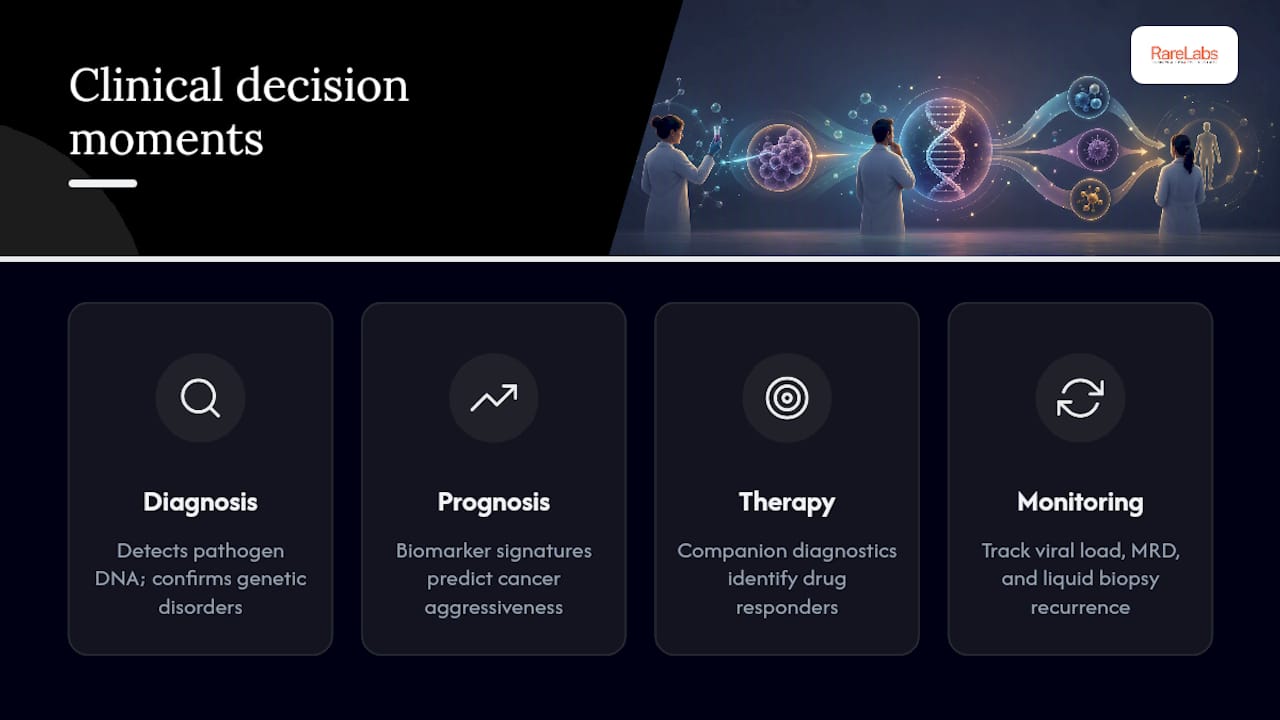
Prognosis follows. Biomarker signatures, like tumor mutation burden, help predict how aggressive a cancer is likely to be and whether it's a strong candidate for immunotherapy.
Therapy selection is where molecular testing earns its reputation. Companion diagnostics identify exactly which patients will respond to a targeted drug or immunotherapy, sparing others from a treatment that wouldn't help them anyway.
Monitoring closes the loop. Clinicians track viral load to catch emerging drug resistance in conditions like HIV, oncologists use minimal residual disease testing to see if cancer treatment truly cleared every last malignant cell, and liquid biopsies watch for recurrence months before symptoms would ever appear.
What Sample Types Does Molecular Testing Need?
The sample determines what a molecular test can and can't tell you. Tissue biopsies remain the gold standard for tumor sequencing because they preserve the tumor's cellular architecture and give a concentrated source of tumor DNA. Blood or plasma is used for circulating tumor DNA testing (liquid biopsy) and for viral load monitoring. Saliva and buccal swabs work well for inherited genetic testing. Cerebrospinal fluid gets pulled for suspected central nervous system infections or certain neurological cancers.
A biopsy is sometimes unavoidable when a liquid sample simply doesn't contain enough tumor-derived material, when doctors need to see how the tumor is structured under a microscope, or when a cancer isn't shedding much DNA into the bloodstream yet. Liquid biopsy can suffice for monitoring an already-diagnosed cancer, but it's not always a reliable stand-in for the initial diagnostic workup.
Pro Tip: Ask your lab about tumor fraction and cold ischemia time before assuming a molecular result is final. A biopsy sample with a low fraction of tumor cells, or one that sat too long before fixation, can produce a false negative that has nothing to do with the disease itself and everything to do with sample handling.
How Accurate Is Molecular Diagnosis, and What Do Uncertain Results Mean?
Accuracy in molecular testing depends on three things: how well the assay was designed, how good the sample quality was, and how abundant the target actually is in that sample.
- Assay design determines the theoretical detection limit.
- Sample quality (degraded DNA, low cell count, contamination) can sink even a well-designed test.
- Target abundance matters because rare mutations or low viral loads sit closer to the noise floor of any method.
When a lab finds a genetic change, it doesn't automatically mean "disease-causing." Variants get sorted into categories, from benign to pathogenic, following structured evidence frameworks tied to ACMG-style guidelines, and the interpretation itself should involve board-certified geneticists or molecular pathologists rather than an algorithm alone.
A variant of uncertain significance, or VUS, means the lab found a genetic change but doesn't yet have enough evidence to call it harmful or harmless. The practical next steps usually involve testing family members, running functional lab studies, or simply waiting, since many VUS results get reclassified as more data accumulates.
False negatives happen too, often from mosaicism (where only some cells in the body carry a mutation) or tumor heterogeneity (where different regions of the same tumor carry different mutations). That's why confirmatory testing matters whenever a result will change how a patient is treated.
How Long Do Molecular Test Results Take?
Turnaround time varies enormously by test complexity. Rapid PCR panels for common infections often return results within a few days. Targeted NGS panels for cancer or inherited disease can take several days to a few weeks. Whole-exome or whole-genome sequencing may require additional time due to the volume of data needing analysis.
- Sample quality issues can force a repeat collection, adding days.
- Reflex confirmatory testing after an initial positive adds its own turnaround.
- Batching (running many samples together for efficiency) and insurance authorization steps both add delay.
- STAT or emergency pathways exist for urgent cases; ask the ordering clinician whether expedited processing applies to your situation.
What Trust Signals Should You Look for in a Molecular Lab?
Not every lab offering a molecular test operates at the same standard, and the difference matters when results guide real treatment decisions. Here's what separates a rigorous lab from a shortcut.
- CLIA certification, required for any US lab performing testing on human samples for diagnosis or treatment.
- CAP accreditation, a voluntary but widely respected quality standard that goes beyond CLIA's baseline.
- FDA-cleared or FDA-approved assays, which confirms a specific test has been validated against a defined performance standard.
- Board-certified molecular pathologist or geneticist sign-off on the final report, not just an automated printout.
Validation statements matter too. A rigorous lab report states its limit of detection (the smallest amount of target it can reliably find) and its analytic sensitivity, and these figures vary meaningfully across methods and platforms, which is exactly why local validation and proper controls matter before a result informs care. If you're evaluating a lab, ask directly: is this test FDA-cleared, is the lab CAP-accredited, and who signs the final interpretation?
Molecular Diagnosis in Rare and Undiagnosed Disease
Rare disease cases push molecular diagnosis into its most demanding territory. The typical flow runs from genomic testing, through variant interpretation, into functional testing or disease modeling, and finally toward a therapy hypothesis worth testing.
A patient with an undiagnosed neurological condition might get whole-exome sequencing that turns up a variant of uncertain significance in a gene tied to ion channel function. Rather than stopping there, a research-focused lab can build a patient-derived cell model carrying that exact variant and run functional experiments to see whether it actually disrupts the protein's job, sometimes surfacing a drug candidate worth testing against the patient's own cells.
This is the kind of work Hopeatrarelabs focuses on: taking a molecular finding that a standard lab report can't fully resolve and pushing it into a personalized research program, often involving multidisciplinary review across genetics, pathology, and drug discovery teams rather than a single reviewer's opinion. The genetic disease research process for ultra-rare cases shows how that pipeline moves from a molecular finding to an actual treatment hypothesis, without naming any single provider as the only path forward.
How Molecular Diagnostics Evolved Into a Standard Clinical Tool
Molecular diagnosis didn't start as a routine clinical service. Early PCR, developed in the 1980s, was a research technique before it became a bedside tool. It took years of refinement, cost reduction, and regulatory validation before PCR-based infectious disease testing became the reflex order it is today.
The Human Genome Project in the early 2000s changed the trajectory entirely. Sequencing an entire genome once took over a decade and cost billions; that same task now takes days and a fraction of the price, which is what made routine clinical sequencing conceivable in the first place. Microarrays arrived in the 1990s and 2000s as the first tools capable of scanning the genome broadly for missing or duplicated segments, replacing older karyotyping as the frontline test for many developmental disorders.
Next-generation sequencing marked the real inflection point. Instead of testing one gene at a time, NGS let labs sequence dozens or thousands of genes in a single run, which is what made gene panels and tumor profiling practical at scale. Liquid biopsy technology matured more recently, giving oncologists a way to monitor cancer from a blood draw instead of a repeat surgical procedure.
Each leap followed the same pattern: a research tool proves useful, gets cheaper and faster, then gets validated rigorously enough to earn a place in routine patient care. Molecular diagnosis today sits on the accumulated weight of four decades of that pattern repeating.
The Core Technologies Behind Modern Molecular Testing
A handful of technologies do most of the heavy lifting across the entire field, and each one operates on a distinct principle worth understanding on its own terms.
PCR and its variants remain the most deployed technology precisely because amplification is fast, cheap, and doesn't require enormous computing power to interpret. Real-time PCR adds fluorescent tracking so results appear as the reaction runs, rather than after it finishes.
Next-generation sequencing works by breaking DNA into millions of small fragments, sequencing them all simultaneously, then reassembling the data computationally. This massively parallel approach is what makes whole genome sequencing and large gene panels financially and logistically possible.
Hybridization-based tools like FISH and microarray rely on the simple chemistry of complementary DNA strands binding together. A fluorescent or chemical probe designed to match a specific sequence will only stick where that sequence exists, making these methods excellent for visualizing structural chromosome changes that sequencing alone can miss.
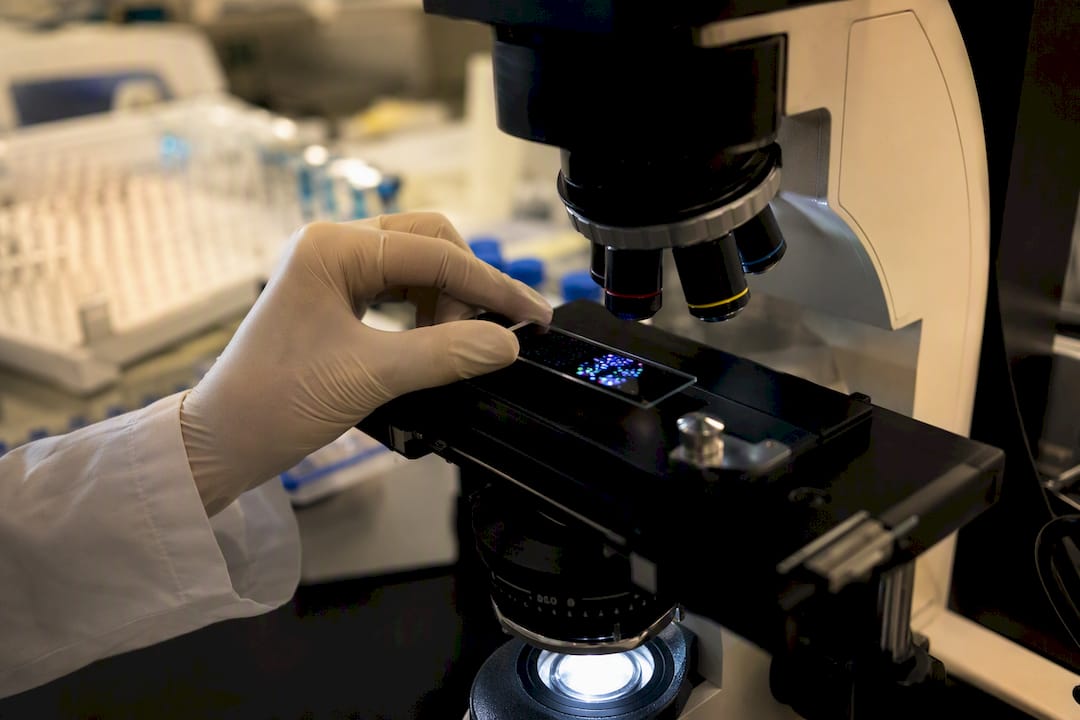
Emerging detection methods, including CRISPR-based diagnostics and isothermal amplification, are pushing toward simpler, faster platforms that don't need the elaborate thermal cycling equipment PCR requires. These technologies promise point-of-care testing that could eventually rival the accuracy of a full laboratory setup, though most are still working through the validation needed for widespread clinical adoption.
Molecular Diagnostics vs. Traditional Diagnostic Methods
Traditional diagnosis relies heavily on what a clinician can see, feel, or measure indirectly: symptoms, imaging, blood chemistry panels, and microscopic examination of tissue or cells. A traditional culture test for a bacterial infection, for instance, requires growing the organism in a lab dish, a process that can take days and sometimes fails if the organism is slow-growing or fastidious.
Molecular diagnosis skips straight to the genetic or protein-level evidence. Instead of waiting for bacteria to multiply visibly, PCR detects the pathogen's DNA directly, often within hours. Instead of relying on a tumor's appearance under a microscope to guess its behavior, molecular profiling identifies the specific mutations driving that tumor's growth, information a pathologist's eye simply cannot see.
The tradeoff isn't always in molecular testing's favor. Traditional methods like culture and microscopy remain cheaper, don't require specialized equipment, and sometimes catch findings molecular tests aren't designed to look for, like an unexpected second organism growing alongside the one being tested for. Molecular tests are also narrower by design in some formats. A PCR test only detects what it was built to detect; it won't flag a pathogen or mutation nobody thought to test for, unlike a broader sequencing approach or an open-ended culture.
In practice, most modern medicine uses both together. A pathologist examines tissue architecture under a microscope while a molecular panel runs in parallel on the same sample, combining what the eye can see with what only genetic analysis can reveal.
What's Next for Molecular Diagnostics?
The field is moving in a few clear directions. Multiplexing, running many tests on a single sample at once, is expanding rapidly, letting a single respiratory panel screen for a dozen pathogens simultaneously rather than one at a time. Sensitivity is climbing too, with digital PCR and next-generation sequencing pushing detection limits down to single-molecule levels in some applications.
Platforms are also getting simpler. Point-of-care molecular testing, once confined to hospital labs, is moving toward smaller, faster devices that could eventually bring PCR-level accuracy to a clinic exam room or even a pharmacy counter.
Perhaps the biggest shift is toward multi-omics integration, combining DNA, RNA, and protein data from the same patient rather than treating each as a separate test. A cancer profile built from genomic mutations alone tells a partial story; layering in gene expression and protein markers paints a fuller picture of how that specific tumor is actually behaving, which is where companion diagnostics and personalized therapy selection are headed next.
What Does Molecular Testing Cost, and Will Insurance Cover It?
Costs vary enormously depending on test complexity. A single-gene PCR test might run a few hundred dollars, while a large NGS panel or whole-exome sequencing test can run into the thousands. Whole-genome sequencing sits at the high end of that range.
Insurance coverage depends heavily on medical necessity documentation and the specific payer's policy. Companion diagnostics tied to an FDA-approved targeted therapy are often covered because the drug label itself requires the test before prescribing. Broader diagnostic panels for undiagnosed conditions face more variable coverage, and prior authorization steps can add weeks to the process before testing even begins.
Patients facing high out-of-pocket costs should ask the ordering clinician or lab about financial assistance programs, since many major reference labs offer sliding-scale pricing for exactly this reason. For rare and ultra-rare disease cases where standard clinical testing has already been exhausted without an answer, research-based programs sometimes offer alternative funding pathways outside standard insurance billing, since these programs are structured around research goals rather than routine clinical billing codes.
The Ethical and Social Weight of Molecular Testing
Molecular diagnosis raises questions that go beyond accuracy. Genetic information is uniquely personal: unlike a blood sugar reading, a pathogenic variant can predict future disease risk not just for the patient, but for their children and siblings too.
Privacy is the most immediate concern. Genetic data, once generated, can theoretically be linked back to an individual and their biological relatives, raising real questions about who can access results and how long labs retain that data. Genetic discrimination is a related worry, particularly around employment and certain insurance products not covered by existing federal protections.
Informed consent carries extra weight here as well. A patient agreeing to a gene panel needs to understand not just what the test is looking for, but what happens if it finds something unrelated to the original question, an incidental finding that reveals unrelated disease risk nobody was searching for.
The DTC (direct-to-consumer) genetic testing market has added its own layer of complexity. These at-home kits often lack the clinical-grade precision and medical oversight that accredited clinical labs provide, meaning a concerning result from a mail-order kit should always be confirmed through a clinically validated lab before it changes any real medical decision. Genetic counseling exists specifically to help patients work through these implications before and after testing, translating a lab report full of technical variant classifications into something a family can actually act on.
Read Molecular Results With Clinical Context, Not in Isolation
A molecular test result is a data point, not a verdict. I'd encourage anyone reading a lab report, whether you're a patient, a family member, or a clinician outside that specific specialty, to pair the result with a clinical review and genetic counseling when the finding is complex or life-altering.
Ask your lab for its validation statement. Ask for a plain-language interpretation of what the report actually means for your specific situation, and consider a referral to a genetics clinic if the result raises more questions than it answers. That's not caution for caution's sake. It's how molecular findings actually translate into decisions worth trusting.
Sources
- Definition of molecular diagnostics - NCI Dictionary of Cancer Terms
- Molecular Genetics Testing - StatPearls (NCBI Bookshelf)
- Molecular diagnostic techniques - PMC (NIH)
- The Present and Future Landscapes of Molecular Diagnostics | Annual Reviews