
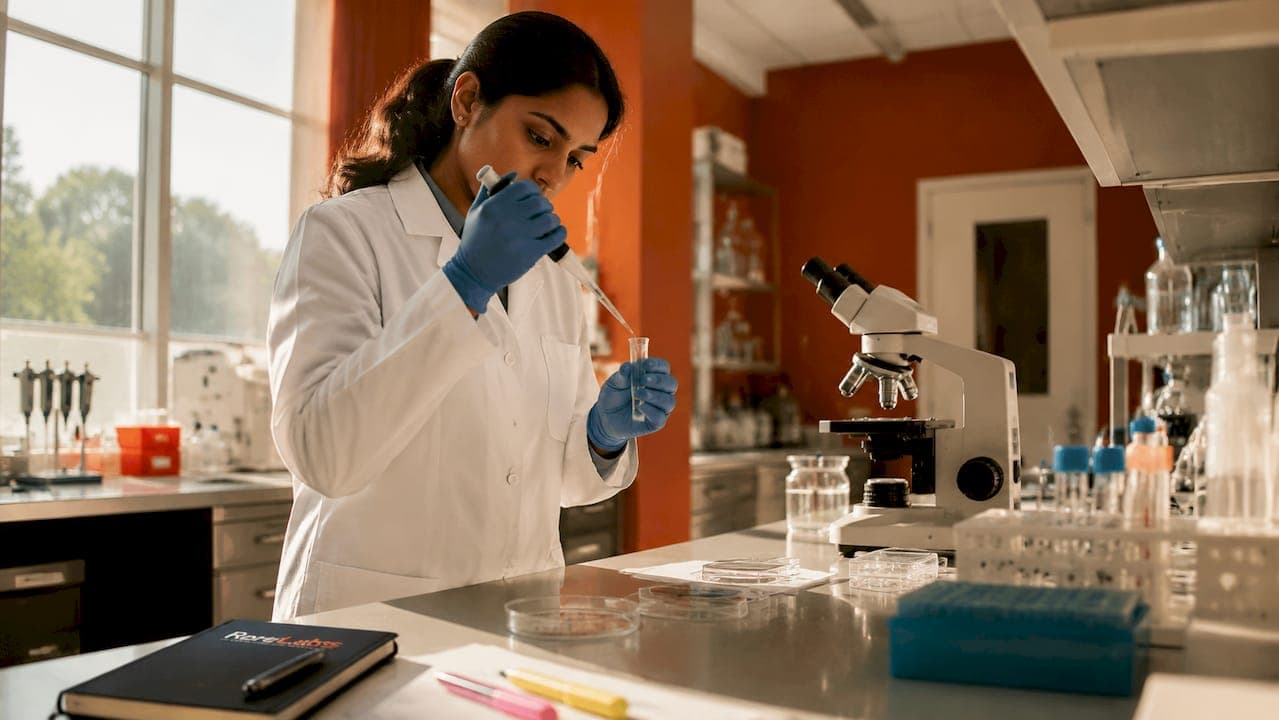
Patient-derived cells are biological models built directly from a patient's own tissue, blood, or biopsy material, capturing the full genetic and molecular complexity of their disease. Researchers, physicians, and biotech teams use patient-derived cells because standard laboratory cell lines and animal models cannot replicate the individual variation that drives treatment response. Technologies like induced pluripotent stem cells (iPSCs), patient-derived organoids (PDOs), and patient-derived xenografts (PDXs) have made this approach practical at scale. For rare diseases, where more than 90% of conditions lack approved treatments, these models are not a luxury. They are the most direct path to finding therapies that actually work.
Why use patient-derived cells instead of traditional models?
Patient-derived cells outperform conventional 2D cell lines and animal models on the single metric that matters most: predicting what will happen in a real patient. Functional testing with patient-derived cells shows 81% sensitivity and 74% specificity in predicting clinical treatment outcomes. That level of accuracy is not achievable with immortalized cell lines, which have been grown in labs for decades and no longer reflect the genetic state of any living patient.
Standard cell lines are genetically homogeneous. They lose the tumor heterogeneity and resistance mechanisms that determine whether a drug works or fails in the clinic. Patient-derived models preserve individual tumor heterogeneity and the resistance pathways that conventional lines cannot. That difference is what makes patient-derived models translatable and standard lines largely decorative for precision medicine purposes.
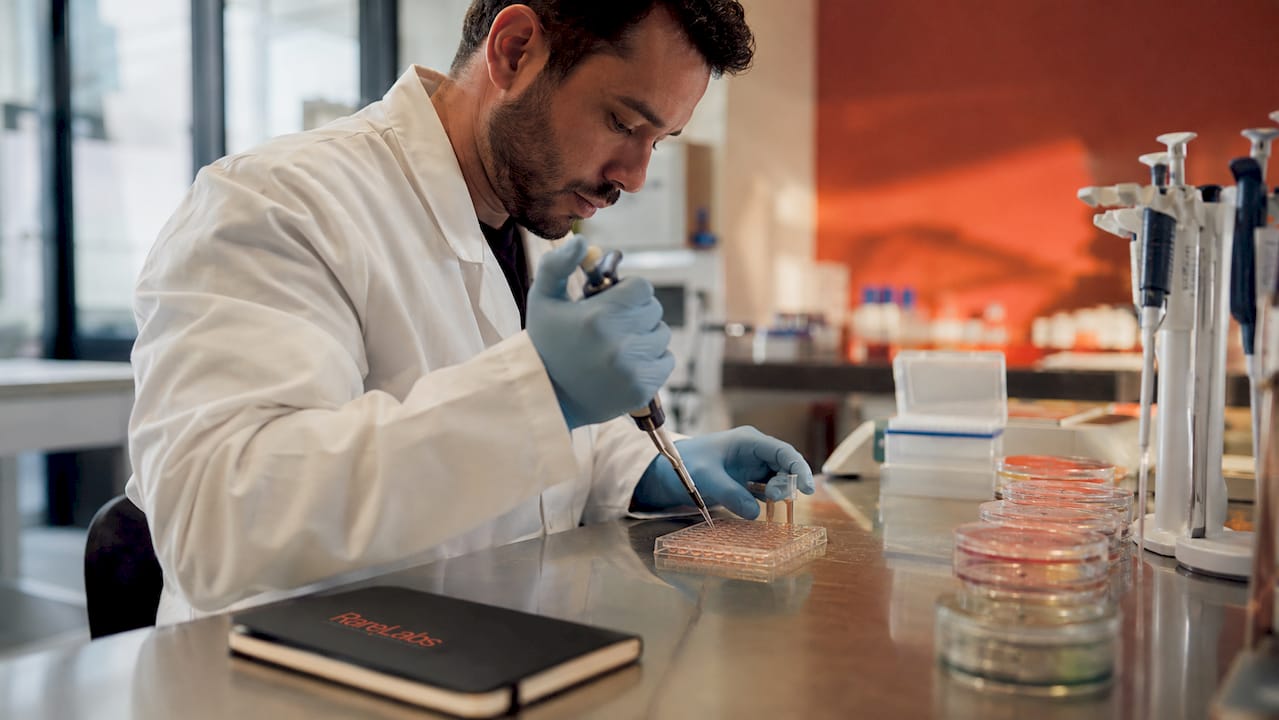
PDX mouse models improve on cell lines but carry their own structural flaw. The interspecies barrier in PDX models replaces human stroma with murine elements over time, which distorts immune interactions and limits the model's ability to represent human biology. Human organoid systems sidestep this problem entirely by maintaining a human tissue environment.
| Feature | Traditional cell lines | PDX models | Patient-derived organoids |
|---|---|---|---|
| Genetic heterogeneity | Lost | Partially preserved | Fully preserved |
| Human immune modeling | Not possible | Limited by murine stroma | Possible with co-culture |
| Establishment speed | Fast | Slow (months) | Fast to moderate |
| Predictive accuracy | Low | Moderate | High |
| Scalability for biobanks | High | Low | High |
Pro Tip: When selecting a model for drug screening, prioritize patient-derived organoids for speed and immune modeling. Reserve PDX models for in vivo validation of your top candidates.
What are the main types of patient-derived cell models?
Three platforms dominate patient-derived cell research: iPSCs, organoids, and xenografts. Each serves a distinct purpose, and understanding where each fits prevents costly misapplication.
iPSCs are adult cells reprogrammed back to a stem cell state. They can be differentiated into virtually any cell type, making them the primary tool for genetic disease modeling in rare and inherited conditions. For a patient with an ultra-rare neurological disorder, iPSC-derived neurons give researchers a living model of the disease in a dish, something no animal model can replicate with the same genetic fidelity.
Patient-derived organoids are three-dimensional tissue structures grown from patient biopsies. They replicate the architecture of the original organ, including cell-to-cell signaling and spatial organization. Human organoid models incorporating autologous immune cells allow accurate study of immune-tumor interactions that PDX mouse models cannot reproduce. PDOs also establish faster and with higher success rates than PDX models, which makes them the preferred platform for building large annotated biobanks.
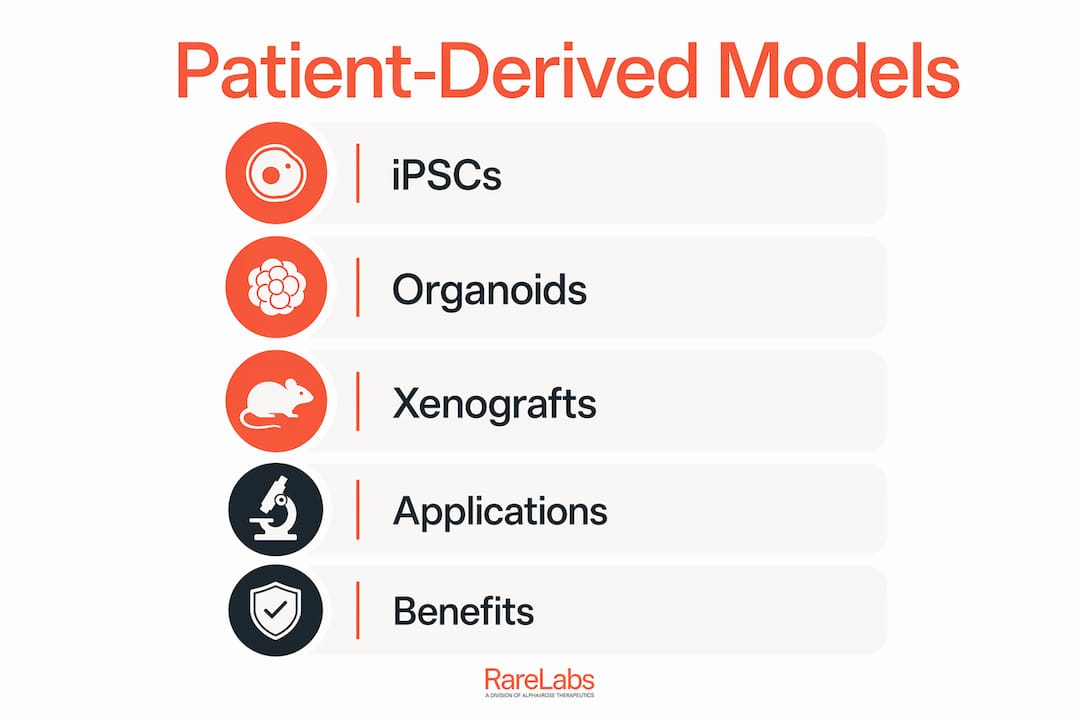
PDX models involve implanting patient tumor tissue into immunodeficient mice. They remain valuable for in vivo drug validation, particularly for confirming results seen in organoid screens before moving to clinical trials.
Key considerations when working with any patient-derived model:
- Passage number matters. Early-passage models at P1–P4 best preserve genetic heterogeneity and low-frequency allele variants critical for drug screening accuracy.
- Starting material quality determines model quality. Biopsy-derived material and surgical resections differ in cell viability and genetic representation.
- Model type should match the research question. iPSCs for disease mechanism studies, organoids for drug screening, PDXs for in vivo validation.
- Annotated clinical data paired with the model multiplies its value. A model without linked patient outcome data is far less useful for translational research.
Pro Tip: Always request passage number documentation when sourcing patient-derived models from biobanks like the NCI's Patient-Derived Models Repository (PDMR). Models distributed beyond P4 may have already lost the genetic variants you need.
How do you maintain model fidelity over time?
Model fidelity is the most underestimated challenge in patient-derived cell research. A model that accurately represents a patient's disease at establishment can drift significantly after repeated passaging or prolonged culture. Patient-derived models require regular monitoring for genetic drift and epigenetic changes to remain clinically relevant.
The practical solution is a strategy researchers call triangulation. Integrating data from multiple patient-derived systems, including organoids, patient-derived cells, and PDXs, creates more reliable patient-specific insights than any single platform alone. Triangulation reduces the risk of acting on a false signal from one model type and increases confidence before moving a candidate into clinical testing.
A structured approach to maintaining fidelity looks like this:
- Characterize at establishment. Perform genomic sequencing and histological confirmation at the point of model creation to document the baseline genetic state.
- Set passage limits. Define a maximum passage number before the model is retired and replaced with a fresh derivation from stored biobank material.
- Schedule periodic re-characterization. Resequence and compare to the baseline at defined intervals, especially before any major drug screen.
- Document starting material type. Record whether the source was a biopsy, surgical resection, or blood draw, since this affects both model behavior and drift rate.
- Combine platforms deliberately. Use organoids for primary screening, then validate hits in PDX models before drawing translational conclusions.
Patient-derived models complement but do not fully replace animal studies. A complete translational pipeline uses both in vitro patient-derived systems and in vivo animal validation to reduce clinical trial failure risk.
Pro Tip: Treat your patient-derived model like a clinical sample, not a reagent. Log every passage, every freeze-thaw cycle, and every culture condition change. That documentation becomes critical when interpreting drug screen results months later.
What are the clinical and research benefits for rare diseases?
The importance of patient-derived cell lines is most visible in rare disease research, where the absence of approved therapies is the norm rather than the exception. Patient-derived cells give researchers a human-relevant platform to test FDA-approved drugs, antisense oligonucleotides (ASOs), and gene therapy constructs in a disease context that actually matches the patient. That specificity is what personalized treatment development requires.
Biobanks built from annotated patient-derived models accelerate this process further. When a model is linked to detailed clinical outcome data, researchers can identify molecular targets and drug response patterns across multiple patients with the same rare condition. The role of biobanks in rare disease genetics is growing precisely because patient-derived organoids establish quickly and at high success rates, making large-scale collection feasible.
The core benefits of patient-derived cell models in clinical and research settings:
- Functional drug testing at the individual level. Screens identify which drugs work for a specific patient's disease variant, not a population average.
- Molecular target identification. Models reveal the specific pathways driving disease in that patient, pointing toward gene therapy or ASO design.
- Speed. Organoids establish faster than PDX models, compressing the timeline from biopsy to actionable data.
- Clinical annotation. Models linked to patient records allow retrospective and prospective correlation of lab findings with real outcomes.
- Rare disease applicability. Where no animal model of the disease exists, iPSCs and organoids provide the only viable human-relevant research platform.
The benefits of patient-derived cells extend beyond individual patients. Each well-characterized model added to a biobank becomes a shared resource that can accelerate drug discovery for an entire disease community.
Key Takeaways
Patient-derived cells are the most accurate human-relevant models available for drug screening, disease research, and personalized therapy development, particularly for rare diseases where no approved treatments exist.
| Point | Details |
|---|---|
| Predictive accuracy | Functional testing with patient-derived cells shows 81% sensitivity and 74% specificity in predicting treatment outcomes. |
| Model type selection | Use iPSCs for disease modeling, organoids for drug screening, and PDXs for in vivo validation of top candidates. |
| Passage number discipline | Models at early passages P1–P4 preserve genetic heterogeneity; higher passages risk losing critical disease variants. |
| Triangulation strategy | Combining data from organoids, patient-derived cells, and PDXs produces more reliable translational predictions than any single platform. |
| Rare disease impact | More than 90% of rare diseases lack treatments; patient-derived cells provide the primary human-relevant platform for finding them. |
What I've learned from watching these models move from bench to bedside
The conversation around patient-derived cells has matured significantly. When iPSCs first became practical, the excitement was about what they could theoretically do. Now the question is about execution: how do you build a pipeline that actually delivers clinically useful data before a patient runs out of options?
What I find most underappreciated is the triangulation principle. Researchers often commit to one model type and defend it. The labs producing the most translatable results are the ones treating organoids, iPSCs, and PDXs as complementary instruments in the same orchestra, not competing tools. No single platform captures everything. The combination does.
The next frontier is immuno-organoids, which incorporate a patient's own immune cells alongside tumor tissue. This approach is already showing results in research settings and addresses the single biggest limitation of current organoid models: the absence of immune context. Paired with AI-driven drug response prediction, this combination could compress the timeline from biopsy to treatment candidate from months to weeks.
The challenge that remains is access. Building and maintaining high-quality patient-derived models requires specialized infrastructure that most clinical centers do not have. That gap is where organizations like Hopeatrarelabs are doing genuinely important work, bringing this capability directly to patients and families who cannot wait for the field to catch up on its own.
— John
How Hopeatrarelabs applies patient-derived cell science to rare disease research
Hopeatrarelabs builds patient-specific disease models from patients' own cells using iPSCs and CRISPR gene editing, then runs parallel treatment screens across thousands of FDA-approved drugs, custom ASOs, and gene therapy options.
For families and physicians facing ultra-rare or undiagnosed genetic diseases, the RareLabs knowledge base is a direct entry point into this research. It compiles rare disease treatment data and patient-derived model insights in one place, designed to accelerate the search for viable options. If you are a researcher, physician, or patient looking for a structured path through the science, Hopeatrarelabs provides the infrastructure and expertise to move from model to meaningful result.
FAQ
What are patient-derived cells?
Patient-derived cells are biological models created directly from a patient's own tissue, blood, or biopsy. They include iPSCs, organoids, and xenograft models, each designed to replicate the patient's specific disease biology for research and drug testing.
Why are patient-derived cells more accurate than standard cell lines?
Standard cell lines are genetically homogeneous and no longer reflect living patient biology. Patient-derived models preserve tumor heterogeneity and resistance mechanisms, achieving 81% sensitivity and 74% specificity in predicting clinical treatment outcomes.
What passage number should patient-derived models be used at?
Early-passage models at P1–P4 best preserve genetic heterogeneity and low-frequency variants. Models passaged beyond this range risk genetic drift that reduces their accuracy for drug screening and disease modeling.
How do patient-derived cells help rare disease research?
More than 90% of rare diseases lack approved treatments. Patient-derived cells provide a human-relevant platform to test drugs, ASOs, and gene therapies in the exact disease context of the individual patient, where no other viable model exists.
What is the triangulation strategy in patient-derived research?
Triangulation combines data from organoids, patient-derived cells, and PDX models to produce more reliable translational predictions. Using multiple platforms together reduces the risk of acting on a false positive from any single model type.