

Custom therapeutics are individualized medical treatments precisely engineered to match a patient's unique genetic and biological profile, and for the roughly 300 million people worldwide living with rare or undiagnosed genetic diseases, they represent the difference between having a treatment option and having none at all. Standard medications are designed for the average patient, which means they routinely miss the mark for anyone whose biology falls outside that average. The importance of personalized medicine has never been clearer: when your disease affects fewer than 200,000 people in the United States, the pharmaceutical industry has little financial incentive to develop a drug for you. Custom therapeutics change that equation entirely, and understanding why custom therapeutics matter is the first step toward knowing what to demand from your care team.
Why custom therapeutics matter more than standard treatments
Custom therapeutics, also called precision medicine or bespoke therapies, differ from conventional drugs in one fundamental way: they are built around the patient, not the disease category. A standard drug is mass-produced to treat a condition as it presents in most people. A custom therapeutic is designed to treat your version of that condition, accounting for your specific gene variant, protein expression, and metabolic profile.
The practical differences show up immediately in three areas:
- Formulation: Up to 80% of children struggle to swallow standard pills. Custom compounding converts medications into liquids, gels, or patches that patients can actually take. Switching to a flavored liquid formulation has been shown to raise pediatric adherence from 40% to 95%. That is not a minor quality-of-life improvement. It is the difference between a therapy working and a therapy failing.
- Allergen removal: About 15 million Americans react to inactive ingredients in mass-produced medications. Custom compounding removes those allergens, making treatment possible for patients who would otherwise have no safe option.
- Molecular targeting: At the advanced end of the spectrum, N-of-1 therapies like antisense oligonucleotides (ASOs) are designed to silence or correct a single patient's specific genetic mutation. These are not adjusted doses of existing drugs. They are new molecular entities created for one person.
Pro Tip: If you or your child cannot tolerate a prescribed medication due to formulation, taste, or allergic reaction to inactive ingredients, ask your physician specifically about compounding pharmacies accredited by the Pharmacy Compounding Accreditation Board (PCAB). This is a distinct and often overlooked pathway.
The term "custom therapeutics" covers this entire spectrum, from compounded liquids to gene-correcting molecules. Recognizing where your situation falls on that spectrum helps you ask the right questions.
What technologies make personalized treatments possible today?
The science enabling custom drug development has advanced faster in the last decade than in the previous five combined. Three technologies sit at the center of this shift.
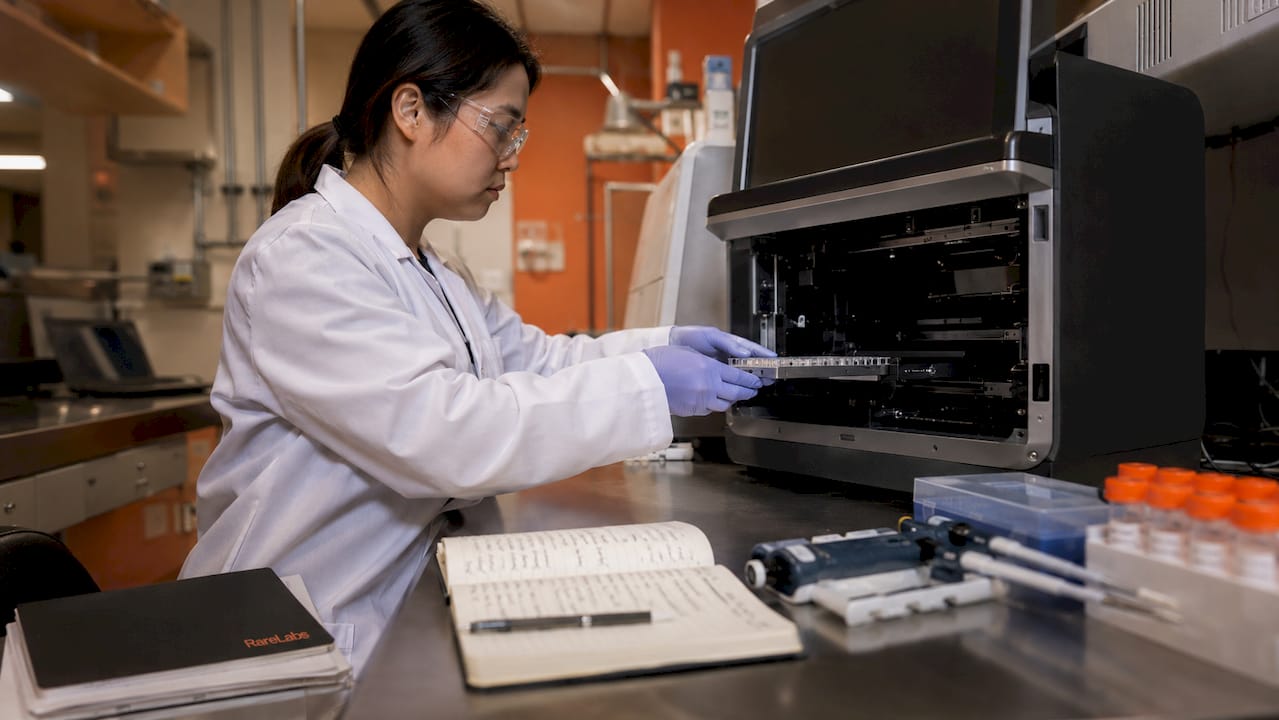
Genomic sequencing is now fast enough and affordable enough to identify the precise mutation driving a patient's disease within weeks. Whole-genome sequencing, offered through programs at institutions like the Broad Institute and through platforms like Hopeatrarelabs, maps every base pair in a patient's DNA. That map becomes the blueprint for a targeted therapy.
Proteomics and biomarker identification add a second layer. Knowing the gene variant is necessary but not always sufficient. Proteomics reveals how that variant changes protein behavior in the body, which tells researchers which molecular pathway to target. This is why personalized medicine integrates genomics, proteomics, and AI to tailor treatments, with demonstrated survival improvements in oncology.
AI-driven drug design closes the loop. Traditional drug development takes 10 to 15 years and costs over a billion dollars per approved compound. AI-enabled drug design cuts through those bottlenecks by predicting molecular interactions computationally, reducing the time and cost required to identify viable custom compounds. For a patient with an undiagnosed disease, that speed is not a convenience. It is a lifeline.
The regulatory side has also evolved. The FDA's acceptance of master protocol umbrella trials allows a single approved process to generate multiple patient-specific therapies, rather than requiring a separate approval for each drug. This framework is what makes scaling bespoke treatments scientifically and legally feasible.
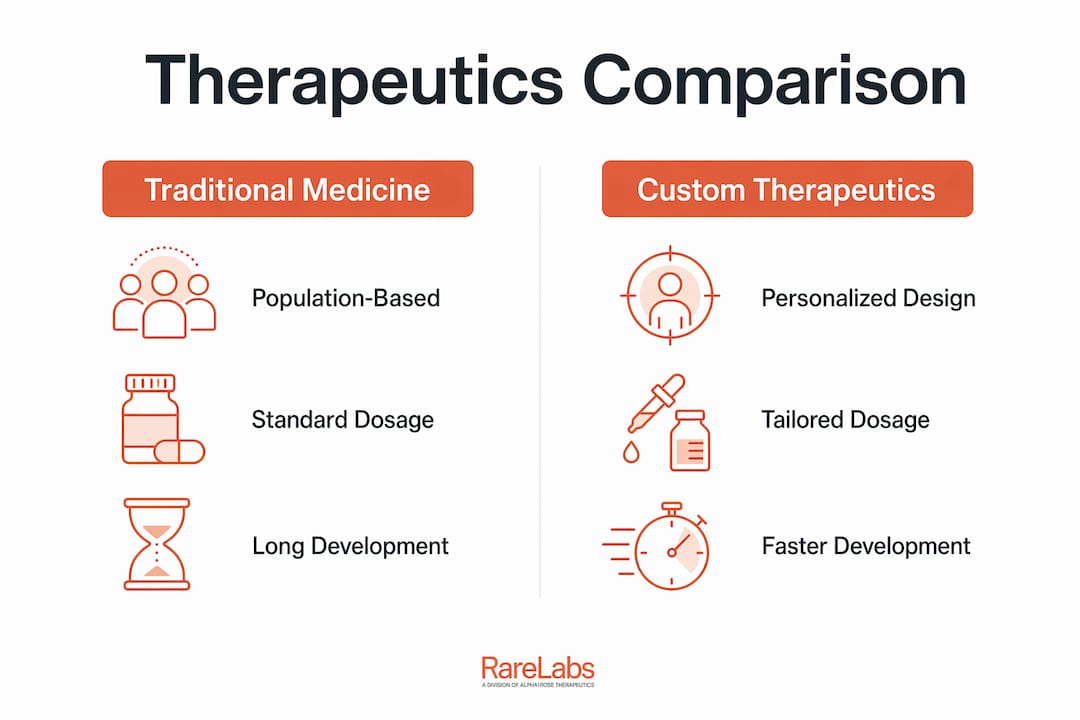
| Approach | Traditional medicine | Custom therapeutics |
|---|---|---|
| Drug design basis | Population averages | Individual genetic profile |
| Development timeline | 10 to 15 years | Months to a few years with AI tools |
| Regulatory pathway | Single drug approval | Umbrella trial master protocols |
| Efficacy measurement | Group-level clinical trials | N-of-1 patient data |
| Formulation flexibility | Fixed dose and form | Compounded to patient need |
What are the real benefits and challenges of bespoke therapeutics?
The advantages of bespoke therapeutics are concrete and well-documented. Better efficacy comes from targeting the actual biological mechanism driving a specific patient's disease rather than a generalized version of it. Reduced side effects follow from the same logic: a drug designed for your biology is less likely to trigger off-target reactions. Improved adherence, as the pediatric compounding data shows, directly translates to better outcomes. For patients with rare diseases, the most significant benefit is simply having an option at all.
The challenges are equally real, and patients deserve an honest account of them.
- Cost: N-of-1 therapies can cost millions of dollars per patient. Even compounded medications are rarely covered by insurance at the same rate as standard drugs.
- Regulatory complexity: The umbrella trial pathway is promising but still evolving. Not every custom therapy has a clear route to approval.
- Quality control variability: Compounded drugs represented only 1% of prescriptions but accounted for 17% of drug recalls between 2010 and 2020. This statistic reflects real inconsistency in compounding pharmacy standards, not a condemnation of the practice itself.
- Access inequality: Ethicists warn that personalized medicine risks creating a two-tiered healthcare system where only wealthy patients benefit. Tools like the Health Equity Impact Assessment exist to evaluate and address this gap, but adoption is uneven.
- Workforce and infrastructure gaps: Implementation is constrained by skill shortages and infrastructure limits in most health systems, slowing clinical adoption even when the science is ready.
"The question is not whether custom therapeutics work. The evidence says they do. The question is whether the systems around them are built to deliver them fairly and safely." This tension defines the next decade of personalized medicine.
Pro Tip: When evaluating a compounding pharmacy or custom therapy provider, verify PCAB accreditation, ask for certificates of analysis for each batch, and confirm that the prescribing physician has experience with the specific formulation or molecular approach being used. Credentials matter more here than in standard pharmacy settings.
How are tailored therapies changing rare disease treatment?
The impact of tailored therapies on rare and undiagnosed genetic diseases is best understood through what was previously impossible. Before the N-of-1 era, a patient with an ultra-rare mutation had two options: try drugs approved for related conditions and hope for partial benefit, or enroll in a clinical trial that might not exist. Custom therapeutics created a third path.
The landmark case is Mila Makovec, whose batten disease was caused by a unique mutation. Researchers at Boston Children's Hospital designed a custom ASO called milasen specifically for her mutation. Since that case, approximately 85 bespoke drugs have been created using similar approaches. Each one represents a patient who previously had no treatment option. The number is small relative to the millions who need help, but the trajectory is clear.
The rare disease therapy pathways available to patients are expanding as patient communities become more active in driving research. The N-of-1 model treats patients as citizen scientists who contribute high-frequency personal data to federated models, improving therapy personalization for others with similar profiles. This flywheel effect means that every patient who shares data makes the system smarter for the next patient.
| Rare disease milestone | Year | Significance |
|---|---|---|
| Milasen ASO for Mila Makovec | 2019 | First N-of-1 bespoke drug for a unique mutation |
| FDA umbrella trial framework adoption | Ongoing | Enables multiple patient-specific approvals under one protocol |
| 85+ bespoke drugs created | As of 2024 | Demonstrates scalability of the N-of-1 model |
| AI-assisted drug design integration | 2020s | Reduces development time from years to months |
Understanding your genetic diagnosis is the prerequisite for accessing any of these pathways. Without a precise molecular diagnosis, there is no blueprint for a custom therapy. This is why genetic testing is not just diagnostic. It is the entry point to treatment.
Key takeaways
Custom therapeutics deliver better outcomes for rare disease patients because they target the specific biology driving each patient's disease rather than a statistical average.
| Point | Details |
|---|---|
| Personalized design improves outcomes | Custom drugs target individual gene variants, reducing side effects and improving efficacy over standard treatments. |
| Adherence rises with tailored formulations | Pediatric adherence can increase from 40% to 95% when medications are reformulated to match patient needs. |
| Umbrella trials enable scaling | FDA master protocol frameworks allow multiple bespoke therapies to be approved under a single regulatory process. |
| Quality control requires verification | Compounded drugs carry higher recall rates, so PCAB accreditation and batch testing are non-negotiable safeguards. |
| Genetic diagnosis is the entry point | No custom therapeutic pathway is accessible without a precise molecular diagnosis of the underlying mutation. |
The uncomfortable truth about where personalized medicine actually stands
I have spent years watching families navigate rare disease systems, and the gap between what the science can do and what patients can actually access is the most frustrating reality in modern medicine. The science is genuinely extraordinary. The delivery infrastructure is not.
What concerns me most is not the cost of N-of-1 therapies, though that is real. It is the assumption that a precise genetic diagnosis automatically opens doors. For most families, it does not. It opens a room full of more questions, most of which their physicians are not trained to answer. The genomic medicine advances happening in research centers do not automatically translate into clinical options at the community hospital level.
The regulatory progress around umbrella trials is genuinely promising, and I think it represents the most important structural shift in rare disease treatment in a generation. But it requires researchers, patient advocates, and biopharma partners to coordinate in ways that do not happen naturally. Patient foundations that fund N-of-1 research and share data openly are, in my view, doing more to accelerate access than most institutional programs.
My honest position: the importance of personalized medicine is not in question. What needs urgent attention is the ethical and logistical infrastructure to deliver it equitably. Families who cannot afford whole-genome sequencing or who live outside major research centers should not be excluded from the benefits of custom therapeutics by default. That is a systems failure, not a science failure.
— John
How Hopeatrarelabs supports your search for personalized treatment
Hopeatrarelabs was built specifically for patients and families who have a rare or undiagnosed genetic disease and need to move faster than the standard system allows. The platform runs parallel treatment screens across thousands of FDA-approved drugs, custom ASOs, and gene therapy options, using patient-derived cell models built from iPSCs and CRISPR technology. Every search is grounded in the patient's specific genetic profile, not a disease category average.
If you are looking for a structured starting point, the RareLabs Knowledge base gives you access to current rare disease research and emerging treatment data organized by condition and mechanism. For a personalized treatment search tied to your specific genetic findings, the RareLabs platform connects your molecular diagnosis to active therapy options and biopharma partners working in your disease space.
FAQ
What is a custom therapeutic?
A custom therapeutic is a medical treatment designed around an individual patient's specific genetic, biological, or physiological profile rather than a population average. Examples range from compounded medications in specialized formulations to N-of-1 ASO drugs targeting a single patient's unique mutation.
Why do custom therapeutics matter for rare disease patients?
For patients with ultra-rare or undiagnosed genetic diseases, no approved standard treatment exists. Custom therapeutics create a treatment pathway where none previously existed, using tools like genomic sequencing, AI drug design, and FDA umbrella trial frameworks to develop patient-specific options.
Are compounded medications the same as custom therapeutics?
Compounded medications are one category within custom therapeutics, typically involving reformulation of existing drugs for individual patient needs such as allergen removal or alternative dosage forms. Advanced custom therapeutics like ASOs or gene therapies are molecularly novel treatments built from a patient's genetic blueprint.
How safe are custom or compounded medications?
Quality varies significantly by provider. Compounded drugs represented 1% of prescriptions but 17% of drug recalls between 2010 and 2020, which makes PCAB accreditation and batch-level quality verification non-negotiable when choosing a compounding pharmacy or custom therapy provider.
What is an N-of-1 therapy?
An N-of-1 therapy is a treatment designed for a single patient based on their unique biological data. The milasen ASO created for Mila Makovec is the most cited example. Since that case, approximately 85 bespoke drugs have been developed using similar approaches, with FDA umbrella trial protocols enabling the regulatory pathway for each.