
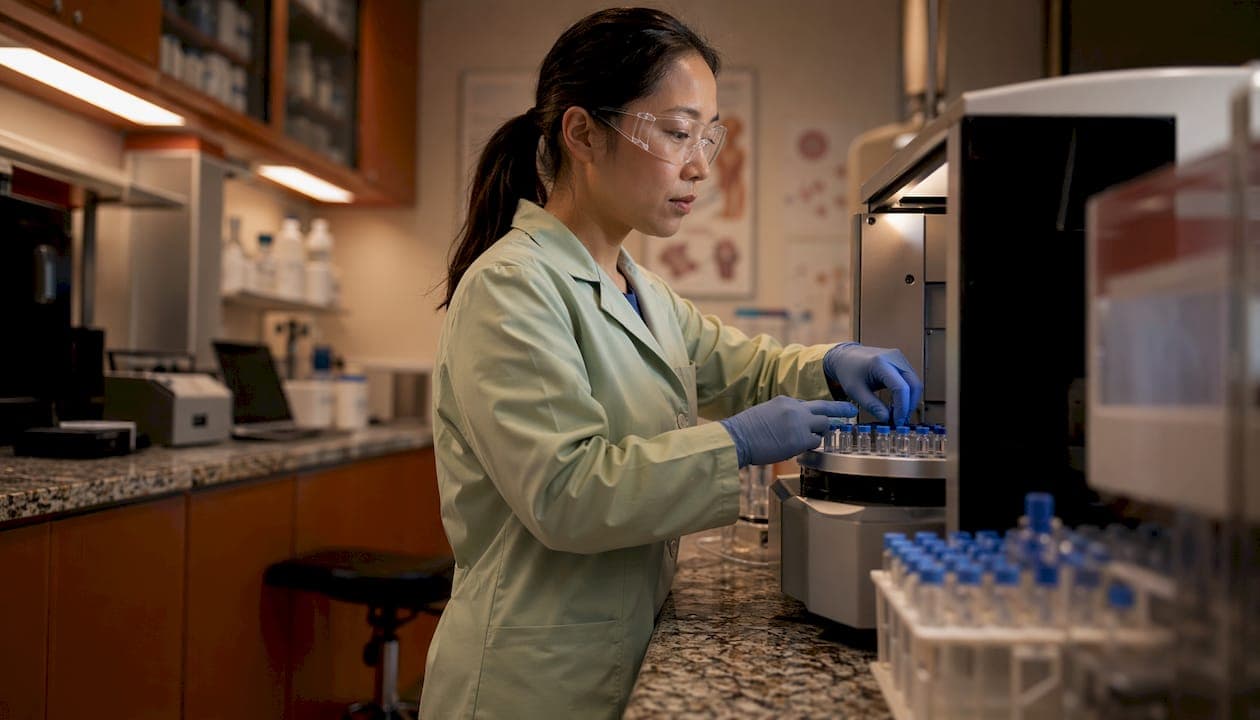
Rapid drug screening is the process of detecting drug exposure or metabolites in a patient within minutes or hours, delivering results fast enough to guide urgent clinical decisions. For healthcare professionals and researchers working on rare and undiagnosed genetic diseases, this speed is not a convenience. It is the difference between a treatment hypothesis and a confirmed data point. Hopeatrarelabs builds its entire parallel treatment screening model around this principle: fast, objective exposure data drives better therapy decisions. The FDA's regulatory framework for point-of-care diagnostics and advances like paper spray ionization mass spectrometry (PSI-MS) have made this kind of speed clinically viable.
Why rapid drug screening matters in clinical decision-making
Speed in drug screening directly reduces the window between patient presentation and treatment. Traditional confirmatory methods like LC-MS/MS are accurate but slow. The gap in turnaround time is precisely where clinical risk accumulates.
Targeted medical interventions show significantly higher efficacy when started within 48 hours of symptom onset. Rapid tests enable clinical teams to act within those critical windows, reducing severity, hospitalization, and long-term complications. That 48-hour threshold is not arbitrary. It reflects the biology of drug metabolism and the narrow period during which intervention changes outcomes.
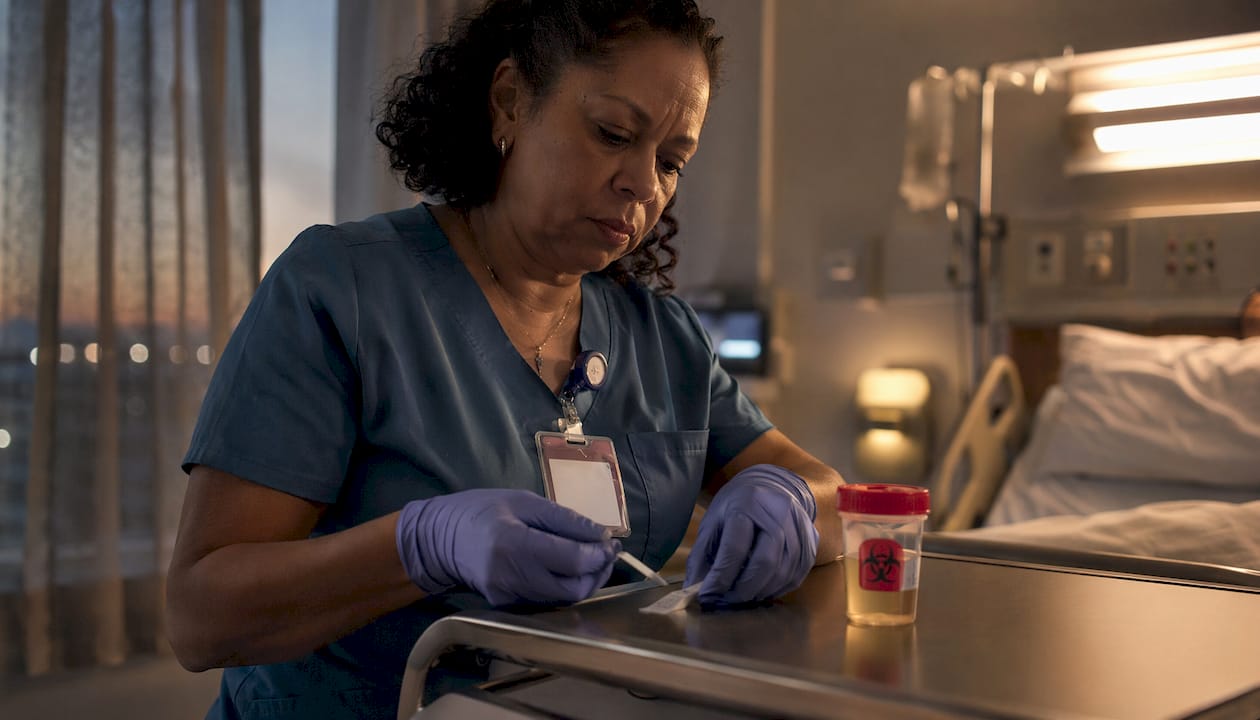
In overdose scenarios, the benefit is even more direct. Rapid screening replaces guesswork with objective exposure data, allowing clinicians to adjust naloxone dosage in real time rather than waiting days for confirmatory results. Labcorp's work on fentanyl testing has made this point clearly: without fast data, treatment becomes reactive rather than targeted.
Rapid testing also improves operational efficiency during patient surges. Faster triage and patient flow allow hospitals and clinics to allocate resources more accurately during peak periods. This is not just a workflow benefit. It is a patient safety benefit.
- Results in minutes allow immediate treatment adjustments
- Faster triage reduces time patients spend in diagnostic limbo
- Objective data supports nonjudgmental, evidence-based care
- Naloxone dosing and similar interventions depend on real-time exposure data
Pro Tip: When interpreting rapid screen results in urgent care, always cross-reference with patient history and current medications. Speed matters, but context prevents misinterpretation.
What scientific advances make rapid detection reliable?
PSI-MS is the most significant recent advance in rapid drug detection. Confirmatory toxicology results using PSI-MS can be obtained in approximately 15 minutes. That compares favorably to traditional methods that require hours or days. Blood spots dried for just 10 minutes perform with stable precision compared to an hour of drying time, which means the method works under real clinical conditions, not just controlled lab settings.
Fentanyl test strips represent another major step forward. Commercial fentanyl strips detect down to 0.05 µg/mL, improving sensitivity at the point of care. That detection threshold matters because fentanyl is lethal at very low concentrations. Getting a reliable read at that level changes emergency response outcomes.
| Method | Turnaround time | Detection limit | Best use case |
|---|---|---|---|
| PSI-MS | ~15 minutes | Sub-microgram range | Point-of-care confirmatory testing |
| Fentanyl test strips | Minutes | 0.05 µg/mL | Field and emergency screening |
| LC-MS/MS | Hours to days | Very low | Lab-based confirmatory testing |
| Standard immunoassay | 30–60 minutes | Varies by analyte | Broad initial screening |
Accuracy is not guaranteed by speed alone. Additives like sugar or flour can mask drugs, requiring trained personnel to evaluate results in context. No rapid test operates in isolation. It generates a data point, not a diagnosis.
Pro Tip: For fentanyl strip testing in field settings, always document the sample matrix and any known diluents. Interference from additives is the most common source of false negatives.
How does rapid screening compare to traditional drug testing?
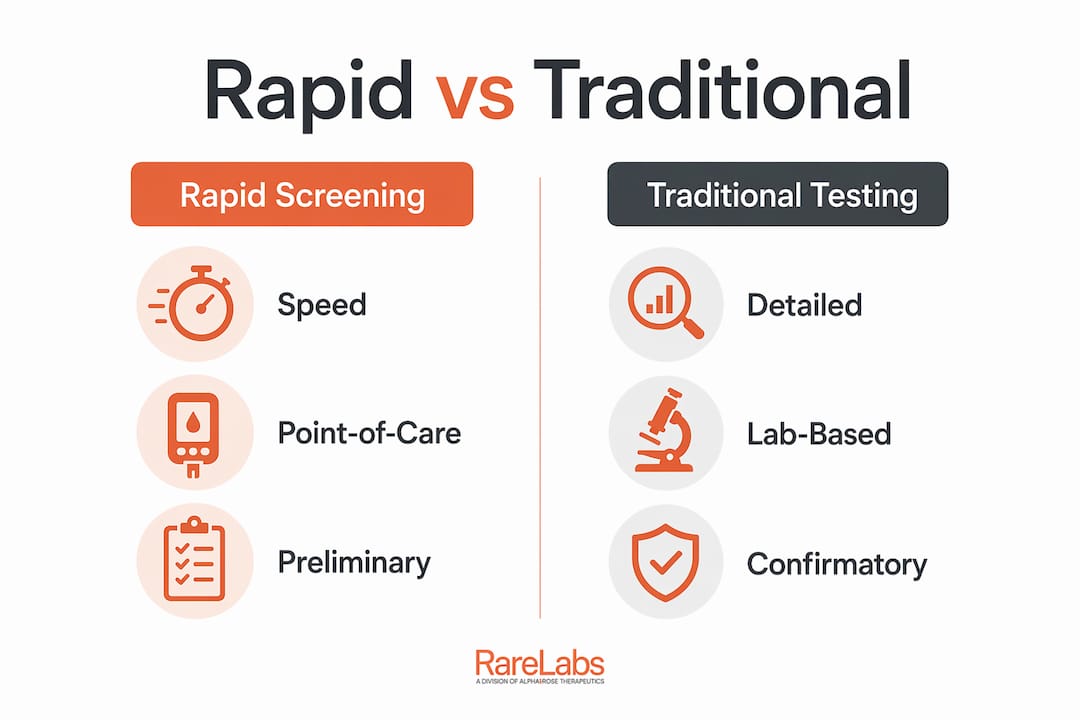
The core trade-off between rapid screening and traditional lab testing is speed versus analytical depth. Rapid tests deliver results in minutes. Traditional LC-MS/MS delivers results in hours or days, but covers a broader analyte range and provides quantitative data.
When rapid tests are the right choice
Rapid point-of-care tests work best when the clinical question is binary: is this drug present or not? Emergency departments, overdose response teams, and field harm-reduction programs all benefit from this speed. The types of FDA-approved drug screens available today span immunoassay strips, lateral flow devices, and newer PSI-MS platforms, each suited to different clinical contexts.
When confirmatory testing is required
Rapid results should trigger confirmatory testing whenever the clinical stakes are high or the result is unexpected. False positives and false negatives can occur due to cross-reactivity and metabolic variability. No single test is diagnostic on its own. Clinical history and symptoms are always part of the interpretation.
The practical workflow for most settings looks like this:
- Use rapid screening for immediate triage and treatment decisions
- Flag unexpected or borderline results for LC-MS/MS confirmation
- Integrate results with patient history before acting on any single data point
- Document the sample matrix, collection time, and any known interfering substances
For researchers and biopharma teams, understanding this workflow is foundational. The drug screening tips for biopharma researchers published by Hopeatrarelabs cover how these principles translate from clinical settings into research protocols.
Why does rapid screening matter for rare and undiagnosed genetic diseases?
Rare disease research faces a problem that standard drug development does not. Patient populations are small, phenotypes are variable, and many patients cannot clearly communicate their drug exposure history. Drug screening provides information otherwise hidden due to unreliable self-reporting, which is especially critical for patients who are sedated, cognitively impaired, or nonverbal.
Rapid screening shortens the therapeutic discovery cycle in rare disease contexts. When a research team tests thousands of FDA-approved compounds against a patient-derived cell model, fast feedback on drug behavior accelerates the identification of candidates worth pursuing. Waiting days for each data point is not viable when the patient population is measured in dozens rather than thousands.
The benefits of rapid screening in rare disease research include:
- Faster identification of drug candidates with measurable biological activity
- Objective exposure data for patients who cannot self-report reliably
- Support for phenotype-driven treatment approaches that depend on real-time response data
- Reduced time between hypothesis and clinical decision for conditions with no approved therapies
Hopeatrarelabs applies this logic directly. The platform tests thousands of FDA-approved drugs and custom antisense oligonucleotides (ASOs) in parallel against patient-specific models built from induced pluripotent stem cells (iPSCs) and CRISPR gene editing. Rapid therapy discovery for rare diseases depends on the same principle that drives emergency toxicology: fast data enables better decisions. For patients with ultra-rare conditions, that speed is not a research preference. It is a medical necessity.
Patients who cannot wait years for a clinical trial benefit most from this model. Rapid screening data feeds directly into personalized treatment decisions, making it possible to identify viable options from existing approved drugs rather than starting from scratch.
Key Takeaways
Rapid drug screening delivers the objective, time-sensitive data that clinical teams and rare disease researchers need to make treatment decisions that are grounded in evidence, not assumption.
| Point | Details |
|---|---|
| Speed changes outcomes | Acting within critical time windows reduces severity, hospitalization, and complications. |
| PSI-MS cuts turnaround to 15 minutes | This makes confirmatory toxicology viable at the point of care for the first time. |
| Accuracy requires context | Rapid results must be integrated with patient history to avoid misinterpretation from cross-reactivity. |
| Rare disease research depends on fast data | Small patient populations and nonverbal patients make objective, rapid exposure data essential. |
| Hopeatrarelabs applies rapid screening at scale | Parallel testing of thousands of FDA-approved drugs against iPSC models accelerates therapy discovery. |
Rapid screening changed how I think about clinical data
The conventional view of drug testing treats it as a verification step. You suspect something, you test, you confirm. That framing misses the real value of rapid screening, which is generative. Fast results create new clinical possibilities rather than just confirming existing suspicions.
I have seen this most clearly in rare disease contexts. When a patient has no approved treatment and no clear drug exposure history, a rapid screen is not just a safety check. It is the starting point for a treatment hypothesis. The data tells you what is present, what the body is doing with it, and where there might be a therapeutic opening. That is a fundamentally different use of the same technology.
The balance between speed and accuracy is a real tension, and I think the field sometimes underestimates it. PSI-MS at 15 minutes is impressive. But a 15-minute result that is misinterpreted because a clinician did not account for diluent interference is worse than a slower result interpreted correctly. The technology is only as good as the training and context around it.
For practitioners integrating rapid screens into research workflows, the most important habit is documentation. Record the sample matrix, the collection conditions, and any known variables before interpreting the result. That discipline separates useful data from noise. Fast testing results in clinical settings, as explored by diagnostics teams working in point-of-care environments, consistently show that workflow discipline matters as much as test sensitivity.
The future of rapid screening in rare disease research is parallel testing at scale. Running thousands of compounds against patient-derived models simultaneously, with fast feedback loops, is the only way to find viable therapies for conditions that affect a few hundred people worldwide. Speed is not a luxury in that context. It is the entire strategy.
— John
How Hopeatrarelabs uses rapid screening to find rare disease therapies
Hopeatrarelabs was built around the premise that rare disease patients cannot wait for traditional drug development timelines. The platform uses patient-derived iPSC models and CRISPR gene editing to create disease-specific cell lines, then runs parallel treatment screens across thousands of FDA-approved drugs, custom ASOs, and gene therapy candidates.
The RareLabs Knowledge platform gives patients, families, physicians, and biopharma partners access to research resources and treatment search tools built specifically for ultra-rare and undiagnosed genetic diseases. Rapid screening data feeds directly into this process, turning biological signals from patient cells into prioritized therapy candidates. For patients who have no approved treatment options, this approach offers a concrete path forward grounded in their own biology.
FAQ
What is rapid drug screening?
Rapid drug screening is the detection of drugs or their metabolites in a patient sample within minutes or hours, using methods like immunoassay strips or PSI-MS. Results are fast enough to guide immediate clinical decisions.
How accurate are rapid drug tests compared to lab testing?
Rapid tests are accurate for initial screening but can produce false positives or false negatives due to cross-reactivity and metabolic variability. Confirmatory testing with LC-MS/MS is required when results are unexpected or clinically significant.
Why does rapid screening matter for rare disease patients?
Rare disease patients often cannot self-report drug exposure reliably, and their small population size makes slow testing cycles impractical. Rapid screening provides objective data that supports personalized treatment decisions without requiring large clinical trial populations.
What is PSI-MS and why does it matter?
Paper spray ionization mass spectrometry (PSI-MS) delivers confirmatory toxicology results in approximately 15 minutes, compared to hours or days for traditional LC-MS/MS. This speed makes it viable for point-of-care use in emergency and research settings.
Can rapid fentanyl test strips give false results?
Yes. Additives in the sample matrix can interfere with detection, requiring higher fentanyl concentrations to trigger a positive result. Trained personnel must evaluate results alongside clinical context to avoid misinterpretation.