
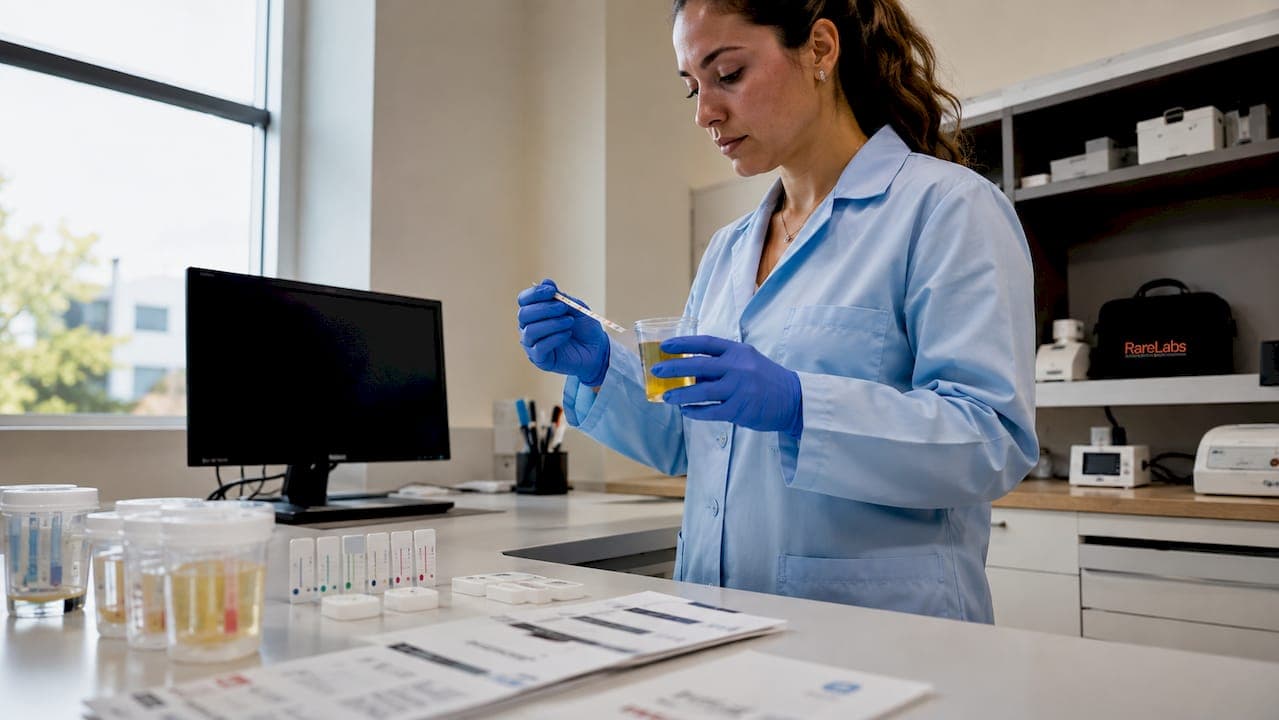
FDA-approved drug screens are classified primarily by regulatory clearance status and sample type, with urine cups, dip cards, and oral fluid tests cleared via the FDA 510(k) pathway representing the mainstream options for clinical and workplace use. The term "FDA-approved" is commonly used in practice, but the precise regulatory term for most diagnostic drug screening devices is "FDA-cleared," referring to 510(k) clearance rather than full premarket approval. Understanding the distinction between these categories, and knowing which approved drug screening types exist for different sample matrices, directly shapes which tools are appropriate for clinical decision-making, workplace monitoring, and research applications.
1. What are the types of FDA-approved drug screens?
The types of FDA-approved drug screens fall into three primary categories: urine-based rapid tests, oral fluid tests, and laboratory-based serum or quantitative assays. Each category carries its own regulatory classification, sample handling requirements, and detection window. Selecting the wrong category for a clinical context produces unreliable results and potential compliance failures.
2. FDA 510(k)-cleared urine drug screens
Urine-based tests are the dominant format in both clinical and workplace drug testing. FDA 510(k) clearance is the required regulatory pathway for moderate-risk devices like urine cups and dip cards, requiring demonstration of substantial equivalence to a predicate device rather than clinical trials. That distinction matters: clearance confirms technical performance equivalence, not independently validated clinical efficacy.
The most common urine formats include:
- Integrated urine cups: Self-contained devices with built-in test strips. Results appear within minutes at the point of care.
- Dip cards: Separate test strips dipped into a collected urine sample. Lower cost per test, widely used in high-volume settings.
- Multipanel cassettes: Flat cassette devices that test multiple drug classes simultaneously from a single urine sample.
Standard panels follow the SAMHSA-5 framework, covering cocaine, amphetamines, marijuana, PCP, and opioids. Extended panels of 10, 12, 14, or 16 substances add detection for fentanyl, buprenorphine, tramadol, and benzodiazepines. Federal panels effective as of july 7, 2025, now include fentanyl and tramadol as standard targets.
Most FDA-cleared rapid urine tests also carry CLIA-waived status. That classification allows non-laboratory personnel to perform testing in clinics, urgent care centers, and employer sites without a laboratory director on site.
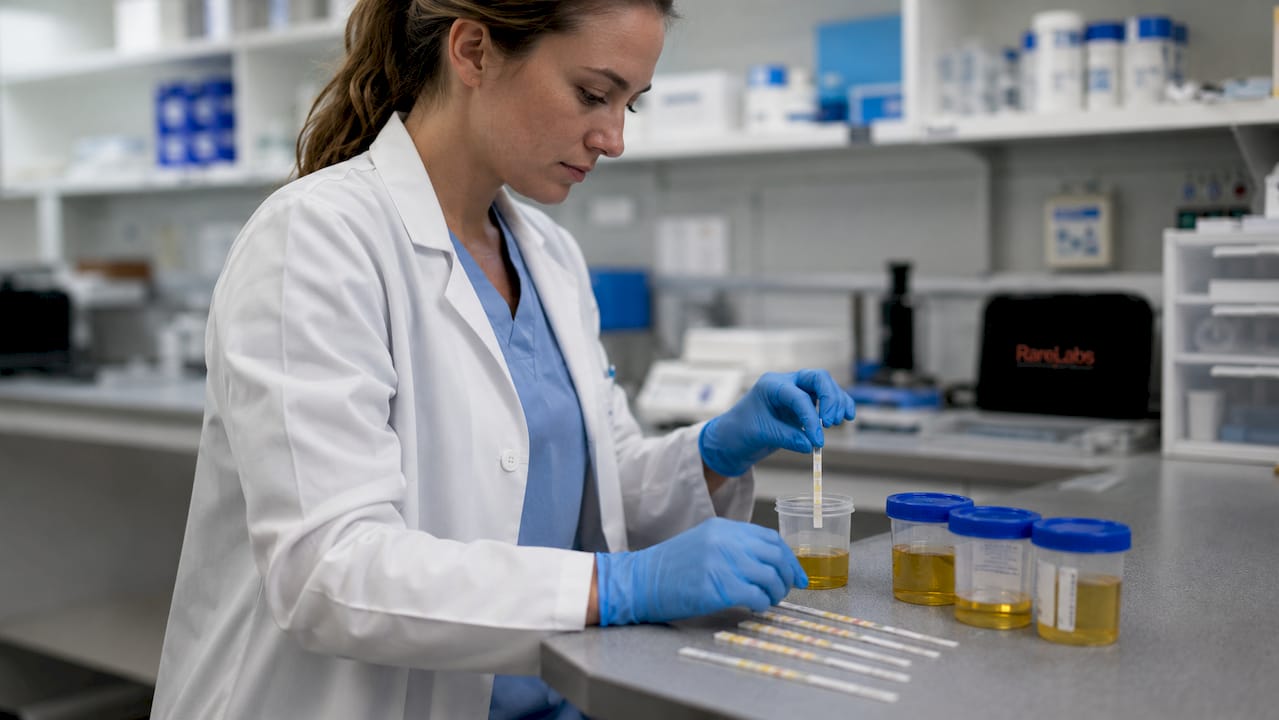
A critical limitation: standard urine immunoassays cannot reliably detect many synthetic cannabinoids and emerging drug analogues. They detect metabolic markers, so a benzodiazepine like diazepam may register positive while an atypically metabolized analog goes undetected entirely.
Pro Tip: When ordering urine test panels for clinical settings, verify both the FDA 510(k) clearance number and the CLIA-waiver certificate number before procurement. A device can hold one without the other, and only CLIA-waived tests are legally permissible for non-lab personnel use.
3. How do FDA-cleared oral fluid drug screens compare to urine tests?
Oral fluid tests represent the second major category of FDA-cleared drug screening devices. They collect saliva directly from the oral cavity using an absorbent collector, then run an immunoassay on the collected fluid. Several oral fluid devices have received FDA 510(k) clearance and CLIA-waived classification, making them viable for point-of-care use.
| Feature | Urine tests | Oral fluid tests |
|---|---|---|
| Sample collection | Requires private restroom | Collected directly, observed |
| Adulteration risk | Higher (dilution, substitution) | Lower (direct collection) |
| Detection window | 1–4 days for most drugs | 24–48 hours for most drugs |
| CLIA-waived options | Widely available | Available but fewer options |
| Panel size range | 5–16 substances | Typically 5–10 substances |
| Clinical adoption | Very high | Moderate and growing |
Oral fluid tests carry a clear advantage in observed collection settings. The collector is placed directly in the donor's mouth, making adulteration or substitution nearly impossible. That property makes oral fluid tests particularly useful in post-accident workplace testing and supervised clinical monitoring.
The detection window is shorter for oral fluid than for urine. Most drugs appear in saliva within 30 minutes of use and clear within 24–48 hours. For detecting recent use, oral fluid outperforms urine. For detecting use from several days prior, urine remains the stronger option.
Panel sizes for oral fluid tests are generally smaller than urine panels. Most FDA-cleared oral fluid devices cover 5–10 drug classes. Extended panels matching the 16-substance federal urine standard are not yet universally available in oral fluid format.
4. Laboratory-based and alternative FDA-approved screening methods
Beyond rapid point-of-care devices, laboratory-based methods offer quantitative results that rapid screens cannot provide. Serum drug testing provides blood concentration values, which are directly applicable in overdose management, pharmacokinetic monitoring, and clinical toxicology. Serum tests are not designed for rapid screening workflows. They require venipuncture, laboratory processing, and trained interpretation.
Key alternative screening methods include:
- Serum quantitative immunoassays: Used in emergency and inpatient settings. Provide drug concentration data rather than a positive/negative result.
- Gas chromatography-mass spectrometry (GC-MS): The gold standard confirmatory method. Not a screening tool, but used to confirm positive rapid screen results.
- Liquid chromatography-tandem mass spectrometry (LC-MS/MS): Increasingly used for confirmatory testing of synthetic opioids and novel psychoactive substances that immunoassays miss.
- Hair follicle testing: Detects drug use over a 90-day window. Not widely FDA-cleared for point-of-care use; typically sent to reference laboratories.
The regulatory distinction between these methods matters. Rapid immunoassay devices cleared via 510(k) are Class II devices. High-complexity laboratory analyzers may follow a different regulatory path, including premarket approval (PMA) for Class III devices. 510(k) clearance confirms safety via technical equivalence, not clinical efficacy, which affects how performance claims should be interpreted.
Research Use Only (RUO) and Investigational Use Only (IUO) devices are a separate category entirely. RUO and IUO devices lack required FDA validation and are legally prohibited for clinical or workplace diagnostic use. Some organizations mistakenly procure them, which produces invalid results and creates compliance liability.
Pro Tip: Always request the FDA 510(k) clearance number from your device supplier before clinical deployment. Cross-reference it against the FDA's 510(k) database to confirm the device is cleared for its intended use, not just for research.
5. How FDA regulatory pathways and CLIA-waived status shape drug screen selection
The FDA regulates drug screening devices under two primary pathways. The 510(k) pathway applies to Class II moderate-risk devices and requires proof of substantial equivalence to an already-cleared device. Premarket approval (PMA) applies to Class III high-risk devices and requires clinical trial data. Nearly all rapid drug screening devices in clinical and workplace use are Class II, cleared via 510(k).
CLIA-waived status is a separate regulatory layer governed by the Centers for Medicare and Medicaid Services (CMS). CLIA-waived classification determines who can perform a test and under what conditions. It is not granted automatically with FDA clearance. A device must be independently waived by CMS before non-laboratory personnel can legally use it for patient care decisions.
Practical implications for test selection:
- Only use devices with confirmed FDA 510(k) clearance for clinical or workplace decisions.
- Verify CLIA-waived status independently if the test will be performed outside a certified laboratory.
- Avoid RUO or IUO labeled devices entirely for any diagnostic or employment-related purpose.
- Confirm that the panel covers the specific substances relevant to your clinical or compliance context.
- Check that the device's intended use in its 510(k) submission matches your actual application.
FDA guidance on validating drug screens is intentionally broad. Professionals should rely on USP monographs and manufacturer performance data for assurance beyond what clearance alone provides.
6. What practical considerations guide the choice among drug screen types?
Matching the screen type to the clinical context is the single most important selection criterion. A 5-panel SAMHSA urine cup is appropriate for federally mandated workplace testing. A 16-panel extended urine screen or an oral fluid device better serves clinical monitoring programs where fentanyl, buprenorphine, and benzodiazepine detection are priorities.
For biopharma researchers and clinical investigators, the limitations of rapid screens are especially relevant. Rapid screens are qualitative. A negative result does not rule out substance use when clinical suspicion remains. Confirmatory testing via GC-MS or LC-MS/MS is indicated whenever a rapid screen result will influence a treatment decision or legal outcome.
Cost and panel size trade-offs follow a predictable pattern:
- 5-panel urine cups: Lowest cost, federally mandated baseline, limited detection scope.
- 10 to 12-panel urine screens: Moderate cost, adds benzodiazepines and synthetic opioids.
- 14 to 16-panel extended screens: Higher cost, covers fentanyl, tramadol, buprenorphine.
- Oral fluid 5 to 10-panel devices: Higher per-test cost than urine, best for observed collection.
- Laboratory serum quantitative assays: Highest cost and turnaround time, required for clinical toxicology decisions.
| Selection factor | Recommended screen type |
|---|---|
| Federal workplace compliance | 5-panel or current federal standard urine |
| Recent use detection | Oral fluid test |
| Clinical overdose management | Serum quantitative assay |
| Broad substance monitoring | 14 to 16-panel extended urine screen |
| Non-lab personnel use | CLIA-waived rapid urine or oral fluid |
Pro Tip: For clinical programs monitoring patients on medication-assisted treatment, pair a CLIA-waived rapid screen for immediate results with a confirmatory LC-MS/MS send-out for any positive or clinically suspicious negative. The rapid screen guides the visit; the confirmatory result guides the treatment record.
Key takeaways
FDA-cleared 510(k) urine and oral fluid tests are the primary approved drug screening tools for clinical and workplace use, and confirmatory laboratory testing remains required for any result that drives a treatment or legal decision.
| Point | Details |
|---|---|
| 510(k) clearance is the standard | Most rapid drug screens are cleared, not approved; verify the clearance number before clinical use. |
| CLIA-waived status is separate | FDA clearance does not automatically grant CLIA-waived status; confirm both before deploying outside a lab. |
| Urine tests dominate but have limits | Standard immunoassays miss synthetic cannabinoids and atypically metabolized benzodiazepines. |
| Oral fluid suits observed collection | Shorter detection window but nearly impossible to adulterate, making it ideal for post-accident testing. |
| Confirmatory testing is non-negotiable | Rapid screens are qualitative first steps; GC-MS or LC-MS/MS confirms results for clinical or legal use. |
What I've learned about the real gaps in FDA drug screen selection
The regulatory framework for drug screens is more nuanced than most procurement checklists acknowledge. Clinicians and researchers often treat "FDA-cleared" as a binary quality stamp, but 510(k) clearance confirms technical equivalence to a predicate device, not independently validated clinical performance. That distinction becomes consequential when you are relying on a rapid screen to guide a treatment decision for a patient on complex polypharmacy.
The synthetic drug problem is the most underappreciated gap in current screening panels. Standard immunoassays were designed around classical drug structures. Novel synthetic opioids and designer benzodiazepines metabolize differently, and many simply do not trigger existing antibody-based assays. Extended panels help, but they lag behind the pace of new substance emergence.
The FDA's work on New Approach Methodologies, including in vitro and in silico models, signals a longer-term shift in how drug safety assessments are validated. These methodologies may eventually influence how screening devices are evaluated and cleared. For researchers working at the intersection of drug screening and rare disease diagnostics, that trajectory is worth tracking closely.
The practical answer for now is layered testing. Use a CLIA-waived rapid screen for speed and point-of-care utility. Follow any clinically significant result with confirmatory mass spectrometry. And audit your panel selection annually against updated federal substance lists, because the federal standard panels themselves changed as recently as july 2025.
— John
How Hopeatrarelabs supports drug screening decisions in rare disease research
Hopeatrarelabs works at the intersection of FDA-approved drug screening and rare disease treatment discovery. The team conducts parallel treatment screens testing thousands of FDA-approved drugs against patient-specific disease models, using iPSC and CRISPR-based platforms to identify viable therapeutic candidates for conditions with no existing approved treatment.
For healthcare professionals and researchers who need to understand how drug screening integrates with rare disease answers and treatment development, Hopeatrarelabs offers detailed resources through its knowledge platform. The platform covers regulatory context, screening methodology, and the science behind repurposing FDA-approved compounds for ultra-rare conditions. If your work involves matching existing drugs to unmet clinical needs, Hopeatrarelabs provides the scientific infrastructure and expert guidance to support that process.
FAQ
What is the difference between FDA-cleared and FDA-approved drug screens?
FDA-cleared drug screens have passed the 510(k) pathway, demonstrating substantial equivalence to a predicate device. FDA-approved devices have completed the more rigorous premarket approval process, which requires clinical trial data and applies primarily to Class III high-risk devices.
Can non-laboratory staff perform FDA-cleared drug tests?
Yes, but only if the device also carries CLIA-waived status. CLIA-waived classification is granted separately from FDA clearance and permits non-laboratory personnel to perform testing in point-of-care settings.
Why do rapid urine screens miss some drugs?
Standard urine immunoassays detect metabolic markers tied to classical drug structures. Synthetic cannabinoids, novel opioids, and atypically metabolized benzodiazepines do not always trigger these assays, producing false negatives.
What panel size should a clinical program use?
Federal workplace programs require the current federal standard panel, which as of july 2025 includes fentanyl, buprenorphine, and tramadol alongside the classic SAMHSA-5 substances. Clinical monitoring programs benefit from extended 14 to 16-panel screens that cover a broader substance range.
Are RUO-labeled drug test kits acceptable for workplace testing?
No. RUO and IUO devices are legally prohibited for clinical or workplace diagnostic use. Using them for employment or patient care decisions produces invalid results and creates regulatory liability.