
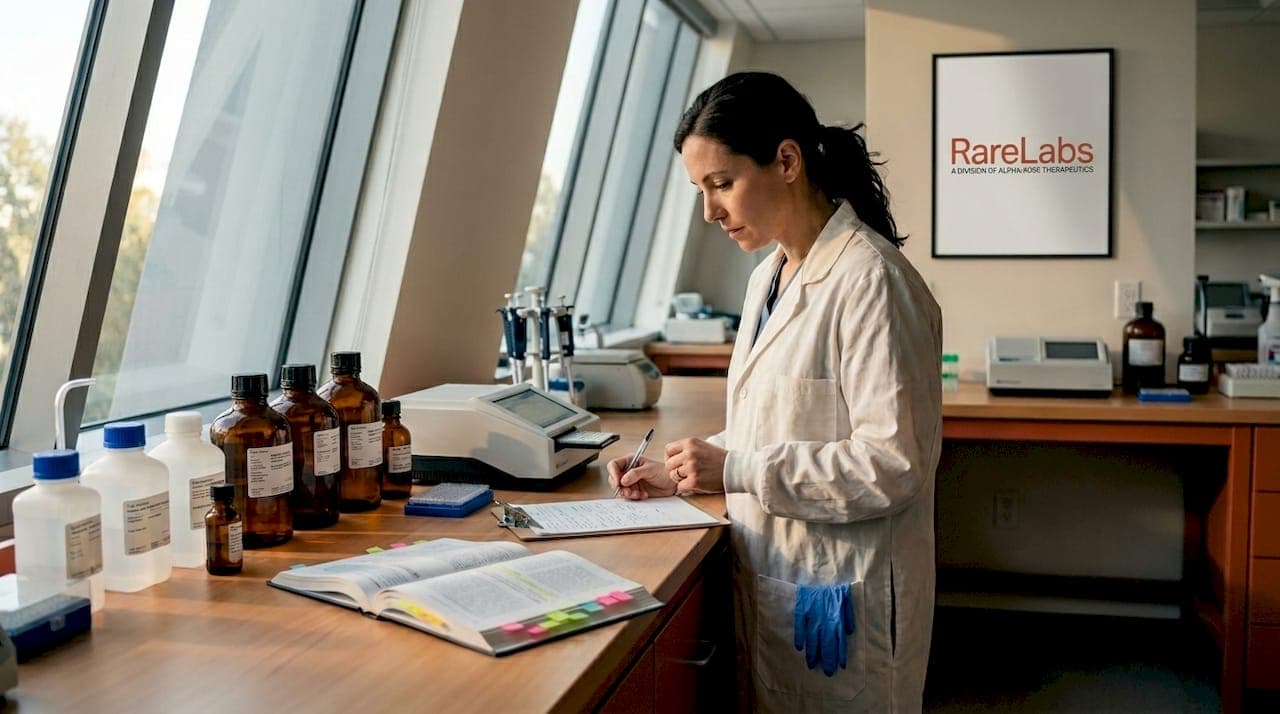
Rare disease drug discovery operates under pressure that standard therapeutic programs rarely face: tiny patient populations, limited reference data, and no approved treatments to benchmark against. Getting drug screening right, what researchers formally call high-throughput screening (HTS) or targeted compound screening, determines whether a candidate advances or dies in the pipeline. These drug screening tips for biopharma teams focus specifically on the rare genetic disease context, where every decision about assay design, technology selection, and validation timing carries outsized consequences for patients who have no other options.
Table of Contents
- Key takeaways
- 1. Drug screening tips for biopharma: start with assay design criteria
- 2. Choose your screening technology based on program scale
- 3. Treat primary screens as sensitivity-first filters
- 4. Plan orthogonal confirmation before you start
- 5. Never initiate formal method validation prematurely
- 6. Use cell-based bioassays for potency determination
- 7. Balance throughput targets against available resources
- 8. Align early with regulatory potency and assay requirements
- 9. Document every variable for reproducibility and compliance
- My perspective on getting biopharma drug screening right
- Accelerate your rare disease discovery with Hopeatrarelabs
- FAQ
Key takeaways
| Point | Details |
|---|---|
| Prioritize biological relevance | Design assays around disease mechanism first; statistical metrics like Z'-factor are secondary signals. |
| Use staged validation funnels | Counter-assays and orthogonal formats should be planned before primary screening begins, not after. |
| Match technology to scale | DEL and CRISPR pooled screens offer major throughput gains but require deliberate resource planning. |
| Delay formal validation | Full bioanalytical method validation should begin only after optimization is complete to avoid rework. |
| AI accelerates candidate selection | Machine learning tools connect in vitro screening signals to clinical endpoints faster than manual review. |
1. Drug screening tips for biopharma: start with assay design criteria
Before any compound touches a plate, the assay itself must earn its place in the workflow. The most common mistake in biopharma screening programs is prioritizing throughput configuration over biological accuracy. An assay that runs fast but misrepresents disease biology will produce a hit list full of artifacts.
Four criteria separate a reliable assay from a misleading one:
- Biological context over biochemical convenience. Cell-based assays that reflect the actual disease mechanism catch liabilities that purified enzyme assays miss entirely. For rare genetic conditions, where the pathophysiology is often poorly characterized, this is non-negotiable.
- Sensitivity and specificity balance. Primary screens should lean toward sensitivity to avoid discarding real hits. Specificity is enforced during validation, not at the first pass.
- Signal stability under screening conditions. Variability in reagent concentrations, buffer composition, or incubation timing destroys assay reproducibility. Lock these variables down during development.
- Proactive false positive management. Build interference checks into assay design from the start, not as an afterthought.
A critical point that gets overlooked: biological relevance beats Z'-factor as a quality indicator. A Z' score above 0.5 tells you the signal window is workable. It says nothing about whether your assay is measuring the right thing.
Pro Tip: Run your assay with a set of known positive and negative controls that reflect your therapeutic hypothesis, not just technical controls. If the biology doesn't respond as expected, the assay isn't ready.
2. Choose your screening technology based on program scale
Matching the right technology to your program's size and stage prevents both under-investment and waste. The field now offers genuinely different options across the throughput spectrum.
DNA-Encoded Library (DEL) technology screens tens of millions of compounds in approximately one month, compared to conventional HTS that covers roughly one million compounds over nearly two months. For rare disease programs with no known starting scaffold, DEL is worth serious consideration.
CRISPR pooled screens have matured significantly. Multiplexed sgRNA perturbation now maintains screen effectiveness while reducing required cell numbers to as few as 500,000 cells per condition. For rare disease models derived from patient iPSCs, where cell supply is genuinely limited, this is a material advantage. A detailed approach to this is covered in the gene therapy screening guide for rare disease trials.
Mass spectrometry-based proteomics has also become a viable high-throughput tool. Optimized workflows now profile over 240 samples per day, identifying more than 7,400 proteins per run using 2-minute gradients. This gives you simultaneous efficacy and toxicity signals across a compound set, which is valuable when you're working with a novel target where off-target effects are poorly mapped.
AI and machine learning tools now automate image and signal analysis at scale, connecting screening readouts to predicted clinical endpoints. The practical benefit is faster triage of the hit list, with less reliance on manual expert review for initial filtering.
3. Treat primary screens as sensitivity-first filters
This is the framing shift that separates efficient screening programs from expensive ones. The purpose of a primary screen is not to confirm hits. It is to capture every real candidate while accepting that some false positives will come along for the ride. Filtering happens afterward.
Industry practice recommends reporter and enzyme counterscreens alongside interference readout checks to triage nuisance mechanisms at early stages. The cost of running these structured counter-assays is trivial compared to the cost of advancing an artifact-laden hit list into dose-response studies.
Build your validation funnel before the primary screen runs, not after you see the data. Proactive hit triage planning that includes counter-assays for interference and orthogonal confirmation formats prevents artifact-dominated hit lists that consume downstream resources.
Pro Tip: Assign every hit a "nuisance score" based on structural alerts and assay interference flags before investing in dose-response studies. Compounds that hit promiscuously across unrelated assays should be deprioritized even if they show strong primary screen activity.
4. Plan orthogonal confirmation before you start
One of the most expensive habits in biopharma screening is designing the orthogonal confirmation strategy after the primary screen completes. By then, you're working with a hit list and no pre-approved infrastructure to evaluate it efficiently.
Orthogonal assays should measure the same biological phenomenon through a different mechanism. If your primary screen uses a fluorescence intensity readout, your orthogonal assay might use a cell viability format or a label-free biophysical method. The combination confirms that activity is real, not a readout artifact. This approach also connects naturally to the broader context of drug repurposing workflows where validated hits may already have safety profiles.
5. Never initiate formal method validation prematurely
This is one of the most consistent sources of costly rework in biopharma programs. Starting formal validation before the method is fully optimized leads to failures, delays, and full repetition of the validation process.
The optimization phase must address matrix effects, analyte stability, and reproducibility across instruments and operators before formal validation begins. Regulatory submissions demand data generated under validated conditions. Any gap between your optimized and validated method creates a documentation problem that reviewers will flag.
6. Use cell-based bioassays for potency determination
For biopharma compliance in biologics programs, binding assays are useful screening tools but they cannot replace functional cell-based readouts. Regulatory expectations explicitly favor robust cell-based bioassays for lot release and potency validation because they reflect biological activity tied to therapeutic mechanism.
This matters practically for rare disease programs working with gene therapies, ASOs, or enzyme replacement candidates. A binding affinity result does not tell you whether the molecule does what it needs to do in a disease-relevant cellular context. Potency data from a cell-based system does.
7. Balance throughput targets against available resources
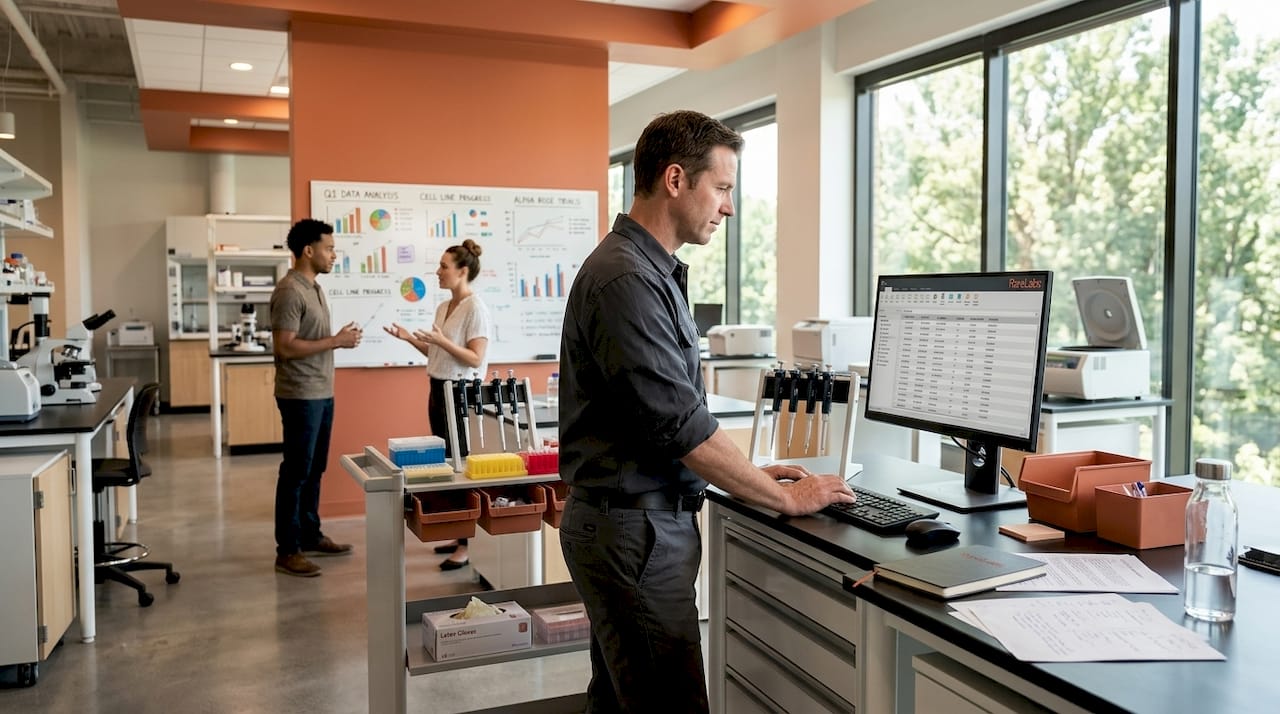
Biopharma teams building drug screening programs face a genuine trade-off between ambition and operational reality. The table below summarizes how platform choices compare across key dimensions:
| Approach | Throughput | Resource demand | Best fit |
|---|---|---|---|
| Conventional HTS | ~1M compounds/2 months | High (automation, library) | Large programs, known target class |
| DEL screening | Tens of millions/1 month | Moderate (outsource-ready) | Early discovery, no scaffold |
| CRISPR pooled screen | Genome-scale | Moderate (cell supply critical) | Target ID, mechanism studies |
| MS proteomics panel | 240+ samples/day | High (instrument access) | Multi-target toxicity profiling |
| AI-assisted triage | Post-screen | Low (software integration) | Any program with data volume |
Automation timing also matters. Introducing full automation before the assay is optimized creates a situation where you're reproducing bad results faster. Automate only after the manual version of the assay performs reliably and reproducibly.
8. Align early with regulatory potency and assay requirements
Biopharma compliance does not start at the IND filing. Regulators expect that potency assays were designed with biological mechanism in mind from the beginning. Retrofitting a mechanistically irrelevant assay to meet regulatory expectations is a common and avoidable problem.
The best approach is to map your intended clinical mechanism to your assay readout during the design phase. If the therapeutic candidate modulates a specific pathway in a rare genetic disease, your potency assay should demonstrate modulation of that pathway in a patient-relevant cell type. This alignment reduces the risk of having to redesign assays when regulatory reviewers ask questions that go beyond binding data.
Research teams working on rare disease trial design in 2026 are increasingly expected to present mechanistically justified potency data from early stages.
9. Document every variable for reproducibility and compliance
Reproducibility is not just a scientific value. It is a regulatory requirement. Every optimization decision made during assay development should be recorded with the rationale for the choice. Regulators reviewing CMC packages for biologics or gene therapies will examine assay development history.
Documentation also protects you internally. When team members change, when instruments are replaced, or when a collaborator needs to replicate your results, comprehensive development records make that possible without starting over. Use multiplex assay principles to standardize and document readout conditions across panels.
My perspective on getting biopharma drug screening right
I've spent years watching programs invest heavily in throughput infrastructure before their core assay was ready to support it. The pattern is consistent. A team identifies a target for a rare disease with no approved treatment, feels the urgency, and moves to high-throughput formats before the biological signal is genuinely understood. The result is a hit list that takes months to deconvolute and frequently yields nothing actionable.
What I've found actually works is a deliberate slowdown in the assay development phase. Get the biology right in a simple format first. Understand what your positive controls tell you, what your variability actually reflects, and whether your readout captures what matters clinically. Then scale.
The second thing I'd emphasize is AI's real role. It's a triage accelerator, not a discovery engine. I've seen programs treat machine learning output as a substitute for biological judgment. The best use of AI is to flag candidates for expert review faster, not to replace that review. The combination of AI-driven screening analysis with experienced scientific interpretation is where the productivity gain actually lives.
For rare genetic conditions, the stakes for every screening decision are real. There are patients at the end of this pipeline who have no other path. That context should inform every design choice, not just the clinical development stage.
— John
Accelerate your rare disease discovery with Hopeatrarelabs
Hopeatrarelabs was built specifically for programs where conventional screening paths fall short. If you are working on an ultra-rare or undiagnosed genetic condition, the platform offers patient-derived disease models built from iPSCs and CRISPR-edited cells, tested against thousands of FDA-approved compounds, custom ASOs, and gene therapy candidates in parallel.
The RareLabs Knowledge hub gives researchers and biopharma partners access to rare disease research and treatment data that would otherwise require years of literature synthesis to assemble. Whether you are designing your first assay for a novel target or evaluating a compound library against a patient-specific model, Hopeatrarelabs brings the infrastructure, biological context, and scientific rigor that rare disease programs require. Explore the treatment search platform to see what options exist for your program today.
FAQ
What makes drug screening in rare disease programs different?
Rare disease programs have extremely limited patient-derived cell supply and no approved benchmarks to compare against, which makes assay design choices more consequential than in standard therapeutic programs.
When should formal bioanalytical method validation begin?
Formal validation should only begin after the assay method is fully optimized across all key variables, including matrix effects, stability, and reproducibility. Starting too early leads to failure and costly repetition.
How does DEL technology compare to conventional HTS for biopharma?
DEL technology screens tens of millions of compounds in roughly one month, while conventional HTS covers about one million compounds in nearly two months, making DEL significantly faster for early-stage discovery programs.
What is the role of AI in optimizing drug screening workflows?
AI and machine learning automate complex image and signal analyses, accelerating hit triage and connecting in vitro screening data to predicted clinical endpoints without replacing expert scientific judgment.
How do you reduce false positives in high-throughput screening?
Design counter-assays and orthogonal confirmation formats before the primary screen runs, then apply interference flags and structural alerts to triage nuisance compounds before committing to dose-response studies.