
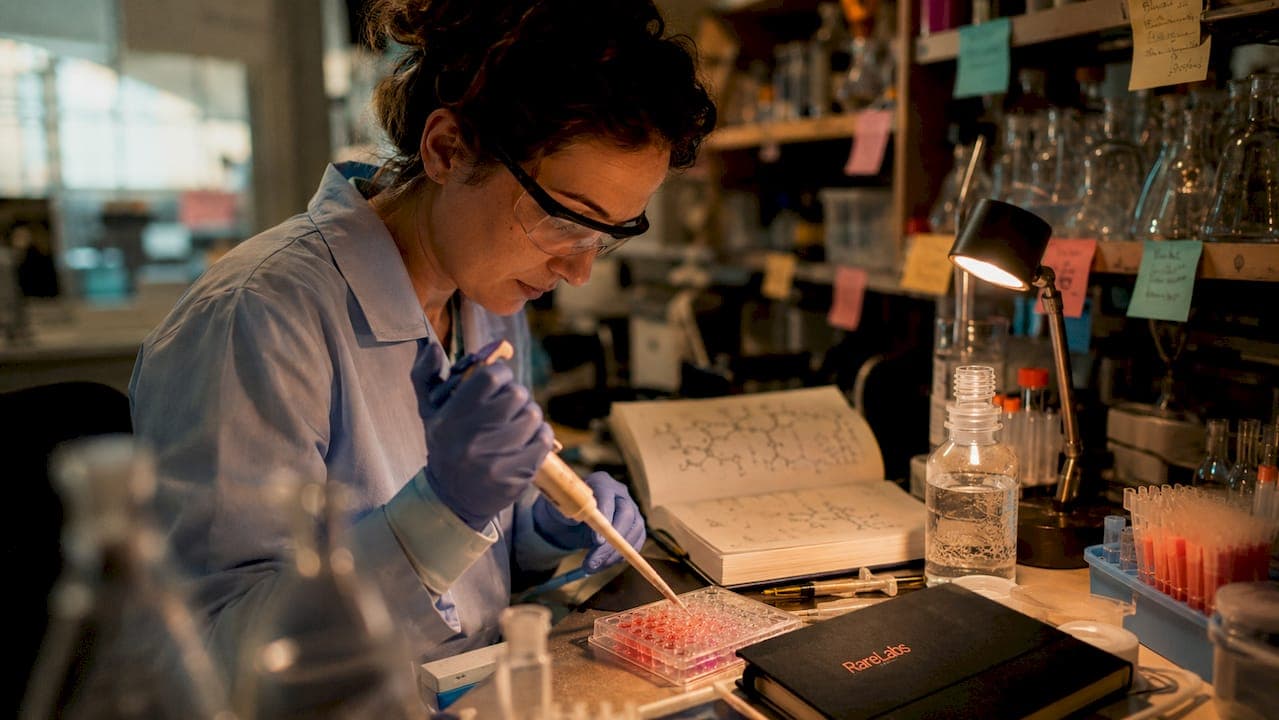
Functional genomics is defined as the branch of molecular biology that studies how genes and their products function and interact across the entire genome to drive biological traits and disease. Unlike structural genomics, which maps and sequences DNA, functional genomics asks what those sequences actually do. The field uses multiplex genome-wide techniques measuring mRNAs and proteins simultaneously to capture gene activity dynamically, not as a static snapshot. Organizations like the UK Human Functional Genomics Initiative have formalized this definition, and technologies like CRISPR-Cas9 and AI-enabled screening have made genome-wide functional studies practical at scale. For researchers and clinicians working on genetic diseases, understanding functional genomics is the foundation for everything from variant interpretation to personalized therapy design.
What is functional genomics and how does it work?
Functional genomics links genetic sequence data to biological function through the study of gene product interactions, cellular responses, and organismal traits. The core goal is to move from knowing what a genome contains to understanding what it does in a living system.
The field relies on several interconnected experimental approaches:
- RNA sequencing (RNA-seq): Measures gene expression across the entire transcriptome, revealing which genes are active in specific cell types or disease states.
- DNA microarrays: Profile gene expression patterns across thousands of genes simultaneously, useful for comparing healthy versus diseased tissue.
- CRISPR-Cas9 genome-wide screens: Systematically knock out or activate individual genes across the genome to identify which ones drive a specific phenotype or disease mechanism.
- Multi-omics integration: Combines transcriptomics, proteomics, metabolomics, and epigenomics to build a complete picture of cellular biology rather than isolating one molecular layer.
The Genome Analysis Toolkit (GATK) is a widely adopted bioinformatics framework for processing and analyzing high-throughput sequencing data. Standardized pipelines like GATK are not optional extras. They are the difference between reproducible findings and noise.
One conceptual distinction that researchers often overlook is the difference between a gene's "causal role" and its "selected effect." A causal role versus selected effect distinction determines whether a gene's activity is the direct driver of a biological outcome or simply a correlated byproduct. Getting this wrong leads to flawed therapeutic targets and wasted development cycles.
Pro Tip: When designing a functional genomics experiment, define your biological question before choosing your assay. Selecting RNA-seq, CRISPR screens, or proteomics based on the question rather than availability reduces technical bias and makes downstream analysis far more interpretable.
How does functional genomics differ from structural genomics and traditional genetics?
These three fields are related but ask fundamentally different questions. Knowing where they diverge helps you choose the right framework for your research problem.
Structural genomics focuses on mapping and sequencing genomes. The Human Genome Project is the defining example. Its output is a reference sequence, a catalog of what exists in the genome. It does not tell you what any of it does.
Traditional genetics centers on inheritance patterns and identifying genes linked to traits or diseases, typically through family studies, linkage analysis, or genome-wide association studies (GWAS). It identifies which gene variants associate with a phenotype. It rarely explains the mechanism.
Functional genomics takes the output of both fields and asks the next question: how do these sequences and variants produce a biological effect? It studies gene function and interaction at the molecular and systems level, across the whole genome, and in dynamic biological contexts.

| Field | Primary goal | Core methods | Output |
|---|---|---|---|
| Structural genomics | Map and sequence the genome | Sequencing, genome assembly | Reference genome, variant catalogs |
| Traditional genetics | Link genes to traits via inheritance | Linkage analysis, GWAS | Gene-trait associations |
| Functional genomics | Determine gene function and interaction | RNA-seq, CRISPR screens, multi-omics | Mechanistic models, functional annotations |
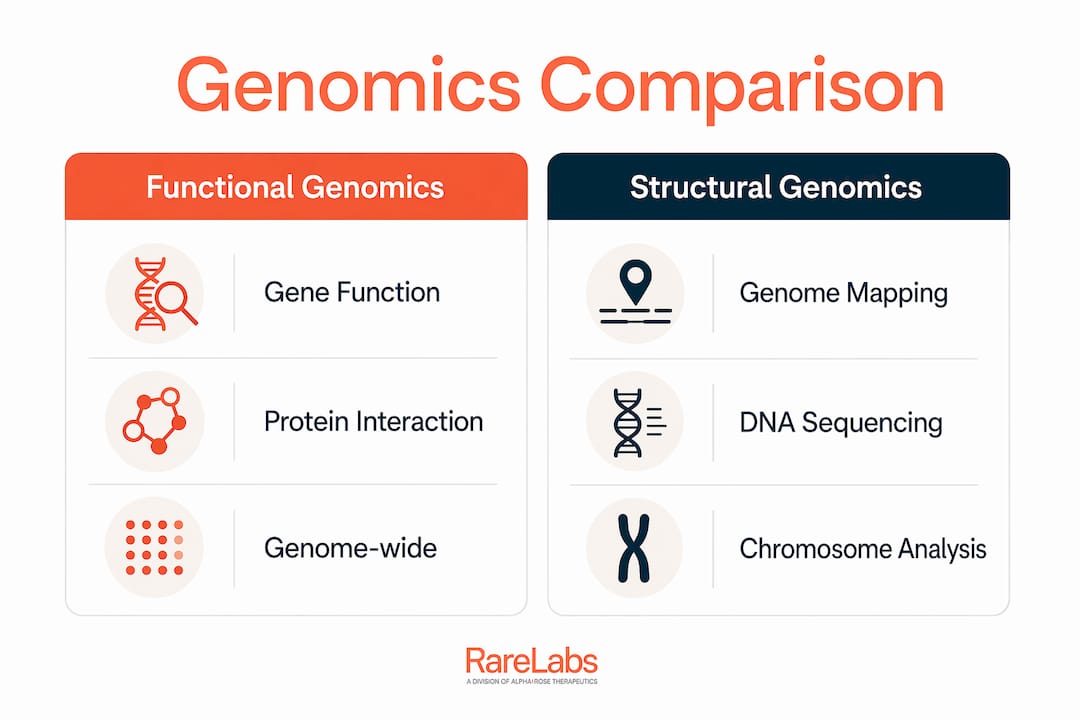
The practical implication is clear. A GWAS study might identify a variant in a noncoding region associated with a rare disease. Functional genomics determines whether that variant actually changes gene expression, disrupts a regulatory element, or alters protein function. Without that step, the association is a hypothesis, not a mechanism.
What are the applications of functional genomics in disease research?
The applications of functional genomics in research span from basic science to clinical translation, and the field is accelerating both ends of that spectrum.
Identifying disease-relevant variants in the right context
Not all genetic variants behave the same way in every cell type or developmental stage. Studying gene function in relevant cell types and at the right biological stage is what separates a meaningful functional finding from a misleading one. A variant that disrupts a regulatory element in neurons may have no effect in liver cells. Functional genomics pins down exactly where and when a variant matters.
Personalizing therapy beyond population averages
Population-level genomic studies identify average effects. Functional genomics enables personalized medicine by linking gene functions to individual patient biology. For patients with ultra-rare or undiagnosed genetic diseases, this is the only viable path. There is no population average when a disease affects fewer than a hundred known patients worldwide. Hopeatrarelabs applies this principle directly, building patient-specific disease models from induced pluripotent stem cells (iPSCs) to test treatments against a patient's own cellular biology.
Accelerating drug discovery and reducing trial failure
Genome-wide CRISPR-Cas9 screens with AI tools now shorten drug development timelines by identifying and validating therapeutic targets before costly clinical trials begin. Genetically supported drug targets, meaning targets where functional genomics confirms the gene's causal role in disease, have a substantially higher success rate in clinical development. This is why phenotype-driven drug discovery has become a central strategy in rare disease programs.
Rare disease research and gene therapy evaluation
Functional genomics is particularly powerful for rare diseases because it does not require large patient cohorts. A single patient's cells, edited with CRISPR and profiled with RNA-seq, can reveal the molecular mechanism of a novel variant. That mechanism then guides whether antisense oligonucleotides (ASOs), gene therapy, or a repurposed FDA-approved drug is the most viable treatment option. Pharmacogenomic testing, such as PGx testing from EIV Diagnostics, adds another layer by predicting how individual patients will metabolize specific drugs before treatment begins.
What are the challenges and future directions in functional genomics?
The field's power comes with real technical and interpretive challenges that researchers need to plan around.
Data volume and computational infrastructure
Genomic data is growing exponentially. Cloud-native computing and data management frameworks are now as critical to a functional genomics program as the wet-lab experiments themselves. Researchers who underinvest in computational infrastructure produce data they cannot analyze at the scale needed for meaningful conclusions.
Multi-omic complexity
Integrating transcriptomics, proteomics, and epigenomics into unified disease models is technically demanding. Each omics layer has its own noise sources, normalization requirements, and biological timescales. Single-gene studies miss the network effects that drive complex diseases. Systems biology approaches that model gene regulatory networks are the direction the field is moving, but they require both computational expertise and large, well-annotated datasets.
Reproducibility and bias
High-throughput experiments are vulnerable to batch effects, reference genome biases, and analytical choices that can shift results significantly. Robust bioinformatics pipelines and pre-registered analysis plans are the current best practice for managing this. Reproducibility is not a bureaucratic requirement. It is the mechanism by which a functional finding becomes a therapeutic lead.
Emerging directions
- Single-cell functional genomics now resolves gene activity at the level of individual cells, revealing heterogeneity that bulk RNA-seq masks.
- Spatial transcriptomics maps gene expression within tissue architecture, connecting molecular function to anatomical context.
- AI-driven variant interpretation is reducing the time from sequencing to functional hypothesis, particularly for gene variant interpretation in rare disease diagnosis.
Pro Tip: Before launching a multi-omics study, map out your data integration strategy at the design stage. Choosing compatible sample preparation protocols across omics layers prevents the most common cause of failed integration: incompatible data structures that cannot be meaningfully merged.
Key Takeaways
Functional genomics translates raw genome sequence into mechanistic understanding of disease, making it the essential foundation for personalized therapy development and targeted drug discovery.
| Point | Details |
|---|---|
| Definition of functional genomics | Studies gene and protein function genome-wide, going beyond static DNA sequencing to capture dynamic biological activity. |
| Core methods | RNA-seq, CRISPR-Cas9 screens, and multi-omics integration are the primary tools for mapping gene function at scale. |
| Distinction from related fields | Structural genomics maps sequences; traditional genetics links variants to traits; functional genomics explains the mechanism. |
| Clinical applications | Enables personalized therapy, rare disease modeling, and genetically validated drug target identification. |
| Key challenge | Exponential data growth requires cloud-native infrastructure and standardized pipelines like GATK to maintain reproducibility. |
Why functional genomics demands more rigor than most labs apply
The promise of functional genomics is real. After two decades working at the intersection of genomics and translational medicine, I have watched the field move from a theoretical framework to a practical engine for drug discovery and rare disease diagnosis. That progress is genuine. But the gap between what the field can do and what most studies actually deliver is wider than most researchers admit.
The most common failure mode is not technical. It is conceptual. Teams run genome-wide screens, generate enormous datasets, and then interpret results without clearly distinguishing causal gene function from correlated activity. A gene that changes expression in a disease state is not automatically a driver of that disease. Conflating the two wastes development resources and, in rare disease contexts, can send families down treatment paths that were never mechanistically justified.
The second failure mode is treating computational analysis as an afterthought. The wet-lab work gets the budget and the attention. The bioinformatics pipeline gets assembled under deadline pressure from whatever tools are available. That is backwards. The analytical framework determines what you can conclude from your data. Build it first.
What I find genuinely exciting about the current moment is the convergence of single-cell methods, spatial transcriptomics, and AI-driven interpretation. These tools are making it possible to study gene function in the precise cell type, tissue location, and disease stage where it matters. For rare disease research, that specificity is not a luxury. It is the only way to build a mechanistic case for a treatment when you have one patient and no approved therapy. Multidisciplinary teams that combine molecular biologists, computational scientists, and clinicians are the ones producing findings that actually reach patients.
— John
Hopeatrarelabs Knowledge: resources for rare disease researchers
Functional genomics is only as useful as the resources available to interpret and apply its findings. For researchers and clinicians working on ultra-rare or undiagnosed genetic diseases, that gap between a functional finding and a viable treatment option is where most programs stall.
Hopeatrarelabs has built a knowledge base specifically for this challenge. The RareLabs Knowledge platform provides curated resources on rare disease research, gene variant interpretation, and the application of functional genomics to personalized treatment development. Whether you are evaluating a novel variant, designing a disease model, or searching for treatment options for a patient with no approved therapy, the platform connects functional genomics science to practical next steps. It is built for researchers, physicians, and patient foundations who need more than a literature search.
FAQ
What is the definition of functional genomics?
Functional genomics is the study of gene and protein functions and interactions across the entire genome. It uses genome-wide experimental methods to determine how genetic information drives biological traits, cellular responses, and disease.
How does functional genomics differ from traditional genetics?
Traditional genetics identifies which gene variants associate with traits through inheritance studies. Functional genomics explains the biological mechanism by which those variants produce their effects at the molecular and systems level.
What are examples of functional genomics techniques?
RNA sequencing, genome-wide CRISPR-Cas9 screens, DNA microarrays, and multi-omics integration combining transcriptomics, proteomics, and epigenomics are the primary experimental approaches in functional genomics research.
Why is functional genomics important for rare disease research?
Functional genomics does not require large patient cohorts, making it the primary tool for studying ultra-rare diseases. A single patient's cells can reveal the molecular mechanism of a novel variant and guide treatment selection.
What is the role of bioinformatics in functional genomics?
Bioinformatics pipelines process and interpret the large datasets generated by high-throughput functional genomics experiments. Standardized frameworks like the Genome Analysis Toolkit are critical for reproducible, reliable results.