

Genetic testing has moved from hospital research labs into everyday healthcare decisions, yet most people have only a vague sense of what actually happens between the moment you give a sample and the moment you get results. How does genetic testing work, exactly? The answer involves several distinct steps, from collecting biological material to analyzing millions of DNA variants with specialized software. Whether you are a patient weighing your options, a family member of someone with a rare disease, or a clinician ordering your first panel, understanding the full genetic testing process puts you in a far better position to act on results.
Table of Contents
- Key takeaways
- How does genetic testing work: sample collection
- Inside the lab: from sample to raw genetic data
- Making sense of variants: the interpretation challenge
- What genetic results actually mean in practice
- My take on where genetic testing still falls short
- How Hopeatrarelabs supports your genetic journey
- FAQ
Key takeaways
| Point | Details |
|---|---|
| Sample collection is simple | Blood, saliva, and cheek swabs all yield adequate DNA for most types of genetic tests. |
| Labs use multiple technologies | DNA extraction, PCR amplification, and sequencing all work together to generate raw genetic data. |
| Interpretation is the hardest step | Bioinformatics tools and curated databases are required to classify variants as harmful, benign, or uncertain. |
| Results can change over time | As databases grow and research advances, a previous result may be reinterpreted with new clinical meaning. |
| Counseling is not optional | Genetic counselors translate complex findings into decisions that actually matter for patients and families. |
How does genetic testing work: sample collection
The genetic testing process starts before any machine touches your DNA. It starts with you, and specifically with the biological material you provide. The type of sample collected depends heavily on what the test is designed to find and who is being tested.
The most common sample types include:
- Blood draw. A venous blood sample provides white blood cells, which are rich in DNA. Clinical diagnostic labs often prefer blood for comprehensive panels because of its reliable yield.
- Buccal cheek swab. A soft brush rubbed along the inside of your cheek collects epithelial cells. Cheek swab sampling takes roughly 2 minutes and provides enough DNA for most standard analyses.
- Saliva. Many direct-to-consumer kits use saliva collected in a tube. Yield can vary by individual, but modern extraction protocols handle it reliably.
- Amniotic fluid or chorionic villus. These invasive prenatal samples capture fetal DNA directly. Amniocentesis is performed between 16 and 20 weeks gestation, while screening tests using maternal blood or nuchal translucency ultrasound are timed between 11 and 14 weeks.
- Tissue biopsy. Used primarily in cancer genetics, tumor tissue can reveal somatic mutations not present in germline DNA.
Timing matters in certain contexts. For prenatal testing, missing the diagnostic window means waiting another trimester, which is a delay that carries real clinical consequences. For most adult testing, timing is flexible, but fasting or medication restrictions may apply depending on the lab's protocol.
Pro Tip: Ask your ordering clinician whether you need to avoid food, drink, or specific medications before sample collection. Some extraction workflows are sensitive to certain compounds in blood or saliva.
Inside the lab: from sample to raw genetic data
Once your sample reaches the lab, a carefully ordered series of steps transforms it into readable genetic information. Understanding this part of how genetic tests are done helps set realistic expectations for turnaround time and result quality.
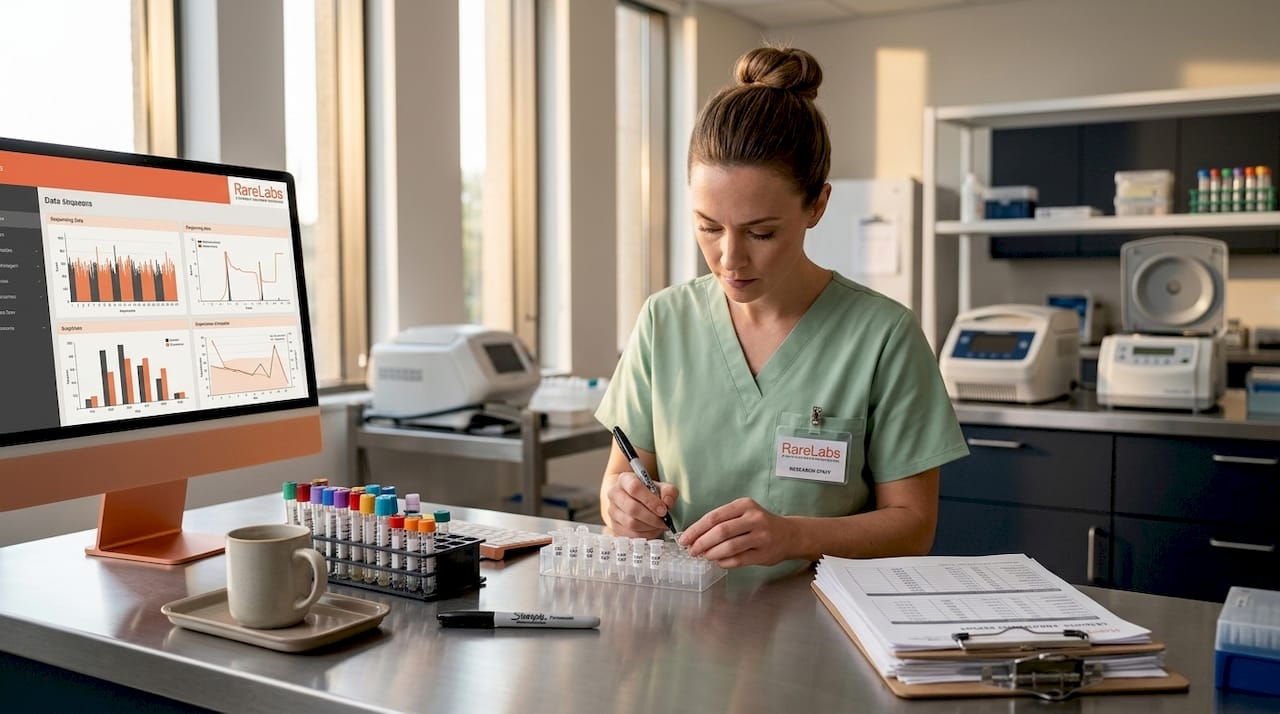
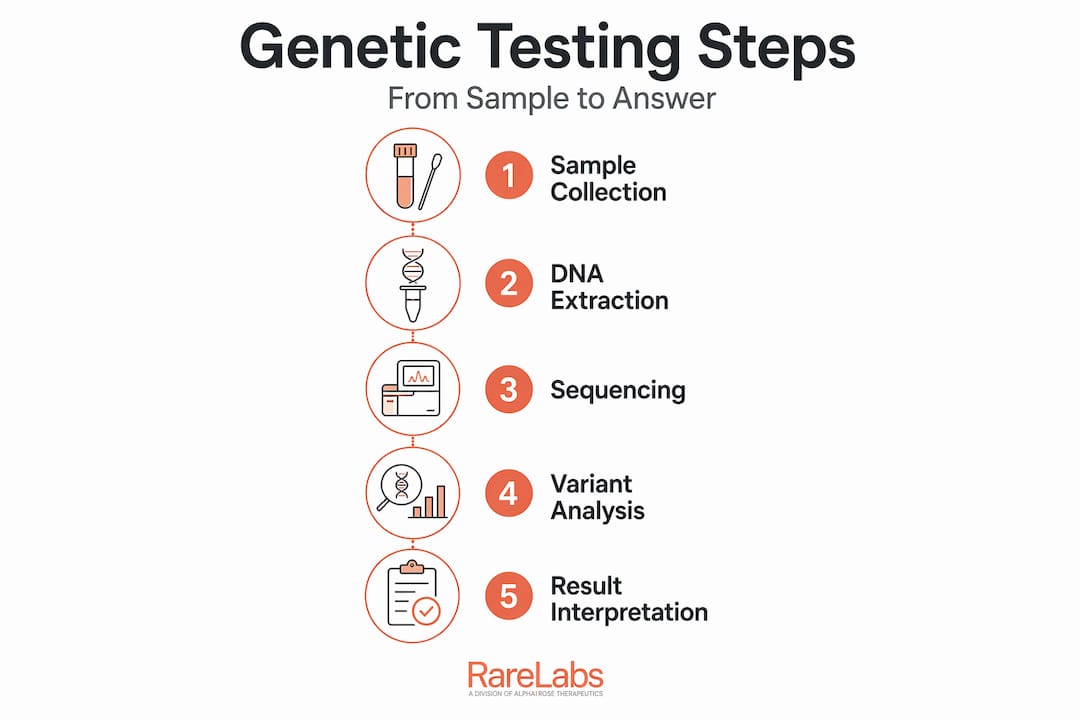
- DNA extraction and purification. Chemical reagents break open cells, releasing DNA. Proteins, lipids, and other cellular debris are removed, leaving a purified DNA solution. The purity of this step directly affects downstream accuracy.
- Quantification. Before any analysis begins, the lab measures how much usable DNA was extracted. Samples below acceptable thresholds may require a repeat collection.
- Amplification via PCR. PCR amplifies specific DNA regions by making millions of copies of a target sequence. This is critical for tests focused on particular genes or variants, because it ensures there is enough material for reliable detection even when the original sample is small.
- Library preparation. For sequencing-based tests, DNA is fragmented into short segments and tagged with molecular identifiers. This prepares the material for high-throughput processing.
- Sequencing. The most common method in clinical labs today is next-generation sequencing (NGS). Short-read platforms can process thousands of genes simultaneously, producing raw sequence files in hours. Whole genome sequencing reads all 3.2 billion base pairs, while whole exome sequencing focuses on the approximately 1 to 2 percent of the genome that codes for proteins.
- Quality control checks. Labs run internal standards alongside patient samples to catch processing errors before results are released.
| Sequencing approach | What it covers | Typical use case |
|---|---|---|
| Targeted gene panel | Specific known disease genes | Hereditary cancer, cardiac conditions |
| Whole exome sequencing | All protein-coding regions | Rare and undiagnosed diseases |
| Whole genome sequencing | Entire genome | Complex cases, research settings |
| Single variant testing | One specific known mutation | Familial follow-up testing |
Pro Tip: When a lab offers both a targeted panel and whole exome sequencing for your condition, ask which approach has the higher diagnostic yield for your specific clinical picture. Panels are faster and cheaper, but they can miss variants outside their scope.
Making sense of variants: the interpretation challenge
Generating raw sequencing data is now the easy part. Interpreting massive genetic datasets remains the greatest challenge, requiring specialized software, curated databases, and expert human judgment working together.
Here is what happens after the sequencer produces its output:
- Bioinformatics pipeline processing. Automated software aligns your DNA sequence against a reference genome and flags positions where your sequence differs. A typical whole genome test can identify millions of variants in a single run.
- Database comparison. Each flagged variant is cross-referenced against databases like ClinVar and gnomAD, which catalog whether specific changes have been linked to disease in the scientific literature or seen at high enough frequency in the general population to be considered benign.
- Variant classification. Variants are sorted into five categories: pathogenic, likely pathogenic, variant of uncertain significance (VUS), likely benign, or benign. The VUS category is where most of the complexity lives. These are changes that cannot yet be confirmed as harmful or harmless based on available evidence.
- AI-assisted analysis. Machine learning models are increasingly used to predict the functional impact of novel variants, particularly those in regulatory regions or those not previously cataloged.
- Expert review. A clinical geneticist or molecular pathologist reviews the software output and applies clinical context before a report is finalized.
Genetic test results are not always static. Findings can be reinterpreted as scientific databases expand, meaning a variant classified as uncertain today may become clinically actionable months or years later.
This is one of the most underappreciated aspects of understanding genetic testing. A negative or inconclusive result today is not necessarily the final word. Laboratories and clinicians are increasingly offering reanalysis services, particularly for patients who remain undiagnosed after an initial workup.
You can learn more about how genetic diagnosis guides rare disease answers through Hopeatrarelabs's detailed resource for patients and healthcare professionals navigating complex results.
What genetic results actually mean in practice
Understanding genetic testing means understanding what you can and cannot do with results once they arrive. The applications span a wider range than most people realize.
- Diagnostic testing confirms or rules out a suspected condition in someone already showing symptoms. This is the most straightforward application, though even here, results may require clinical correlation before a diagnosis is confirmed.
- Carrier testing identifies people who carry one copy of a disease-causing variant without being affected themselves. This matters most for family planning decisions, particularly for recessive conditions like cystic fibrosis or spinal muscular atrophy.
- Prenatal testing assesses whether a fetus carries chromosomal abnormalities or specific genetic variants. All U.S. newborns are also screened for dozens of genetic and metabolic conditions at birth to allow early intervention before symptoms develop.
- Pharmacogenetic testing analyzes how your genetic variants affect drug metabolism. At UCSF, a pharmacogenetic program delivered over 19,000 alerts in a single year, flagging potential drug-gene interactions and guiding safer medication choices.
- Predictive and risk assessment testing identifies variants associated with elevated disease risk, such as BRCA1 and BRCA2 for breast and ovarian cancer, before symptoms appear.
One important limit to understand: clinical-grade tests are significantly more accurate than direct-to-consumer options. Consumer kits test a small fraction of known variants and are not validated to clinical standards. A positive or negative from a consumer kit is not a diagnosis, and it should never be used as one without clinical confirmation.
Ordering tests without a clear clinical indication also carries risk. False positives generate anxiety, trigger unnecessary follow-up procedures, and can distort clinical decision-making for years. The role of genetic counseling in this process is not bureaucratic. It is the mechanism by which results get translated into real, appropriate action.
For a deeper look at why the diagnostic step matters so much, see Hopeatrarelabs's piece on genetic diagnosis for personalized care.
My take on where genetic testing still falls short
I have spent years working at the intersection of genomics and rare disease, and the question I hear most from patients and families is not "how does it work?" It is "why is it taking so long, and why did no one prepare us for this answer?"
The technology has genuinely outpaced the healthcare system's ability to use it well. Wait times to see a genetics specialist can stretch 12 to 24 months in many parts of the country. By the time results arrive, some patients have deteriorated, changed treatment plans, or simply lost trust in the process. That is a systems failure, not a science failure.
What I have seen work is the combination of clinical decision support tools with dedicated genetic counselors who take the time to sit with results and explain every category. Physicians genuinely struggle with the complexity of genetic reports. That is not a criticism; it is an honest reality of how fast genomics has moved relative to medical training. The support infrastructure around the test matters as much as the test itself.
My honest advice to anyone going through this process: ask for the counseling appointment before you get results, not after. Understand what a VUS means before you see those three letters in your report. And if your result comes back inconclusive, ask your clinician about reanalysis timelines. The data is sitting there, and better answers often do come with time.
— John
How Hopeatrarelabs supports your genetic journey
At Hopeatrarelabs, we work with patients, families, and clinicians who are past the point of generic answers. If a genetic result has left you with more questions than clarity, particularly in the context of an ultra-rare or undiagnosed condition, our team is built to help you move forward. We develop patient-specific disease models, run parallel treatment screens across thousands of compounds, and evaluate gene therapy options grounded in your actual biology. Visit our rare disease knowledge base to search by condition, gene, or symptom and find research-backed information relevant to your situation. For a direct conversation about whether our services fit your case, explore our treatment search platform and connect with our scientific team.
FAQ
How does genetic testing work at a basic level?
Genetic testing works by collecting a biological sample, extracting DNA, amplifying or sequencing specific regions, and comparing the results against reference databases to identify disease-associated variants. A trained specialist interprets the findings before a clinical report is issued.
What sample is used for genetic testing?
The most common samples are blood, buccal cheek swabs, and saliva. Prenatal testing uses amniotic fluid or chorionic villus samples, while cancer genetic testing may use tumor tissue.
How long does it take to get genetic test results?
Turnaround time varies from a few days for targeted single-gene tests to several weeks for whole exome or whole genome sequencing. Specialist appointment wait times can extend 12 to 24 months, which is a separate bottleneck from lab processing.
Can genetic test results change over time?
Yes. As scientific databases expand and new research is published, variants previously classified as uncertain may be reclassified as pathogenic or benign. Patients should ask about reanalysis options if their initial result was inconclusive.
What is a variant of uncertain significance?
A variant of uncertain significance, or VUS, is a DNA change that cannot be confirmed as harmful or harmless based on current evidence. It does not mean the variant is definitely causing disease, nor does it rule that out. VUS classifications are frequently updated as more data becomes available.