

Living with an undiagnosed condition is one of the most isolating experiences a family can face. You are dealing with real, often debilitating symptoms while the medical system struggles to put a name to them. The average diagnostic journey for ultra-rare conditions stretches over a decade, and that wait carries enormous emotional, financial, and physical weight. Understanding the most effective ways to support undiagnosed patients goes far beyond chasing the next specialist appointment. It means building a structure around yourself or your loved one that holds up even when answers are slow to arrive.
Table of Contents
- Key Takeaways
- 1. Organize medical records and prepare strong case submissions
- 2. Connect with peer support communities
- 3. Pursue structured mental health support
- 4. Engage with specialized diagnostic programs
- 5. Build a care coordination system with your medical team
- 6. Prioritize self-care as a strategic, not optional, practice
- My honest perspective after watching families navigate this
- How Hopeatrarelabs supports undiagnosed patients and families
- FAQ
Key Takeaways
| Point | Details |
|---|---|
| Organize records early | Well-prepared medical documentation significantly improves your chances in specialized diagnostic programs. |
| Community reduces isolation | Peer groups and structured psychoeducational programs lower emotional distress during prolonged uncertainty. |
| Mental health care is non-negotiable | Only about 30% of rare disease patients access mental health services, yet distress levels are consistently high. |
| Research networks exist for you | Programs like the NIH Undiagnosed Diseases Network offer advanced diagnostic tools unavailable in standard care. |
| Self-care sustains the long haul | Consistent wellness routines protect your capacity to advocate effectively over a multi-year journey. |
1. Organize medical records and prepare strong case submissions
When you are trying to get answers for an undiagnosed condition, the quality of your documentation matters as much as the quality of your doctors. Disorganized records slow everything down. A well-assembled case, by contrast, gives specialists exactly what they need to move quickly.
The UDNF Patient Navigation program helps patients organize medical records and prepare case submissions before, during, and after clinical review. Patient navigators understand what these programs require and can help you gather the right materials in the right format. If you do not have access to a navigator, you can still build your own system.
Here is what a strong medical file typically includes:
- A detailed symptom timeline with dates, severity, and any triggers
- Copies of all genetic test results, imaging, labs, and pathology reports
- A summary letter from your primary physician outlining the diagnostic workup to date
- A list of every specialist seen, with contact information and visit summaries
- Documentation of any treatments tried and their outcomes
Pro Tip: Create a single shared digital folder using a free cloud service so that any new specialist can access your full history immediately, without waiting for records to be transferred.
Thorough case assembly is not just a good habit. High-quality submissions are critical to success in undiagnosed disease review programs, and patient navigators exist precisely to help families meet that standard.
2. Connect with peer support communities
One of the fastest ways to reduce the psychological weight of an undiagnosed condition is to find other people who truly understand what you are going through. The sense that no one believes you, or that your situation is uniquely hopeless, often lifts the moment you enter a community of people on the same road.
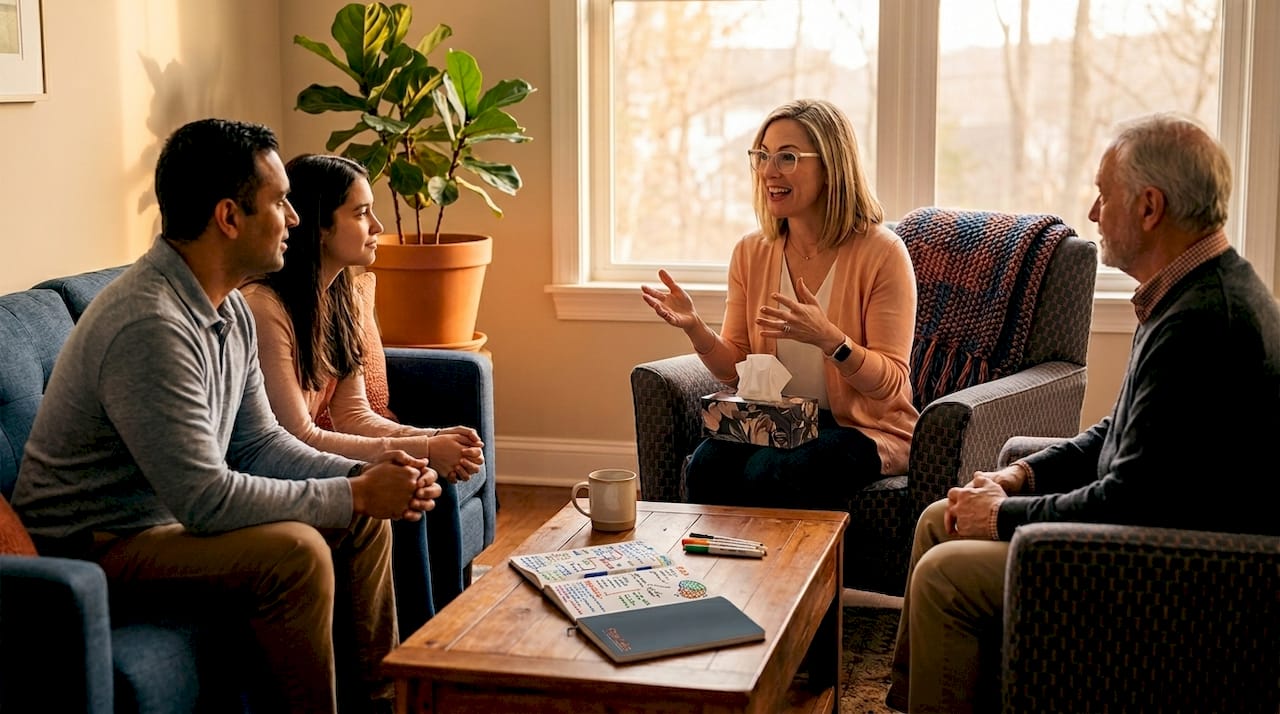
UDNF runs active peer support spaces online, including Facebook groups where families share experiences, resources, and encouragement. These communities do several things at once. They reduce social isolation. They often surface diagnostic leads, since another family may have encountered a similar presentation. They also provide practical tips about which specialists, programs, or hospitals have the most experience with complex undiagnosed cases.
Benefits of joining a patient community include:
- Emotional validation from people with direct experience
- Crowdsourced knowledge about diagnostic pathways and programs
- Referrals to specialists who take undiagnosed cases seriously
- Practical advice on navigating insurance, disability, and care coordination
- A network that remains available to you between medical appointments
Pro Tip: Search condition-specific and symptom-specific groups, not just general rare disease communities. A group organized around neurological symptoms or metabolic disorders may be more targeted and useful than a broad rare disease forum.
Programs that combine community support, patient navigation, and structured interventions address the full range of challenges undiagnosed patients face, in a way that any single resource cannot.
3. Pursue structured mental health support
Here is a fact that should change how we talk about undiagnosed conditions. Only about 30% of patients with rare or undiagnosed diseases access professional mental health services, despite extremely high rates of anxiety, depression, and trauma within this population. The barriers are real. Many therapists have no experience with medical complexity. Costs are high. And there is still significant stigma around seeking help when your primary struggle is physical.
But the psychological toll of an undiagnosed condition is not a side issue. It is central to your ability to function, advocate, and sustain a long diagnostic journey. Psychological support embedded in care pathways for rare diseases improves coping, resilience, and overall quality of life in measurable ways.
When looking for mental health support, consider these options:
- Therapists who specialize in chronic illness or medical trauma
- Social workers connected to rare disease centers or academic hospitals
- Telehealth platforms, which expand access significantly in rural or underserved areas
- Hospital-based psychologists who work within rare disease or genetics departments
UDNF's Undiagnosed Exchange is one of the most specific resources available. It is an 8-session psychoeducational program led by trained mental health professionals, designed specifically for the cognitive and emotional challenges of diagnostic uncertainty. This differs meaningfully from informal peer support. It is structured, clinically grounded, and addresses the specific mental patterns that emerge during prolonged uncertainty.
"Psychological support is not optional for patients living with rare and undiagnosed conditions. It must be embedded through care pathways from the point of diagnosis onward." — EURORDIS Report on Rare Disease Psychological Support
If you encounter a therapist who dismisses the relevance of your physical condition to your mental health, find a different one. You deserve a provider who understands the full picture.
4. Engage with specialized diagnostic programs
Standard healthcare was not designed for the complexity of undiagnosed conditions. That is not a criticism of individual doctors. It is a structural reality. When you have exhausted local options, specialized research programs offer a different level of diagnostic capability.
The Undiagnosed Diseases Network is a national NIH-funded program that coordinates physicians and researchers across multiple sites to pursue diagnoses using tools like whole genome sequencing, specialized imaging, and multidisciplinary case reviews. Patient navigators support the application process and help families prepare submissions that meet the program's standards.
Here are the key programs and what they offer:
- NIH Undiagnosed Diseases Network (UDN): Advanced diagnostics, research participation, and access to specialists unavailable in standard care.
- Undiagnosed Diseases Program at individual academic centers: Many major university hospitals run their own programs with similar capabilities.
- Clinical trials: Participation can provide access to cutting-edge testing and sometimes experimental treatments.
- International rare disease networks: Programs in Europe and beyond accept cases and sometimes identify conditions not yet recognized in the US.
| Program | What it offers | Who to contact |
|---|---|---|
| NIH Undiagnosed Diseases Network | Whole genome sequencing, multidisciplinary review | udnf.org/undiagnosed-diseases-network-udn |
| Academic medical center programs | Advanced testing, specialist access | Your geneticist or referring physician |
| Patient advocacy organizations | Funding, navigation, community | Condition-specific foundations |
| Clinical trials registries | Research access, experimental options | ClinicalTrials.gov |
Managing your expectations here is part of honest support. Diagnostic timelines in these programs are often still measured in months. One well-documented case at Cleveland Clinic showed a diagnosis reached four weeks after targeted genetic testing, but this followed 18 years of prior investigation. The programs work. They do not always work fast.
Understanding the genetic diagnosis process helps families prepare realistic expectations and engage more effectively with these programs from the start.
5. Build a care coordination system with your medical team
Seeing multiple specialists without a central coordinator is one of the most exhausting aspects of helping patients without a diagnosis. Information gets siloed. Each doctor treats their piece of the puzzle without seeing the whole. Families end up doing the translation work themselves, often without medical training.
Structured communication plans help families coordinate complex care effectively. Here are practical ways to build coordination into your process:
- Designate one primary physician, ideally a geneticist or internist, as the central coordinator who receives notes from all specialists
- Send a brief summary email after each specialist visit to your care coordinator so the record stays current
- Request that specialists copy each other on significant findings rather than routing everything through you
- Bring a written one-page case summary to every new appointment so providers can get up to speed in two minutes instead of twenty
- Ask explicitly: "Who else should know about this result?" at every appointment
The step-by-step guide to rare disease treatments at Hopeatrarelabs covers how to move from diagnostic work into treatment exploration once a potential direction emerges.
6. Prioritize self-care as a strategic, not optional, practice
Families who sustain a long diagnostic journey without burning out share one characteristic: they treat their own wellness as part of the strategy, not a luxury they will get to later. A caregiver who collapses from exhaustion or a patient who stops advocating because they are too depleted cannot navigate the system effectively.
Practical self-care for undiagnosed patients and their families includes:
- Setting a consistent sleep schedule, even when anxiety makes this difficult
- Building at least two non-medical activities per week that provide genuine enjoyment or rest
- Limiting the number of hours per day spent on diagnostic research, since excessive searching often raises anxiety without producing useful leads
- Connecting with other caregivers through caregiver support groups that understand the unique pressures of medical complexity
- Practicing acceptance of current uncertainty as a daily mental discipline, not a one-time decision
Long diagnostic timelines require families to maintain parallel strategies, meaning ongoing supportive care and wellness practices must run alongside the diagnostic work, not after it. This is not giving up. It is how you stay in the fight.
My honest perspective after watching families navigate this
I have seen firsthand what separates families who sustain the diagnostic journey from those who fracture under its weight. It almost never comes down to the severity of the condition. It comes down to whether they built support systems around themselves, not just around the patient.
What I have learned is that most families underinvest in two areas. The first is mental health. They treat it as something to address after the diagnosis, when in reality the emotional processing needs to happen all along. The second is organization. Families who walk into specialist appointments with a chaotic pile of records get worse care than families who walk in with a clean, navigable file. That is a painful truth, but acting on it is within your control right now.
My take on the mental health gap is blunt. Underutilization of mental health services among rare disease patients is not primarily a personal failing. It reflects how poorly the healthcare system has integrated psychological support into medical care. You should not have to fight for it. But right now, you might have to, and it is worth fighting for.
I am also realistic about diagnostic timelines. Progress is real. Whole genome sequencing, patient navigation programs, and research networks have genuinely changed outcomes. But the journey still takes time. The families I have seen thrive are the ones who found ways to live well during the wait, not just survive it.
Become the most informed, best-organized advocate in the room. Not because the system requires it of you, but because it works.
— John
How Hopeatrarelabs supports undiagnosed patients and families
If you are in the middle of this journey, Hopeatrarelabs was built with you in mind. The platform exists specifically to close the gap between what standard healthcare offers and what patients with ultra-rare and undiagnosed genetic conditions actually need.
The RareLabs Knowledge base gives patients and families access to research findings, treatment options, and disease modeling information that is otherwise scattered across scientific literature and inaccessible without specialist training. For families seeking more personalized support, the RareLabs treatment search platform helps identify potential therapies by screening FDA-approved drugs and experimental options against patient-specific disease models. These tools are designed to work alongside the support strategies in this article, not replace them. Think of them as the scientific layer beneath the navigational and emotional work you are already doing.
FAQ
What are the most important ways to support undiagnosed patients?
The most effective support strategies combine organized medical documentation, peer community connection, professional mental health care, and engagement with specialized diagnostic programs like the NIH Undiagnosed Diseases Network. No single strategy is sufficient on its own.
How can families help patients without a diagnosis stay mentally healthy?
Accessing a therapist familiar with chronic illness, joining structured psychoeducational programs like UDNF's Undiagnosed Exchange, and limiting obsessive diagnostic research all help reduce anxiety and sustain emotional resilience over a long journey.
What resources exist specifically for undiagnosed conditions?
The UDNF offers patient navigation, peer community spaces, and the Undiagnosed Exchange program. The NIH Undiagnosed Diseases Network provides advanced diagnostic tools. Hopeatrarelabs offers a rare disease knowledge base for treatment research.
How long does it typically take to get a diagnosis for a rare condition?
Diagnostic delays for ultra-rare conditions average over 10 years, though advanced tools like whole genome sequencing are shortening timelines. One documented case reached diagnosis four weeks after genetic testing, following 18 years of prior evaluation.
Should families pursue clinical trials while still undiagnosed?
Yes, in many cases. Clinical trials and research programs can provide access to advanced diagnostic testing and sometimes experimental treatments, and participation supports the broader scientific effort to understand rare conditions.