

The rare disease diagnostic journey is one of the most exhausting experiences a family can face. You visit specialist after specialist, collect test after test, and still leave appointments without a name for what your child or loved one is fighting. The diagnostic odyssey averages 4-8 years, and for many families dealing with ultra-rare or undiagnosed genetic conditions, it stretches even longer. But the landscape is changing fast. Genomic tools, biopharma-sponsored programs, and AI-assisted diagnostics are reshaping what is possible. This guide walks you through the full process, from recognizing you need a new approach to building a real care plan.
Table of Contents
- Understanding the diagnostic odyssey
- Preparing for an effective diagnosis
- Choosing the right testing and tools
- Next steps after a diagnosis: Verification and access to care
- Why speed and strategy matter more than ever in rare disease diagnosis
- Get expert help connecting to rare disease diagnosis and care
- Frequently asked questions
Key Takeaways
| Point | Details |
|---|---|
| Diagnostic odyssey is lengthy | Many families spend years seeking answers, but methodical steps can help shorten the journey. |
| Genomic testing improves odds | WGS and trio sequencing offer much higher chances of a rare disease diagnosis than older methods. |
| Preparation is critical | Gathering records, histories, and exploring sponsored testing can fast-track the diagnostic process. |
| Few approved treatments, but a diagnosis opens doors | Even without a cure, an accurate diagnosis connects families with trials and emerging therapies. |
Understanding the diagnostic odyssey
Most families enter the rare disease world the same way: a symptom appears, a pediatrician refers to a specialist, and the search begins. What nobody warns you about is how circular that search can become. Patients often cycle through neurologists, cardiologists, metabolic specialists, and geneticists, sometimes for years, before anyone looks at the bigger picture.
The core problem is that rare diseases are, by definition, uncommon. With over 10,000 recognized rare diseases, no single specialist can know them all. Many conditions mimic more common diagnoses, leading to misdiagnosis that delays the real answer. Some patients receive multiple incorrect diagnoses before reaching the right one. The average diagnostic timeline of 4-8 years is not an outlier. It is the norm.
Several patterns show up repeatedly in the diagnostic odyssey:
- Redundant testing: The same blood panels, MRIs, or metabolic workups are repeated across different hospital systems because records are not transferred or reviewed.
- Siloed specialists: Each specialist looks only at their organ system, missing patterns that span multiple body systems.
- Symptom masking: Medications prescribed for symptoms (seizure meds, pain management, psychiatric drugs) can mask underlying signs that would otherwise point toward a diagnosis.
- Insufficient genetic referral: Primary care providers and even some specialists are not always aware of when to order genetic testing, particularly whole genome sequencing.
"The longer a patient goes without a diagnosis, the more likely they are to accumulate organ damage, disability, or missed windows for early intervention."
A case may be heading into ultra-rare or genomically complex territory when standard metabolic panels, MRI findings, and common genetic panels keep returning normal results. Other red flags include multi-system involvement (neurological plus cardiac plus skeletal, for example), early childhood onset, family history of similar unexplained illness, or consanguinity in the family background.
| Sign | What it suggests |
|---|---|
| Multiple systems affected | Likely genetic or mitochondrial cause |
| Normal standard workup | Time to escalate to WES or WGS |
| Family history of similar symptoms | Inherited condition, trio testing valuable |
| Rapid neurological decline | Urgent genomic workup needed |
If any of these patterns sound familiar, you are likely in the territory where advanced genomic diagnostics and deep rare disease research become essential tools rather than optional ones.
Preparing for an effective diagnosis
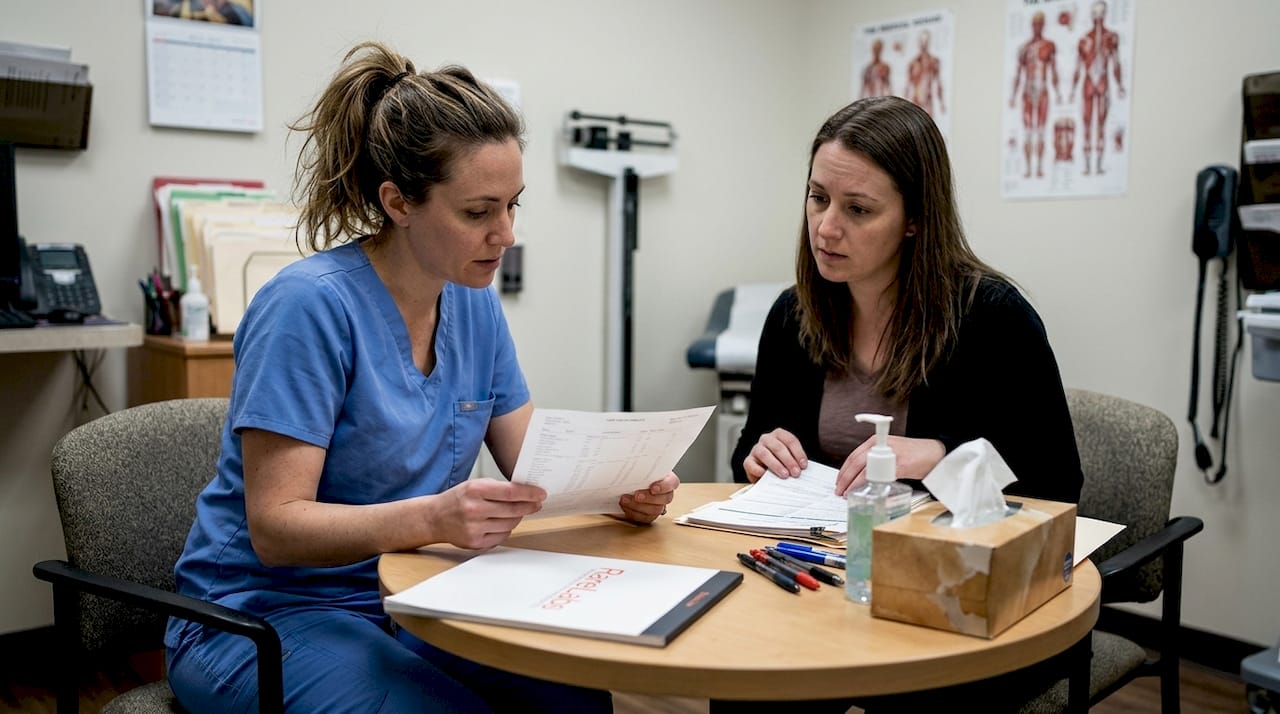
Before walking into your next specialist appointment, there is real work you can do that directly affects how productive that appointment will be. Preparation is not just about being organized. It is about giving clinicians the raw material they need to think more clearly and act more efficiently on your behalf.
Here is what you need to assemble before your next appointment:
- Complete medical records from every provider you have seen, including labs, imaging reports, surgical notes, and neurology or cardiology summaries. Request these in writing and digitize them.
- A detailed symptom timeline, noting when each symptom appeared, how it has changed, and what makes it better or worse. Clinicians use timelines to identify disease progression patterns.
- A three-generation family history, including relatives with unexplained neurological issues, early deaths, developmental delays, or miscarriages. Genetic counselors can extract significant diagnostic signal from this information.
- A list of all prior genetic tests, including test names, lab used, date performed, and results. Many families have had targeted gene panels but have never had broader sequencing.
- Insurance and prior authorization records, so your team knows which tests have already been approved or denied.
One of the most powerful moves you can make right now is to ask your care team directly about sponsored or free testing programs. Biopharma partnerships are expanding access to diagnostic tools that were previously out of reach for many families. For example, GeneDx and Zevra Therapeutics launched a sponsored program offering free ExomeDx testing to patients with suspected Niemann-Pick disease type C (NPC). Similar models are emerging across multiple disease areas as biopharma companies recognize that earlier, faster diagnosis benefits both patients and their development pipelines.
| Preparation action | Why it matters |
|---|---|
| Complete records assembly | Prevents redundant testing |
| Three-generation pedigree | Identifies inheritance patterns |
| Prior test documentation | Avoids repeating inconclusive work |
| Researching sponsored programs | Removes cost barriers to advanced testing |
Understanding where precision blood testing advances fit into your care plan is also worthwhile, especially for conditions where biomarkers in blood may offer early clues before or alongside genetic testing.
Pro Tip: Before your next genetics appointment, ask for a formal genetic counseling session separately from the physician appointment. Genetic counselors are specifically trained to take family histories, explain testing options, and help you navigate insurance prior authorization. They often have direct relationships with sponsored testing programs and can identify options your physician may not know about.
Choosing the right testing and tools
Not all genetic tests are created equal, and choosing the right one significantly affects whether you get an answer. This is one of the most consequential decisions in the diagnostic process, and many families make it without fully understanding the differences between available options.
The main genomic testing options are:
- SNP arrays (chromosomal microarray): Good for detecting large chromosomal deletions or duplications. Often a first-line test. Misses single-gene changes.
- Whole exome sequencing (WES): Sequences the protein-coding regions of the genome. Diagnostic yield approximately 33.7% in 825 patients studied. Misses intronic variants and some structural changes.
- Whole genome sequencing (WGS): Sequences the entire genome. Diagnostic yield ranges from 46 to 72% in studies, and it detects copy number variants, intronic mutations, and structural rearrangements that WES misses entirely.
- Trio sequencing: WES or WGS performed on the patient and both parents simultaneously. Trio testing doubles diagnostic yield compared to singleton sequencing because it makes it far easier to identify de novo (new) mutations.
| Test | What it covers | Typical diagnostic yield | Best used when |
|---|---|---|---|
| SNP array | Large chromosomal changes | Variable | First-line, structural concerns |
| WES | Protein-coding genes | ~33.7% | Standard rare disease workup |
| WGS | Entire genome | 46-72% | Ultra-rare, WES negative |
| Trio sequencing | Patient plus both parents | Up to 2x WES/WGS | De novo mutation suspected |
For families who have already had a negative WES result, WGS is the logical next step. The difference in diagnostic yield is substantial enough that advocating for WGS with your insurer or through a research program is absolutely worth the effort.
On the AI front, there is real excitement but also important nuance. Tools like Exomiser, which score genetic variants against clinical phenotype data, have been part of clinical workflows for several years. LLMs (large language models) are promising but trail Exomiser, with recall at rank 1 scores of 23 to 57% for LLMs versus 35 to 55% for Exomiser in recent benchmarking studies. That does not mean AI is useless. It means it is most powerful as a complement to established tools, not a replacement.
The role of AI in diagnostics continues to grow, particularly in phenotype matching and literature mining, where it can surface case reports of similar patients that a busy clinician might never have time to find. When discussing testing with your care team, ask specifically whether an AI-assisted phenotype matching tool like Exomiser will be used to analyze variants before results are finalized.
When speaking with clinicians about testing, come prepared with specific questions: Has trio sequencing been considered? If WES was done, was RNA sequencing used to validate variants of uncertain significance? Is the lab used accredited and experienced with ultra-rare conditions?
Understanding rare disease diagnostics at this level of detail helps you have more productive conversations with your care team and ensures no viable testing option is left on the table.
Next steps after a diagnosis: Verification and access to care
Receiving a diagnosis after years of searching is a profound moment. But it is not the end of the process. It is, in many ways, the beginning of a new and more focused chapter.
Steps to take immediately after receiving a diagnosis:
- Request a confirmation test from a second laboratory. Genetic variants, especially novel ones, should be validated by an independent accredited lab. This is standard practice for variants of uncertain significance (VUS) and important even for likely pathogenic findings.
- Seek a second clinical opinion from a center that specializes in rare or undiagnosed diseases, such as a NIH Undiagnosed Diseases Program site or a major academic rare disease center.
- Search ClinicalTrials.gov and patient registries for your specific diagnosis. Approximately 95% of rare diseases lack approved treatments, but a confirmed diagnosis is the key that unlocks access to natural history studies, expanded access programs, and early-phase clinical trials.
- Connect with the relevant patient advocacy foundation. These organizations often know about trials, compassionate use cases, and emerging research that has not yet been published.
- Build a coordinated care management plan with all treating specialists aligned on the same diagnostic picture. Ask for a care coordinator or patient navigator if your hospital system offers one.
"A confirmed diagnosis, even for a condition with no approved therapy, is a clinically actionable outcome. It opens doors to trials, disease management protocols, and access to specialists who have seen the condition before."
Personalized health protocols built around your specific genetic diagnosis can guide symptom management, nutrition, and monitoring plans even when no disease-modifying therapy exists yet.
Pro Tip: Join every available patient registry for your diagnosis as soon as it is confirmed. Registries are how researchers find patients for trials, and some conditions have so few known cases worldwide that being registered can directly result in being contacted about an emerging therapy or compassionate use program. Your data, shared safely and with your consent, is a contribution to the entire patient community.
The path from diagnosis to care is not automatic. It requires active engagement, strategic use of every resource available, and a willingness to find clinical trials and opportunities that are not always visible through standard care channels.
Why speed and strategy matter more than ever in rare disease diagnosis
The conventional model of rare disease diagnosis assumes that exhaustive, sequential specialist visits are simply the price you pay. The reality is that this model is not just slow. It is often actively harmful, because every year without a diagnosis is a year without access to appropriate management, trials, or emerging therapies.
The shift happening right now is significant. Genomics-first approaches, where WGS and trio sequencing are ordered early rather than after years of negative workups, are demonstrating that prioritizing early genomic testing dramatically shortens the odyssey. Biopharma-sponsored programs are removing the cost barrier that previously made advanced testing inaccessible to many families. The diagnostic infrastructure is better than it has ever been.
What this means practically is that families and clinicians should resist the instinct to "work up to" genomic testing. If standard panels have been negative and symptoms are multi-systemic, persistent, and unexplained, pushing for WGS with trio sequencing early is not impatient. It is medically sound strategy.
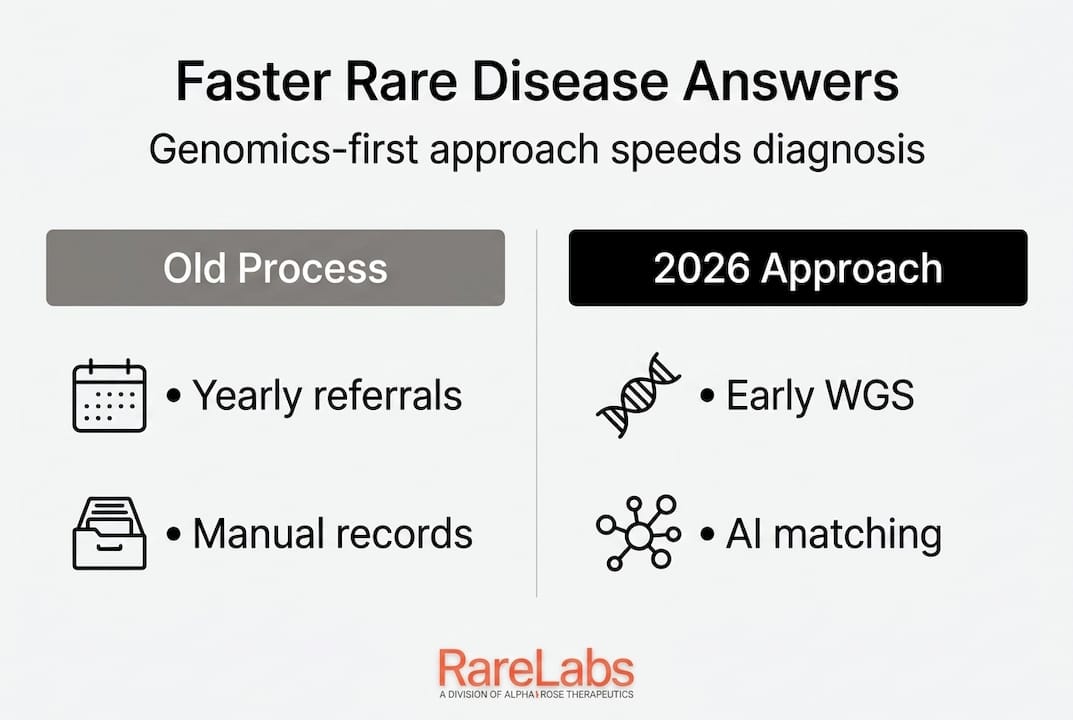
It also means connecting to platforms that can translate a diagnosis into a treatment search immediately. You can search rare disease treatments based on the specific genetic variant identified, rather than waiting for traditional clinical pathways to catch up. The families who move fastest through the diagnostic and therapeutic landscape are the ones who treat this as a coordinated, strategic effort, not a passive waiting game.
Get expert help connecting to rare disease diagnosis and care
Navigating the path from diagnostic uncertainty to a real care plan is exactly what RareLabs was built to support.
RareLabs works with patients, families, and physicians to bridge the gap between diagnosis and actionable therapy. Their platform lets you explore RareLabs Knowledge, a curated database of rare disease research, treatment options, sponsored programs, and emerging therapies. For families who have a confirmed diagnosis and are searching for next steps, or for those still seeking answers, personalized rare disease care through RareLabs connects you to scientifically rigorous, patient-specific strategies designed to find real options faster.
Frequently asked questions
How long does rare disease diagnosis usually take?
The rare disease diagnostic journey often takes 4-8 years, though newer genomic tools including WGS and trio sequencing are actively shortening this timeline for many families.
What is the difference between WES and WGS for diagnosing rare diseases?
WGS analyzes the entire genome and detects more variant types than WES, with diagnostic yield up to 72% compared to approximately 33.7% for WES, making it the stronger choice for ultra-rare conditions.
Are there free or sponsored genetic testing options for rare disease patients?
Yes, several biopharma partnerships offer sponsored or free testing, including free ExomeDx testing for patients with suspected Niemann-Pick disease type C through GeneDx and Zevra Therapeutics.
What should patients do if their results are still inconclusive after genetic testing?
If genetic testing returns inconclusive results, consider escalating to trio sequencing, which doubles diagnostic yield, and request expert review from a center with specific rare disease expertise.
Can artificial intelligence help in diagnosing rare and ultra-rare diseases?
AI tools are improving rapidly but LLMs currently trail Exomiser in diagnostic recall, making AI most valuable as a complement to established phenotype-matching tools rather than a standalone solution.