
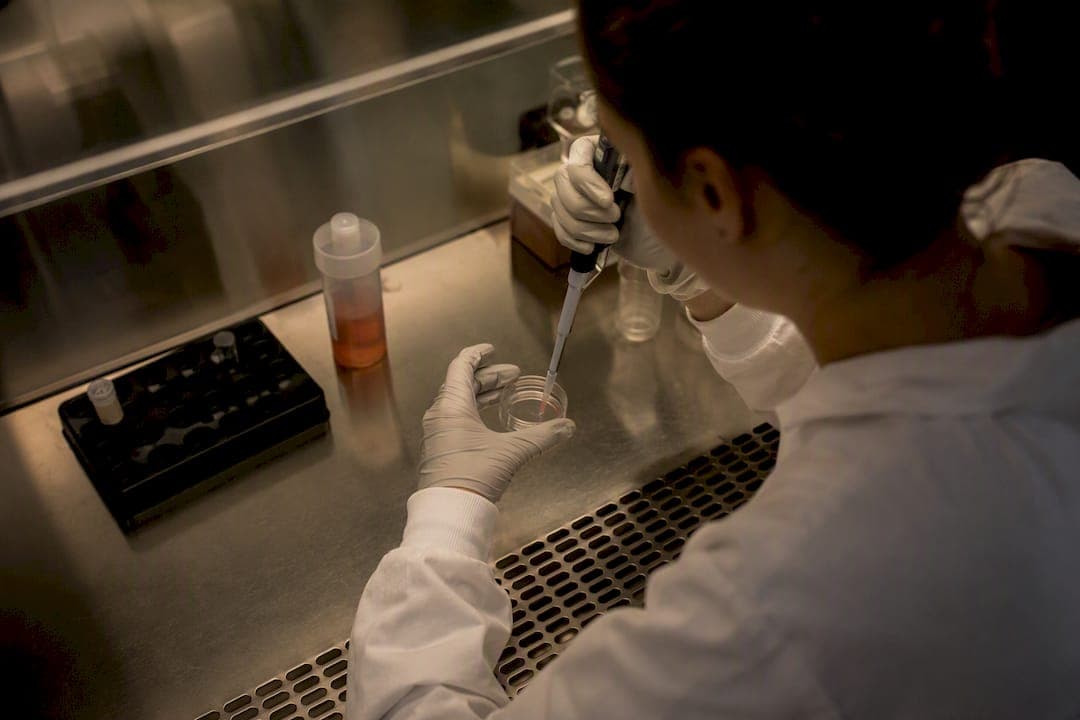
Patient-derived cell models are lab-grown, patient-specific cellular systems (iPSC lines, CRISPR isogenic controls, organoids) used to screen and prioritize therapies for an individual patient. They come from a small tissue sample, most often blood, and get reprogrammed into stem cells that can become almost any cell type the disease affects: neurons, heart muscle, liver, retina. From there, researchers run parallel screens against repurposed drugs, custom antisense oligonucleotides (ASOs), and gene-therapy strategies to find candidates worth pursuing further.
What these models can do right now:
- Test thousands of FDA-approved drugs against a patient's own cells to find repurposing candidates
- Evaluate whether a custom ASO corrects a specific genetic defect before it reaches a patient
- Assess gene-therapy feasibility using cells that carry the patient's exact mutation
One caution matters more than any other: a strong signal in a dish is preclinical evidence, not proof a treatment will work in the body. It's a starting point for the next conversation with a physician, not a finish line.
TL;DR:
- Using at least two independent iPSC lines enhances reliability by differentiating true signals from technical noise.
- Reprogramming from blood cells takes approximately two to three weeks, significantly faster than fibroblast-based methods.
- A positive in vitro hit requires validation across multiple doses and methods, and it remains preclinical evidence, not an approved treatment.
- Consent should be carefully reviewed to understand data sharing, future research use, and deposit rights before starting a program.
- Whole process from sample collection to screening results typically spans weeks for reprogramming and months for full validation.
Table of Contents
- How Patient Consent Shapes Cell Models Used in Rare Disease Research
- Understanding the Path From Sample to Screening Results
- How to Read the Data: What Counts as a Real Signal
- What Patients Should Know About Data Sharing and Consent
- Questions to Ask Before Starting a Personalized Screening Program
- What RareLabs Delivers for Ultra-Rare Disease Programs
- Editorial Take: Why Consent Deserves as Much Rigor as the Science
- Start a Personalized Screening Program With RareLabs
- Key Takeaways
- Sources
How Patient Consent Shapes Cell Models Used in Rare Disease Research
Patient-derived models solve a translation problem that has plagued rare-disease research for decades: mouse models and immortalized cell lines often don't reflect how a specific patient's genetic variant behaves. Researchers now describe this approach as building a "clinical trial in a dish," pairing iPSC-derived organoids with AI-assisted analysis to predict how a drug will behave before it's ever given to a patient, according to a review in Annual Reviews.
This matters most when there's no approved therapy and no active clinical trial to join. A few reasons this approach earns its place in rare-disease work:
- iPSC models have already been used to test mitochondrial-targeting drugs for macular degeneration, revealing meaningful patient-to-patient variability in drug response
- Organoids and functional assays capture disease biology that a flat dish of generic cells simply can't
- FDA policy changes under the Modernization Act 2.0 increasingly recognize non-animal, cell-based evidence as part of a legitimate preclinical case
Understanding the Path From Sample to Screening Results
Here's the operational sequence a program actually follows, from the day a sample ships to the day you get results.
- Sample collection. Peripheral blood mononuclear cells (PBMCs) are the preferred starting material because collection is minimally invasive and PBMCs reprogram faster than skin biopsies. Fibroblasts (from a skin punch) or urine-derived cells are used when blood isn't feasible or when a specific cell type reprograms more reliably from that source.
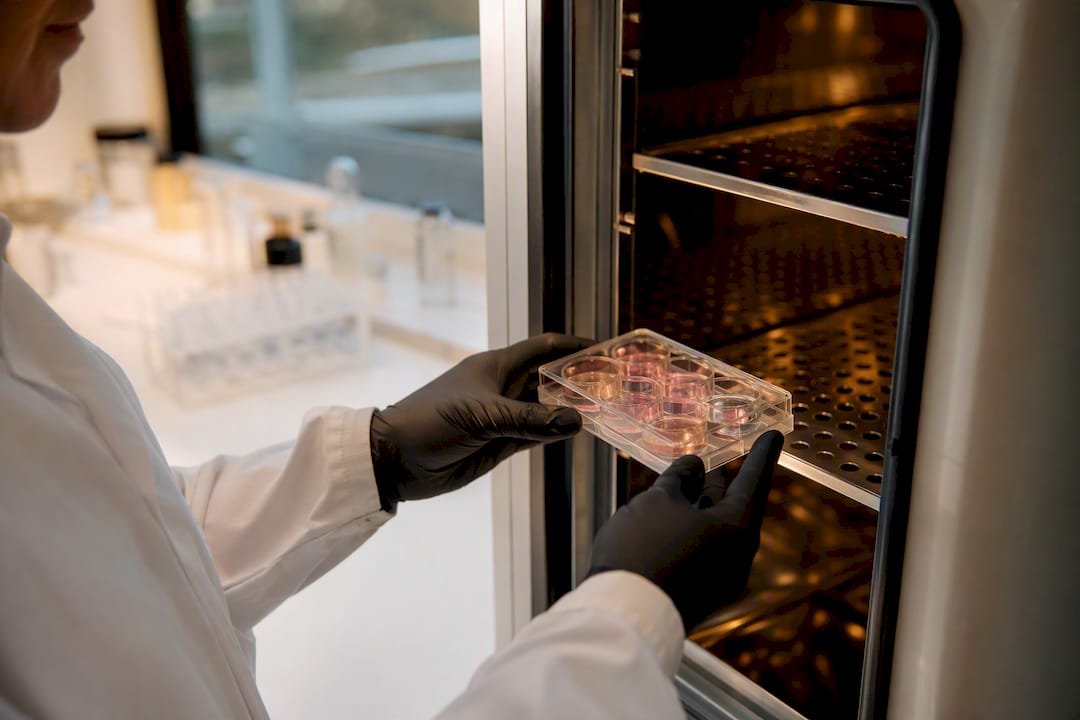
- Reprogramming into iPSCs. Optimized protocols using cryopreserved PBMCs can now generate iPSC lines in roughly two to three weeks, a dramatic improvement over older fibroblast-based methods that took months. Programs typically generate at least two independent iPSC lines per patient, since replicate lines help separate real biological signal from technical noise inherent to any reprogramming process.
- Differentiation into disease-relevant cells. Depending on the disease, iPSCs get pushed toward neurons, cardiomyocytes, hepatocytes, retinal cells, or full organoids. Labs then run high-content imaging, cell painting assays, and functional readouts (electrical activity, metabolic function, protein expression) to characterize how the patient's cells actually behave.
- Parallel screening. This is where the search widens: thousands of FDA-approved drugs get screened simultaneously for repurposing potential, alongside custom ASOs designed for the patient's specific mutation and, where relevant, gene-therapy feasibility testing.
- Hit triage. Candidates that show a consistent effect across replicates and doses move forward; everything else gets ruled out.
Pro Tip: Ask any provider whether they run replicate iPSC lines and independent differentiation batches for your case. A single line, tested once, tells you far less than two lines tested twice.
Realistic timeline: two to three weeks to establish iPSC lines, then several weeks to a few months for differentiation, characterization, and a first round of screening. Full validation of a promising hit can take longer.
How to Read the Data: What Counts as a Real Signal
A "hit" means a compound or ASO produced a consistent, measurable effect on the patient's cells across multiple tests, not a one-time blip in a single well. Distinguishing a real signal from noise requires:
- Testing across replicate iPSC lines, not just one
- Running dose-response curves, not a single concentration
- Confirming the effect with a second, orthogonal assay method
- Checking for toxicity at effective doses
A meaningful share of promising in vitro findings never translate to clinical benefit, which is exactly why cell maturity and assay variability remain open challenges in iPSC-based disease modeling. Cells differentiated in a dish don't always reach the same maturity as tissue in an adult body, and that gap matters most for adult-onset conditions. Preclinical evidence, however strong, is not an approved treatment. Moving a hit toward a patient typically runs through a physician-led compassionate-use request or an n-of-1 trial design, never straight from bench to bedside.
What Patients Should Know About Data Sharing and Consent
Consent for a personalized cell-modeling program is not one document, it's a set of distinct decisions. Understanding the difference protects you and your family long after the initial screen is done.
- Program-specific consent vs. broad research consent. A one-off consent for your own treatment screen is different from consent to let de-identified data or cell lines be used in future, unrelated research.
- Read for these specific clauses. Commercial use rights, de-identification standards, whether your cells or data can be used in future studies you haven't agreed to yet, and your right to withdraw and have samples destroyed.
- Ask about technical protections. Encryption standards, which repository (if any) will hold your data, and who has access controls to your genomic information.
- Request documentation of oversight. Institutional Review Board (IRB) approval, a formal data-use agreement, and, where cells move between institutions, a material transfer agreement (MTA).
Public iPSC biobanks can meaningfully accelerate rare-disease research by making disease-specific lines available to other scientists, but that only happens if you've explicitly agreed to deposit your lines. Nothing should move into a shared repository without that separate, clearly worded consent.
Questions to Ask Before Starting a Personalized Screening Program
Before committing to any program, get clarity on deliverables, timeline, and terms in writing.
- What exactly will you receive: an interpreted report, raw assay data, metadata, and suggested next steps?
- How many replicate lines and differentiation batches will be run for your case?
- What's the validation plan for any hit, and who owns intellectual property on custom ASOs or gene-therapy work?
- What's the full cost structure, including any downstream costs if a candidate moves toward compassionate use?
Look for peer-reviewed publications, protocols that other labs can reproduce, and facilities that follow documented validation checklists rather than proprietary black-box methods. If reagent-grade materials like peptides factor into a screen, ask how those inputs are sourced and validated, since peptide use in model systems varies widely in quality control across suppliers.
Pro Tip: If a physician is involved in your case, loop them in before sample collection starts. They can flag which tissue source and shipping logistics work best for your specific diagnosis.
What RareLabs Delivers for Ultra-Rare Disease Programs
RareLabs builds personalized disease models from a patient's own cells using iPSC reprogramming and CRISPR-engineered isogenic controls, then runs parallel screens across thousands of FDA-approved drugs, custom ASOs, and gene-therapy feasibility questions. The goal is a rapid, transparent, and scientifically rigorous path to candidates worth discussing with your physician.
What that looks like in practice:
- Reprogramming timelines aligned with modern PBMC-based protocols, typically weeks rather than months
- Replicate iPSC lines and CRISPR-corrected isogenic controls built into every program, not offered as an add-on
- Interpreted reports plus raw data, so your physician can independently review the evidence
- A step-by-step research process that families and foundations can follow from sample collection through result translation
| Program Element | What It Means for You |
|---|---|
| Replicate lines | Reduces the chance a false signal gets mistaken for a real drug candidate. |
| Parallel screening | Tests repurposed drugs, ASOs, and gene therapy feasibility at the same time. |
| Transparent reporting | Gives your physician the raw data needed for independent review. |
Editorial Take: Why Consent Deserves as Much Rigor as the Science
The conventional advice on this topic treats consent as paperwork to sign before the "real" science begins. That's backward. The consent conversation is where a family decides how far their genetic data travels, who profits from it, and whether their cells outlive the original question that created them. Get that wrong, and no amount of scientific rigor downstream fixes it.
What's overrated: the assumption that faster reprogramming timelines are the main bottleneck. Two to three weeks to an iPSC line sounds impressive, but it means little if the resulting hit can't be validated across replicate lines or if consent terms block the follow-up work needed to act on a signal.
What I'd prioritize first, if I were a family starting this process: read the withdrawal and data-sharing clauses before you read anything about the science. Ask whether your cells can be deposited in a public repository, and whether you can say no to that without losing access to your own treatment screen. A program that can't answer that clearly in plain language isn't ready for your case.
— John
Start a Personalized Screening Program With RareLabs
If you've made it this far, you already understand why generic cell lines and animal models fall short for ultra-rare disease. Hopeatrarelabs runs the alternative: personalized iPSC-based modeling built around your specific mutation, with replicate lines, CRISPR isogenic controls, and parallel drug, ASO, and gene-therapy screening handled as one coordinated program instead of separate, disconnected vendors.
What sets this apart for families and physicians coming from this article is straightforward: you get one team managing sample collection, reprogramming, screening, and result interpretation, with consent terms and data handling explained before a single cell is touched. Foundations and biopharma partners get the same transparency, with reports built for independent physician review rather than a black-box summary. Visit the RareLabs knowledge center to see program details and start the conversation about what a personalized screen could look like for your case.
Key Takeaways
Personalized cell models turn a patient's own cells into a screening platform for repurposed drugs, ASOs, and gene therapy, but consent terms determine what happens to that data afterward.
| Point | Details |
|---|---|
| Models are a starting point | A strong hit in a dish is preclinical evidence, not an approved treatment. |
| Replicate lines matter | At least two iPSC lines per patient help separate real signal from technical noise. |
| Timelines are measured in weeks | Reprogramming can take two to three weeks; full screening takes weeks to months. |
| Consent has layers | Program consent differs from broad research or biobank consent, read both carefully. |
| RareLabs runs it as one program | Sample collection, reprogramming, and parallel screening are coordinated with transparent reporting. |
Sources
- Next-Gen Therapeutics: Pioneering Drug Discovery with iPSCs, Genomics, AI, and Clinical Trials in a Dish | Annual Reviews
- Studying rare diseases using induced pluripotent stem cell (iPSC)-based model systems | Frontiers
- Nature platform paper demonstrating rapid PBMC-to-iPSC pipelines and ASO validation
- A disease-specific iPS cell resource for studying rare and intractable diseases - PMC
This article is general information, not a substitute for advice from a qualified doctor. Consult a qualified healthcare professional about your own circumstances before acting on anything here.