

Genetic diseases are passed down through families according to a handful of well-defined inheritance patterns: autosomal dominant, autosomal recessive, X-linked recessive, X-linked dominant, mitochondrial, chromosomal, and multifactorial. Each pattern carries a different recurrence risk. In autosomal dominant conditions, roughly 50% of children of an affected parent will inherit the disease-causing variant. When both parents carry a recessive variant, each pregnancy carries a significant chance of an affected child and a carrier. X-linked patterns skew heavily toward males. One important caveat: carrying a pathogenic variant does not guarantee disease. Penetrance and variable expressivity mean that two people with the same mutation can have very different outcomes. The single most useful next step for any family with a known or suspected hereditary condition is to schedule a consultation with a certified genetic counselor, who can translate these patterns into a personalized risk estimate.
Table of Contents
- What DNA, genes, and chromosomes actually mean for inherited disease
- How each inheritance pattern determines your family's risk
- How clinicians estimate risk and what testing options are available
- Familiar conditions and how they are typically passed down
- When standard testing doesn't give you an answer
- How to talk to relatives and take the next practical steps
- Key Takeaways
- What the science of inheritance means for families still searching for answers
- Hopeatrarelabs: a path forward for families with unresolved genetic diagnoses
- Authoritative sources and where to find a genetic counselor
What DNA, genes, and chromosomes actually mean for inherited disease
Every cell in your body contains about 20,000 genes, each a stretch of DNA that carries instructions for building proteins. Genes sit on chromosomes, and humans carry 46 of them arranged in 23 pairs. One chromosome in each pair comes from your mother, one from your father. An allele is simply one version of a gene; a mutation or pathogenic variant is a change in the DNA sequence that disrupts normal function.
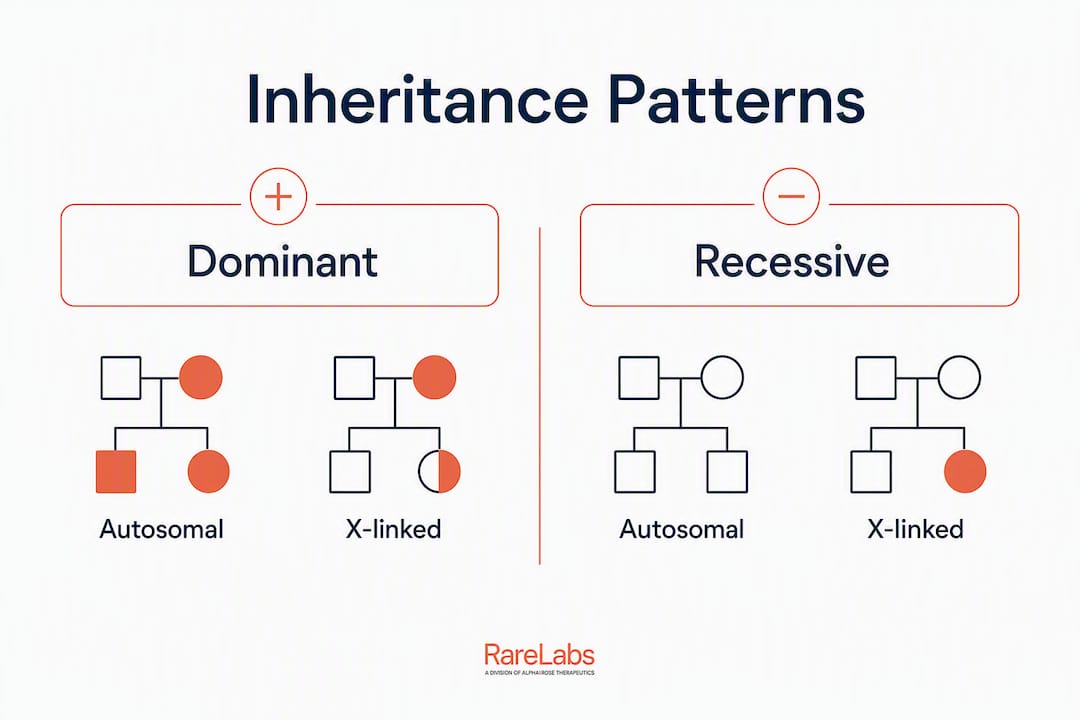
Most inherited diseases fall into one of three categories. Single-gene (Mendelian) disorders are caused by a mutation in one gene and follow predictable inheritance rules. Chromosomal disorders involve changes in the number or structure of whole chromosomes. Multifactorial conditions arise from a combination of multiple gene variants and environmental factors, making them harder to predict. Single-gene disorders, combined, occur in about 1 in 300 births and can appear anywhere from the newborn period to adulthood.
Sex chromosomes add a layer of complexity. Females carry two X chromosomes (XX); males carry one X and one Y (XY). Mitochondrial DNA is a separate, much smaller genome inherited almost entirely from the mother through the egg cell, not through chromosomes at all.
Pro Tip: Start a family health history document now. Record every first- and second-degree relative's diagnoses, the age symptoms began, any pregnancy losses, and causes of early death. Clinicians use this pedigree as their primary risk-assessment tool, and updating it regularly improves both risk detection and testing choices. A simple spreadsheet or the U.S. Surgeon General's "My Family Health Portrait" tool works well.
How each inheritance pattern determines your family's risk
Understanding the specific pattern behind a condition is what turns a vague worry into a concrete probability. Here is how each one works.
Autosomal dominant
One mutated copy of the gene is enough to cause disease. An affected parent carries one working copy and one pathogenic copy; each child has approximately an equal chance of inheriting the pathogenic copy. Huntington disease is the textbook example: a CAG repeat expansion in the HTT gene, fully penetrant in those who inherit it. Hereditary breast and ovarian cancer linked to BRCA1 or BRCA2 is also autosomal dominant, but with an important difference: penetrance is incomplete. Carrying a BRCA1 pathogenic variant raises lifetime breast cancer risk substantially, but not every carrier develops cancer. Variable expressivity adds another layer: two relatives with the same dominant variant may have very different symptom severity or age of onset.

Autosomal recessive
Both copies of the gene must be mutated for disease to appear. A carrier has one working copy and one pathogenic copy and is typically healthy. When two carriers have children, the 25% affected / 50% carrier probability applies to every pregnancy independently. Cystic fibrosis, caused by variants in the CFTR gene, is the most familiar example in the United States. Carrier frequency matters here: certain variants are more common in specific ethnic groups, which is why expanded carrier screening panels are now offered to all prospective parents regardless of ancestry.
X-linked recessive
Because males have only one X chromosome, a single pathogenic variant on that X causes disease with no second copy to compensate. Females with one affected X are usually carriers and may be mildly affected or entirely unaffected. A carrier mother passes the affected X to about half her sons (who will be affected) and about half her daughters (who will be carriers). An affected father passes his X to all daughters, making them all carriers, but none of his sons, who inherit his Y. Hemophilia A (F8 gene) and Duchenne muscular dystrophy (DMD gene) both follow this pattern.
X-linked dominant
Rarer than X-linked recessive. One mutated copy on the X is sufficient to cause disease in both males and females, though males are often more severely affected. Fragile X syndrome, the most common inherited cause of intellectual disability, is technically X-linked but has a more complex mechanism involving a trinucleotide repeat expansion.
Mitochondrial inheritance
Mitochondrial DNA is transmitted from the oocyte, so mitochondrial disorders pass exclusively through mothers. An affected mother passes the condition to all her children, but sons do not transmit it further. A complicating factor is heteroplasmy: cells contain many mitochondria, and the proportion carrying the pathogenic variant varies between tissues and between siblings. This is why two children of the same affected mother can have dramatically different symptoms. Leber hereditary optic neuropathy (LHON) is a well-known mitochondrial condition.

Chromosomal abnormalities
These involve gains, losses, or rearrangements of whole chromosomes rather than single-gene mutations. Down syndrome (trisomy 21) is the most common, occurring when a person has three copies of chromosome 21. Most cases arise from a random error in egg or sperm formation, so the recurrence risk for parents of a child with trisomy 21 is generally low but slightly above the population baseline, and it increases with maternal age. Chromosomal conditions are diagnosed by karyotype or chromosomal microarray, not standard gene panels.
Multifactorial inheritance
Conditions like coronary artery disease, type 2 diabetes, and most common birth defects do not follow a single-gene pattern. Multiple genetic variants combine with environmental triggers to produce disease. Polygenic risk scores can estimate relative risk, but they cannot predict whether any individual will develop the condition. Standard genetic panels are not designed for multifactorial conditions, and a negative result does not rule out elevated risk.
De novo mutations
A de novo mutation arises during sperm or egg formation, or in the earliest cell divisions after fertilization. Neither parent carries the variant, so family history is negative, yet the child has a genetic disease. Recurrence risk for future pregnancies is generally low, but not zero: a parent can carry the variant in a subset of their germ cells (gonadal mosaicism) without showing it in a blood test. When a child is diagnosed with a condition that appears de novo, parental testing with sensitive assays is worth discussing with a genetic counselor.
| Inheritance Pattern | Typical Recurrence Risk | Classic Example |
|---|---|---|
| Autosomal dominant | ~50% per child (one parent affected) | Huntington disease, BRCA1/2 cancer syndromes |
| Autosomal recessive | ~25% affected, ~50% carrier (both parents carriers) | Cystic fibrosis |
| X-linked recessive | ~50% of sons affected (carrier mother) | Hemophilia A, Duchenne muscular dystrophy |
| Mitochondrial | All children of affected mother at risk | Leber hereditary optic neuropathy |
| Chromosomal (trisomy) | Low but above population baseline | Down syndrome (trisomy 21) |
| De novo | Low for future pregnancies (mosaicism caveat) | Many cases of severe intellectual disability |
| Multifactorial | Elevated relative risk, not predictable | Coronary artery disease, type 2 diabetes |
Single-gene disorders collectively affect approximately 1 in 300 births in the United States — more common than most families realize, and spanning conditions that appear at every stage of life.
How clinicians estimate risk and what testing options are available
The clinical process starts with the pedigree. A clinician or genetic counselor draws a three-generation family tree, marks affected individuals, records ages at symptom onset, and looks for the pattern that best fits the inheritance mode. That pedigree drives every testing decision that follows.
What families should gather before a genetics appointment:
- Medical records and pathology reports for affected relatives
- Previous genetic test results (gene panels, chromosomal microarrays, whole-exome or genome sequencing reports)
- Documentation of pregnancy losses, including gestational age and any known cause
- Diagnoses and ages at onset for grandparents, parents, siblings, aunts, uncles, and first cousins
| Test Type | Purpose | Typical Timing | Key Limitation |
|---|---|---|---|
| Carrier screening | Identify carriers of recessive or X-linked variants | Preconception or early pregnancy | Does not detect all variants; residual risk remains |
| Diagnostic testing | Confirm a suspected diagnosis in an affected person | After clinical evaluation | Panel may not cover ultra-rare or novel variants |
| Prenatal testing (CVS/amniocentesis) | Detect chromosomal or single-gene disorders in a fetus | First or second trimester | Small procedural risk; limited to known or targeted variants |
| Predictive testing | Assess risk in an unaffected adult with family history | Before symptom onset | Penetrance is incomplete for many conditions |
| Whole-exome/genome sequencing | Broad search for causative variants | After standard panels are unrevealing | Variants of uncertain significance are common |
A certified genetic counselor is the right person to interpret these results, explain what a positive or negative finding actually means for the family, and guide informed consent. The National Society of Genetic Counselors (NSGC) maintains a clinic finder at nsgc.org where you can search by location and specialty.
Familiar conditions and how they are typically passed down
Connecting abstract patterns to real conditions helps families understand what they are actually dealing with.
- Cystic fibrosis: Autosomal recessive (CFTR gene). Both parents must be carriers. Carrier frequency in people of Northern European descent is roughly 1 in 25, making it one of the most common serious recessive disorders in the U.S.
- Huntington disease: Autosomal dominant (HTT gene). Fully penetrant; onset is typically in midlife (35–55 years), which means an affected parent may not yet know their diagnosis when children are born. Predictive testing is available but requires careful counseling.
- BRCA1/BRCA2-related hereditary breast and ovarian cancer: Autosomal dominant. Penetrance is incomplete and varies by specific variant. Testing is recommended when personal or family history meets established criteria; the CDC's Genomics and Your Health pages outline current guidance.
- Down syndrome (trisomy 21): Chromosomal. Most cases are not inherited in the traditional sense but arise from a random nondisjunction event. Prenatal screening and diagnostic testing are well established.
- Duchenne muscular dystrophy: X-linked recessive (DMD gene). Affects primarily males; onset in early childhood. The Muscular Dystrophy Association (MDA) provides condition-specific resources and clinic referrals.
- Hemophilia A: X-linked recessive (F8 gene). Carrier females may have mildly reduced clotting factor levels. Genetic testing of at-risk female relatives is clinically important before surgery or pregnancy.
- Leber hereditary optic neuropathy (LHON): Mitochondrial. Causes sudden central vision loss, typically in young adult males, though females can be affected. All children of an affected mother are at risk, but penetrance is incomplete and influenced by additional genetic and environmental factors.
For deeper condition-specific information, the NCBI Bookshelf genetics guide and MedlinePlus Genetic Conditions directory are the most reliable starting points.
When standard testing doesn't give you an answer
Standard gene panels are designed around known, well-characterized variants. They work well for common conditions, but they have real limits. Ultra-rare or novel pathogenic variants, atypical presentations, and conditions caused by genes not yet included in commercial panels can all produce a negative result even when a genetic cause exists. When a family has a clearly heritable condition and panels come back empty, that is not the end of the road.
The research path for undiagnosed cases typically follows this sequence:
- Trio whole-genome sequencing: — Sequencing the affected individual and both parents simultaneously to identify de novo or inherited variants missed by panels. RNA studies may follow to assess variant impact on gene expression.
This path is experimental. No research program guarantees a therapy, and timelines vary considerably depending on the complexity of the case. Before enrolling in any research program, discuss the risks, data privacy implications, and costs with your clinician and a genetic counselor. For families navigating this territory, the Hopeatrarelabs guide on rare vs. undiagnosed diseases explains the practical differences and when a research referral makes sense.
Pro Tip: Ask your clinician specifically whether your case qualifies for an Undiagnosed Diseases Network (UDN) site evaluation. UDN sites, funded by the NIH, combine deep phenotyping and genomic sequencing at no cost to qualifying patients and have identified diagnoses in cases that had been unresolved for years.
How to talk to relatives and take the next practical steps
Learning about a hereditary risk creates an obligation that many families find uncomfortable: telling relatives who may also be at risk. Here is a practical approach.
Who to contact and what to share:
- Start with first-degree relatives (parents, siblings, children) before extending to second-degree relatives (aunts, uncles, grandparents, half-siblings).
- Share a copy of the written genetic test report, a brief summary of what the result means, and your clinician's or genetic counselor's contact information for follow-up questions.
- Frame the conversation around information, not alarm. Relatives can choose whether to pursue testing; your role is to give them the facts.
Storing and sharing results:
- Keep the original report in a secure location (a fireproof home safe or a secure cloud folder with two-factor authentication).
- Give copies to your primary care physician and any relevant specialists. Upload to your patient portal if your health system supports it.
- If you change providers, bring the report yourself rather than relying on records transfers.
Family-planning options to discuss with your clinician:
- Preconception carrier screening for both partners before pregnancy
- Preimplantation genetic testing for monogenic disorders (PGT-M) combined with IVF, which allows embryo selection before implantation
- Prenatal diagnostic testing (CVS or amniocentesis) for confirmed chromosomal or single-gene conditions
- Reproductive counseling through a genetic counselor for couples weighing options
The NSGC clinic finder (nsgc.org) is the fastest way to locate a board-certified genetic counselor near you. Many hospital genetics clinics also accept direct referrals from primary care physicians, and most major insurers cover genetic counseling when a clinical indication exists. Understanding the role of genetic counseling in rare diseases can help you prepare for that first appointment.
Key Takeaways
The inheritance of genetic diseases follows predictable patterns that translate directly into recurrence risks families can act on, but a pathogenic variant is never a guaranteed diagnosis.
| Point | Details |
|---|---|
| Six main inheritance patterns | Autosomal dominant (~50%), autosomal recessive (~25% affected when both parents are carriers), X-linked, mitochondrial, chromosomal, and multifactorial each carry distinct recurrence risks. |
| Penetrance and expressivity matter | Carrying a pathogenic variant does not guarantee disease; environmental factors and genetic modifiers shape whether and how severely symptoms appear. |
| De novo mutations can surprise families | A child can have a genetic disease with no family history; parental mosaicism means recurrence risk is low but not zero. |
| Genetic counseling is the first step | A certified genetic counselor translates test results into personalized risk estimates and guides testing decisions for the whole family. |
| Hopeatrarelabs for unresolved cases | When standard panels are unrevealing, Hopeatrarelabs offers iPSC disease modeling, CRISPR controls, and drug/ASO screens to pursue a diagnosis and potential treatment path. |
What the science of inheritance means for families still searching for answers
The genetics field has made remarkable progress in cataloging how diseases pass through families. What gets less attention is the gap between knowing a pattern exists and actually finding the specific variant driving a family's condition. For most families, standard testing closes that gap. For a meaningful subset, it does not.
That gap is exactly where personalized translational research sits. The logic of building a disease model from a patient's own cells, then testing compounds against it, is not speculative. It is the same logic that drives drug development at major pharmaceutical companies, applied at the individual level. The difference is that Hopeatrarelabs works on cases where no commercial program exists because the patient population is too small to attract one.
What I find underappreciated in most inheritance explainers is the role of functional evidence. A variant of uncertain significance on a sequencing report can sit in a family's file for years, generating anxiety without resolution. A functional assay in patient-derived cells can reclassify that variant, turning uncertainty into a diagnosis and, sometimes, a treatment direction. That reclassification is not a minor administrative update. It changes everything about how a clinician manages the case.
Hopeatrarelabs: a path forward for families with unresolved genetic diagnoses
For families who have completed standard genetic testing without a clear answer, personalized disease modeling offers something panels cannot: a functional look at what is actually happening in the patient's own cells.
Hopeatrarelabs works with patients, families, physicians, and foundations on cases involving ultra-rare or undiagnosed genetic diseases. The program builds iPSC-based disease models from the patient's own cells, uses CRISPR-edited isogenic controls to confirm variant pathogenicity, and runs high-throughput screens across FDA-approved compounds and custom ASOs. Gene therapy feasibility assessment is also part of the evaluation. This is not a diagnostic service in the clinical sense; it is a translational research program designed to find mechanisms and potential treatment directions where none currently exist.
If your family has exhausted standard diagnostics, the right next step is to discuss a research referral with your clinician and then visit the Hopeatrarelabs knowledge page to review the program details and begin the referral conversation.
Authoritative sources and where to find a genetic counselor
- CDC Genomics and Your Health: Plain-language overviews of genetic disorder types, inheritance patterns, and family health history tools. A reliable first stop for patients and families.
- NCBI Bookshelf: Diseases That Run in the Family: Free, peer-reviewed genetics guide from the NIH covering inheritance patterns, carrier status, and pedigree interpretation.
- NCBI Bookshelf: Inheritance Patterns: Detailed reference on single-gene inheritance modes, useful for understanding the mechanics behind recurrence risk numbers.
- MedlinePlus Genetic Conditions: Condition-by-condition directory with inheritance pattern, symptoms, and links to specialist resources for hundreds of genetic disorders.
- Merck Manual: Single-Gene Defects (Professional Edition): Clinical-level reference on Mendelian inheritance, penetrance, and when to refer to research programs.
- Merck Manual: Inheritance of Single-Gene Disorders (Consumer Version): Accessible consumer version covering mitochondrial and other inheritance modes.
- Cleveland Clinic: Genetic Disorders Overview: Practical overview of genetic disorder types, penetrance, and when to seek testing.
- National Society of Genetic Counselors (NSGC) Clinic Finder: Search by ZIP code and specialty to find a board-certified genetic counselor near you. Most hospital genetics clinics also accept referrals from primary care physicians.
- Muscular Dystrophy Association (MDA): Condition-specific resources, clinic locations, and research updates for Duchenne muscular dystrophy and related neuromuscular diseases.
- NIH National Human Genome Research Institute: Genetic Disorders: Broad overview of how genetic disorders are caused and classified, from a primary federal research institution.
This article provides general educational information about genetic disease inheritance and is not a substitute for professional medical or genetic counseling advice. Consult a certified genetic counselor or licensed clinician for guidance specific to your family's situation.