

Searching for reliable information about a rare genetic disease can feel like standing in front of a wall of medical jargon with no door in sight. Families frequently describe spending months piecing together fragments of information from unreliable websites, outdated pamphlets, and well-meaning but uninformed sources. The diagnostic odyssey averages 4-8 years for rare disease patients, which means the quality of education you find early on genuinely shapes the path ahead. This guide cuts through the noise by identifying the most trusted genetic disease education resources, explaining what separates good platforms from great ones, and giving you practical strategies for applying what you learn.
Table of Contents
- What to look for in genetic disease education resources
- Top trusted genetic disease education resources
- Comparing features and access across resources
- How to make the most of these resources
- What families really need beyond basic information
- Explore more with RareLabs' knowledge and research tools
- Frequently asked questions
Key Takeaways
| Point | Details |
|---|---|
| Trusted sources matter | Stick to government-backed, nonprofit, and medical platforms for accurate genetic disease information. |
| Tailor resource use | Choose guides with support groups, clinician access, and research updates depending on your family’s situation. |
| Get involved proactively | Participate in patient registries and clinical studies to accelerate progress and learn about new therapies. |
| Seek expert guidance | Connect with genetic counselors, advocacy groups, and specialist care teams for better outcomes. |
What to look for in genetic disease education resources
Not all health information online is equal, and when your family is navigating a rare genetic condition, the stakes of using a poor source are high. Before selecting any platform, evaluate it against a clear set of standards.
First, source credibility is non-negotiable. Government agencies, established medical institutions, and recognized patient advocacy nonprofits are the gold standard. Blogs, social media posts, and commercially motivated websites should never be your primary reference, no matter how polished they look.
Second, look for resources that cover the full picture: not just a disease definition, but information on how diagnosis works, what testing options exist, and where current research stands. Understanding the patient journey with a diagnosis means knowing what comes after you receive results, including next steps, specialist referrals, and follow-up testing.
Here are the core features you should expect from any trustworthy genetic disease education platform:
- Medically reviewed content updated regularly to reflect new research
- Diagnosis guidance, including explanations of next-generation sequencing (NGS), whole exome sequencing (WES), and whole genome sequencing (WGS)
- Treatment landscape summaries, even when options are limited
- Links to patient registries, clinical trials, and specialist directories
- Community forums or support group directories so families can connect with others navigating similar paths
- Accessibility features such as plain-language summaries, multiple languages, and mobile-friendly design
Pro Tip: When evaluating a new resource, look for a "last reviewed" or "last updated" date on individual articles. Rare disease science moves fast, and a page last updated in 2018 may be missing critical breakthroughs in gene therapy or sequencing technologies.
One often-overlooked factor is whether a platform helps families interpret variants of uncertain significance (VUS). Many genetic tests return ambiguous results, and trio sequencing doubles diagnostic yield by testing both parents alongside the patient. A quality resource should explain these nuances rather than oversimplify them. You can also explore research and treatment resources that go beyond general education to support active treatment searches.
Top trusted genetic disease education resources
Once you know what to look for, here are the most reputable educational platforms available for rare genetic diseases.

1. GARD: Genetic and Rare Diseases Information Center
Run by the National Institutes of Health, the GARD Center is one of the most comprehensive starting points for patients and families. The GARD Information Center provides easy-to-understand information on rare diseases, covering diagnostic journeys, expert contacts, clinical studies, and community resources. It is free, accessible, and specifically designed for non-specialists.
Key features:
- Plain-language disease summaries
- Diagnostic journey guides
- Links to experts and clinical studies
- Resources in multiple formats
2. MedlinePlus Genetics
Maintained by the National Library of Medicine, MedlinePlus genetics is a reliable hub for families looking to understand inheritance patterns, genetic testing, and specific conditions. MedlinePlus Genetics offers trusted information on causes, testing options, support groups, and ongoing research, all vetted by federal health experts.
Key features:
- Condition-specific pages with inheritance and testing details
- Support group directories
- Gene and chromosome reference pages
3. NORD: National Organization for Rare Disorders
NORD is the largest rare disease patient advocacy organization in the United States. The NORD database contains over 10,000 diseases, and the platform offers patient guides, a video library, caregiver toolkits, and financial assistance resources. NORD provides resources including over 10,000 diseases in its database, making it one of the broadest collections available for families at any stage of their journey.
Key features:
- Rare disease database with over 10,000 conditions
- Patient and caregiver toolkits
- Video library and webinars
- Financial and insurance assistance guides
4. NCBI Genes and Disease
For families ready to explore more clinical depth, the NCBI genetics guide organizes genetic disorders by body system and provides mutation-level details, clinical features, and links to further research. This platform is more technical but invaluable for families working with specialists.
Knowing which resource fits your stage matters. A newly diagnosed family may start with GARD or NORD, while a family already working with a geneticist may rely more on NCBI for clinical detail. There is no single correct path, and using several platforms together gives the fullest picture.
All four platforms are free to access and complement each other well. Starting your rare disease treatment search alongside these educational tools helps bridge the gap between understanding a condition and acting on it.
Comparing features and access across resources
Now, let's break down the main differences between these resources so you can see which best suits your needs.
| Feature | GARD | MedlinePlus Genetics | NORD | NCBI Bookshelf |
|---|---|---|---|---|
| Disease database size | Large | Large | Over 10,000 diseases | Extensive, by system |
| Plain-language content | Yes | Yes | Yes | Partial |
| Clinical trial links | Yes | Limited | Yes | Yes |
| Support group directory | Yes | Yes | Yes | No |
| Expert/specialist links | Yes | Limited | Yes | Limited |
| Caregiver tools | Limited | Limited | Extensive | No |
| Mobile-friendly | Yes | Yes | Yes | Yes |
| Free access | Yes | Yes | Yes | Yes |
Several important distinctions stand out. NORD is the strongest choice for families who need emotional and logistical support alongside medical information, including insurance navigation and caregiver guides. NCBI Bookshelf details genetic disorders organized by body systems with clinical mutation-level features, making it best suited for families already working closely with a medical team.
For families building their knowledge foundation, consider bookmarking at least two of these platforms:
- Use GARD or NORD for disease summaries and support connections
- Use MedlinePlus Genetics for inheritance and testing explanations
- Use NCBI when preparing questions for a specialist appointment
Your choice should evolve as your needs change. Early on, plain-language summaries matter most. Over time, clinical detail and trial access become more relevant. The research and treatment platform at RareLabs complements these educational resources by connecting families with active treatment modeling and personalized options.
How to make the most of these resources
After choosing your preferred platforms, here's how to maximize their value and get active support in your healthcare journey.
-
Register with a patient registry. Registries collect data on people with specific conditions, helping researchers identify patterns, recruit for trials, and develop therapies. Many NORD and GARD pages link directly to condition-specific registries.
-
Connect with an advocacy group. Disease-specific foundations often have the most current information on ongoing research and can directly connect you to specialists. NORD advocacy for caregivers provides a clear roadmap for connecting with the right networks and specialists for pediatric rare diagnoses.
-
Schedule genetic counseling. A certified genetic counselor helps you interpret test results, understand inheritance risks, and evaluate options. This step is especially important when results include VUS findings or when family planning is a concern.
-
Request periodic test reanalysis. Genetic databases grow constantly, and a variant that was uncertain two years ago may now be classified. Ask your care team to revisit old results every 12 to 18 months.
-
Search for clinical trials actively. Patient registries and research participation accelerate progress and connect families to emerging gene therapy options, particularly for monogenic conditions where a single gene mutation drives the disease.
Pro Tip: When searching ClinicalTrials.gov, filter by "rare disease" and your specific condition name along with gene name if known. Many trials recruit based on genetic profile rather than diagnosed condition name alone.
Important statistic: 95% of rare diseases currently lack any approved treatment. Joining a registry or trial is not just about access to therapy. It is also how the data needed to develop future treatments gets built. You can also explore clinical studies through RareLabs to understand what active research options may apply to your case.
What families really need beyond basic information
Here at RareLabs, we see something that does not appear in platform comparison tables: many families arrive with stacks of downloaded articles and zero sense of what to do next. The best resource in the world does not replace a clear action plan.
What makes a lasting difference is access to people, not just pages. A parent who finds a private patient community for their child's ultra-rare condition gains more in three conversations than weeks of solo research. Yet these communities are consistently underutilized because families do not know they exist or feel intimidated about joining.
Another overlooked strategy is insisting on reanalysis. 80% of rare diseases are genetic, and 70% present in childhood, meaning the pressure to get answers quickly is intense. But a negative result today is not the final answer. VUS reanalysis, expanded sequencing panels, and new gene discoveries all open doors that were previously closed. Families who build habits around following ongoing research updates are far better positioned than those who search once and stop.
Finally, emotional resilience resources matter as much as clinical ones. Caregiver burnout is real, and finding a support group early prevents the kind of isolation that makes the journey harder for everyone.
Explore more with RareLabs' knowledge and research tools
Education is the starting point, but it rarely answers the hardest question families face: what can actually be done for this patient?
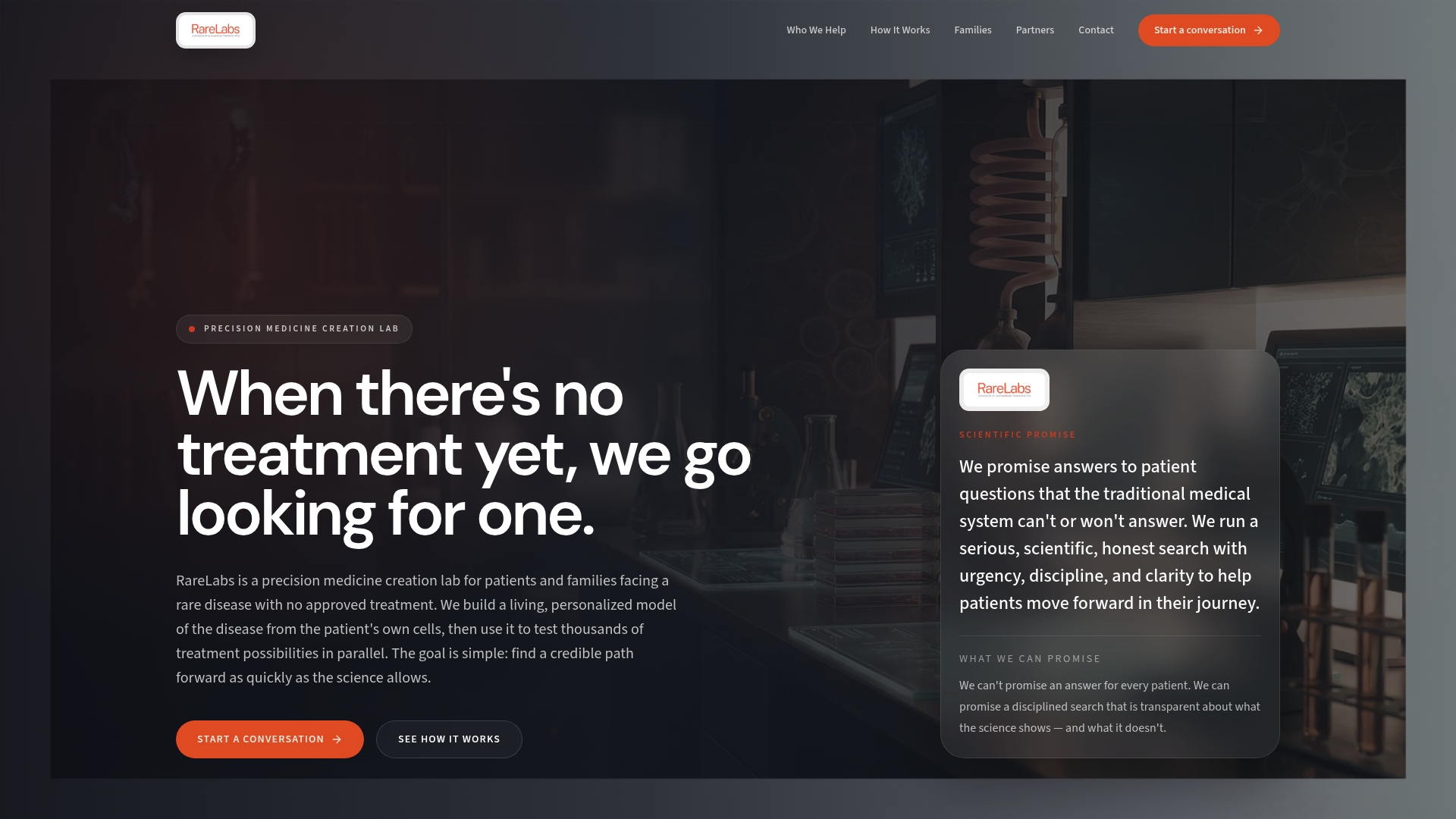
RareLabs bridges that gap. Our RareLabs knowledge platform brings together curated educational content, clinical study tracking, and expert tools designed specifically for ultra-rare and undiagnosed genetic diseases. Whether you are early in your diagnostic journey or actively seeking treatment options, the RareLabs treatment search connects you to personalized research and drug screening resources built around your family's specific case. You do not have to navigate this alone. We are here to help move from understanding to action.
Frequently asked questions
Where can I find reliable information about rare genetic diseases?
Trusted sources include GARD, MedlinePlus Genetics, NORD, and NCBI Bookshelf, all offering comprehensive guides and support for patients and families.
How can families join clinical trials or find research opportunities?
Platforms like RareLabs Knowledge and NORD connect families to clinical studies, patient registries, and community support networks tailored to specific conditions.
Why is genetic counseling important for rare diseases?
Genetic counseling helps families interpret complex test results and understand inheritance patterns; genetic counseling is essential for making informed decisions about care, family planning, and follow-up testing.
What if no treatment is available for my condition?
95% of rare diseases lack approved therapies, so early diagnosis, registry enrollment, and connecting with advocacy groups are the most important steps while research continues to advance.
Are there resources for pediatric genetic diseases?
NORD, GARD, and MedlinePlus Genetics offer extensive pediatric-focused resources, and 80% of rare diseases are genetic with 70% presenting in childhood, making early access to these platforms especially valuable for families.