

Early genetic testing is the analysis of DNA to detect changes that affect health, guide medical care, and inform reproductive decisions. For individuals and families weighing this choice, the stakes are real. A positive result can redirect a treatment plan, clarify a family's risk profile, or open reproductive options that would otherwise remain unknown. Genetic testing examines DNA for changes that impact health outcomes, from prevention through family planning. Understanding why early genetic testing matters starts with knowing what it can and cannot tell you, and what to do with that information.
Why early genetic testing changes health outcomes
Early genetic testing, known clinically as genomic screening or molecular genetic testing depending on the method, delivers its greatest value when results arrive before symptoms do. The core principle is simple: catching a genetic risk early gives you time to act. Early diagnosis through sequencing reduces metabolic crises and irreversible damage in treatable genetic conditions, particularly in newborns and infants. That finding is not theoretical. It means a child born with a metabolic disorder who receives rapid exome sequencing within days of birth can begin targeted treatment before organ damage occurs.
The importance of early testing extends beyond newborns. Adults with a family history of hereditary cancers, cardiovascular disease, or neurological conditions benefit from knowing their genetic risk profile before symptoms appear. That knowledge enables more frequent monitoring, preventive interventions, and lifestyle adjustments calibrated to actual risk rather than statistical averages. Genetic diagnosis and personalized care are directly connected: the earlier the information, the more options remain open.

What types of early genetic tests are available?
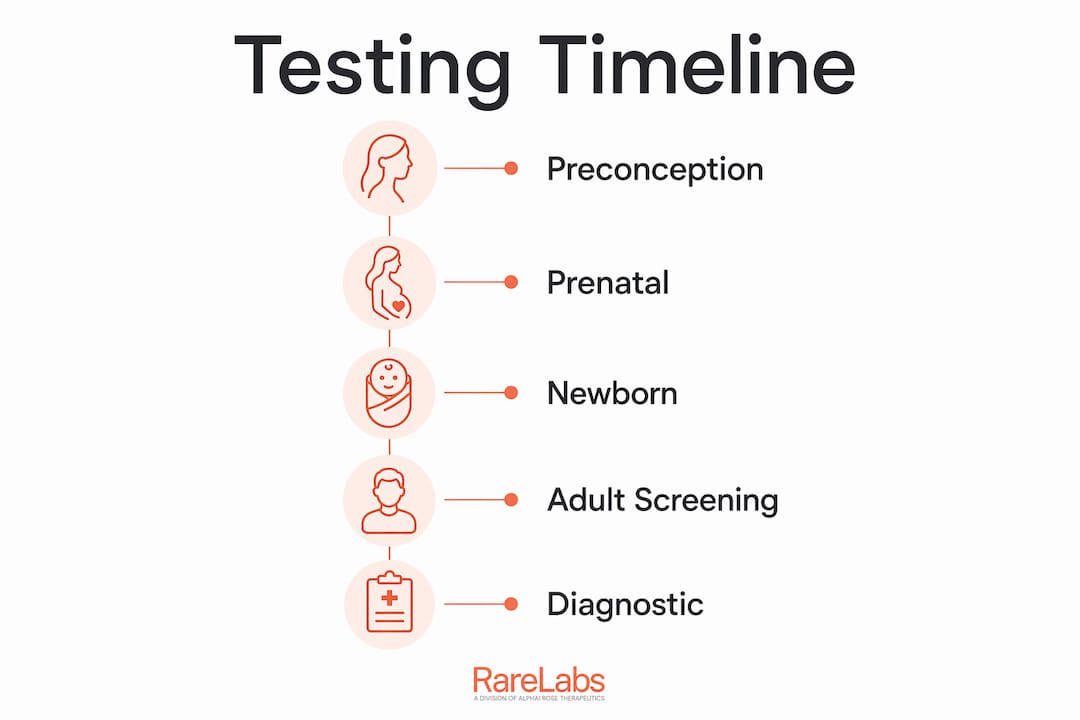
Not all genetic tests serve the same purpose, and choosing the right one depends on timing, clinical context, and what question you are trying to answer. The four main categories are prenatal screening, diagnostic testing, carrier testing, and newborn screening.
| Test type | Purpose | Timing | Risk level |
|---|---|---|---|
| Prenatal screening (cfDNA/NIPT) | Estimates likelihood of chromosomal conditions | First trimester onward | Noninvasive, very low |
| Diagnostic (amniocentesis, CVS) | Confirms a genetic condition | 10 to 20 weeks gestation | Low but procedural |
| Carrier testing | Identifies gene variants you could pass to children | Before or during pregnancy | Noninvasive, blood or saliva |
| Newborn screening | Detects treatable conditions at birth | First days of life | Heel prick, minimal |
Each test type occupies a distinct role in the clinical timeline:
- Prenatal screening tests such as cell-free DNA (cfDNA) screening estimate the probability of chromosomal conditions like trisomy 21, 18, and 13. ACOG recommends cfDNA screening for all obstetrical patients with informed choice and counseling, reflecting how standard this option has become.
- Diagnostic tests like amniocentesis and chorionic villus sampling (CVS) confirm what a screening test flags. They carry a small procedural risk but deliver definitive answers.
- Carrier testing tells you whether you carry a gene variant associated with conditions like cystic fibrosis or sickle cell disease, even if you show no symptoms yourself.
- Newborn screening programs, now standard in all U.S. states, test for dozens of treatable conditions within the first 48 hours of life.
Pro Tip: If you are planning a pregnancy, carrier testing before conception gives you the most options. Results arrive before any time-sensitive decisions need to be made.
Why is early genetic testing important for family planning?
The benefits of genetic testing reach well beyond a single diagnosis. For families, early results reshape how you plan, prepare, and respond across generations.
- Early intervention prevents irreversible harm. Faster sequencing enables first-line newborn testing and earlier monitoring, improving treatment outcomes for conditions that worsen rapidly without treatment. In inborn errors of metabolism, hours matter.
- Personalized medical care becomes possible. Knowing a specific genetic variant allows physicians to select treatments that target the underlying mechanism rather than managing symptoms. This is the foundation of precision medicine.
- Reproductive decisions become informed rather than reactive. Positive results inform family risk and reproductive choices, including options like preimplantation genetic testing during IVF, adoption, or choosing not to have biological children.
- Negative results reduce anxiety. A negative result does not provide an absolute guarantee, but it substantially lowers the probability of a specific condition and allows families to move forward with greater confidence.
- Extended family members gain relevant information. A confirmed genetic variant in one family member signals that siblings, parents, and children may benefit from targeted testing, creating a ripple effect of useful health data.
The genetic testing advantages here are cumulative. Each piece of information builds a clearer picture of what your family faces and what you can do about it. For families navigating fertility testing decisions, genetic results often become the deciding factor in which reproductive path makes the most sense.
How do screening and diagnostic tests compare?
The distinction between screening and diagnostic testing is the most misunderstood aspect of early genetic screening, and the confusion causes real harm when families act on screening results as if they were diagnoses.
Screening tests show risk; diagnostic tests confirm a diagnosis. That difference is not semantic. A cfDNA screen that returns a high-probability result for trisomy 21 means the risk is elevated, not that the condition is confirmed. NIPT achieves high sensitivity for trisomy 21, but a positive screen still requires diagnostic confirmation before clinical decisions are made.
| Feature | Screening test | Diagnostic test |
|---|---|---|
| What it tells you | Probability of a condition | Presence or absence of a condition |
| Invasiveness | Noninvasive (blood draw) | Invasive (amniocentesis, CVS) |
| Accuracy | High sensitivity, some false positives | Near-definitive |
| Next step | May require follow-up diagnostic test | Guides treatment or planning directly |
| Risk to pregnancy | None | Small procedural risk |
Key points families should understand before choosing between these options:
- A normal screening result does not rule out all genetic conditions, only those the screen was designed to detect.
- Diagnostic tests carry a small risk of pregnancy loss, which is why they follow abnormal screens rather than replace them.
- Both test types are optional. Testing is optional post-counseling, and no provider should pressure a patient toward or away from either option.
Pro Tip: Ask your provider specifically whether a recommended test is a screening or a diagnostic test. The answer changes what the results mean and what you should do next.
What ethical considerations come with early genetic testing?
Genetic testing carries weight that goes beyond biology. The results affect not just the person tested but their entire family, their insurance situation, and their emotional wellbeing. Testing requires professional guidance to address emotional and social risks alongside result uncertainties.
Ethical genetic testing and counseling should be presented transparently, with clear expectations about what screening versus diagnostics can and cannot tell you, and without any form of coercion. That standard matters because the pressure to test, or to act on results in a particular way, can undermine the autonomy that makes genetic information genuinely useful.
Results fall into three categories, and each requires a different response:
- Positive results confirm a genetic variant is present. This triggers a conversation about medical management, family risk, and reproductive options.
- Negative results reduce but do not eliminate risk. They mean the tested variants were not found, not that no genetic risk exists.
- Variants of uncertain significance (VUS) are common and represent the most challenging outcome. A VUS means a change was detected but its health impact is not yet understood. VUS results require expert counseling to interpret and guide appropriate follow-up rather than premature clinical action.
The role of genetic counseling in navigating these outcomes cannot be overstated. A board-certified genetic counselor translates results into plain language, helps you understand the implications for your family, and connects you with specialists when needed. For families considering counseling in reproductive contexts, this support is particularly valuable when results intersect with IVF or other assisted reproduction decisions.
What practical steps should you take before and after testing?
Knowing when to get genetic testing and how to act on results requires a structured approach. The following steps reflect current best practice for individuals and families entering this process.
- Talk to your primary care provider or OB-GYN first. Describe your personal and family medical history in detail. This conversation determines which tests are clinically appropriate for your situation.
- Request pretest genetic counseling. Before any sample is collected, a genetic counselor should walk you through what the test measures, what results mean, and what your options are at each outcome. This is not optional for complex tests.
- Choose the test type that matches your question. If you want to know your carrier status before pregnancy, carrier testing is the right tool. If a prenatal screen returns abnormal, a diagnostic test is the appropriate next step.
- Plan for result interpretation before you test. Decide in advance who will help you interpret results, whether that is a genetic counselor, a specialist, or a multidisciplinary team. Results without interpretation create anxiety without direction.
- Follow up with specialists when results are positive or uncertain. A rare disease guide for families can help you understand what comes after a confirmed or uncertain result, including which specialists to consult and what treatment pathways exist.
Key takeaways
Early genetic testing delivers its highest value when results arrive before symptoms, enabling prevention, personalized treatment, and informed reproductive planning.
| Point | Details |
|---|---|
| Test early for maximum options | Early results preserve the widest range of medical and reproductive choices. |
| Know your test type | Screening estimates risk; diagnostic testing confirms a condition. These are not interchangeable. |
| Counseling is not optional | Genetic counselors are required to interpret VUS results and guide follow-up accurately. |
| Negative results have limits | A negative screen reduces risk for specific variants but does not guarantee no genetic condition exists. |
| Family impact is multigenerational | One confirmed result signals that siblings, parents, and children may benefit from targeted testing. |
What I've learned from watching families navigate genetic results
I have spent years working at the intersection of rare disease research and family decision-making, and the pattern I see most often is this: families who test early and receive counseling before results arrive make better decisions. Not because the results are better, but because they are prepared.
The families who struggle most are those who receive a result, particularly a VUS, without any framework for what it means. They search online, find conflicting information, and spend months in a state of suspended anxiety. That outcome is preventable. Pretest counseling is not a formality. It is the difference between a result that informs and a result that paralyzes.
I also want to push back on the idea that early testing is always the right choice for everyone. Emotional readiness matters. Some individuals are not in a position to act on genetic information, whether due to financial constraints, family dynamics, or personal values. Respecting that reality is part of ethical practice. The goal is informed choice, not maximum testing.
What I consistently recommend is this: get the counseling first, then decide on the test. That sequence changes everything about how results land and what you do with them.
— John
How Hopeatrarelabs supports families through genetic testing
Hopeatrarelabs works with families navigating the most complex end of the genetic testing spectrum: ultra-rare and undiagnosed genetic diseases where standard testing has not produced answers. Using technologies including induced pluripotent stem cells (iPSCs) and CRISPR gene editing, Hopeatrarelabs builds patient-specific disease models to test thousands of FDA-approved drugs and evaluate gene therapy options in parallel. For families who have received a confirmed or uncertain genetic result and need to understand what treatment options exist, the RareLabs Knowledge platform provides research and treatment information on rare diseases that lack approved therapies. If your family is past the testing stage and looking for what comes next, Hopeatrarelabs is built for exactly that question.
FAQ
What is early genetic testing?
Early genetic testing is the analysis of DNA to detect changes that affect health, guide treatment, and inform reproductive decisions. It includes prenatal screening, carrier testing, diagnostic testing, and newborn screening, each serving a distinct clinical purpose.
When should you get genetic testing?
The right time depends on your goal. Carrier testing is most useful before or early in pregnancy. Prenatal screening begins in the first trimester. Newborn screening occurs within the first 48 hours of life for conditions that require immediate treatment.
What is the difference between a screening and a diagnostic genetic test?
A screening test estimates the probability of a condition without confirming it. A diagnostic test, such as amniocentesis or CVS, confirms whether a condition is present. Abnormal screening results typically require diagnostic follow-up before clinical decisions are made.
What does a variant of uncertain significance mean?
A variant of uncertain significance (VUS) means a DNA change was detected but its health impact is not yet understood. VUS results require expert genetic counseling to interpret and should not trigger clinical action without specialist guidance.
Is genetic testing safe?
Noninvasive tests like cfDNA screening and carrier testing carry no physical risk. Diagnostic tests like amniocentesis carry a small procedural risk. All testing carries potential emotional, social, and financial implications, which is why pretest counseling is standard practice.