
Cell reprogramming is defined as the process of altering a cell's identity by resetting its gene expression and epigenetic state, enabling it to adopt new or rejuvenated characteristics. This process underpins the generation of induced pluripotent stem cells (iPSCs), first demonstrated by Shinya Yamanaka using the OSKM transcription factor cocktail (Oct4, Sox2, Klf4, c-Myc). More recent advances extend beyond full pluripotency induction into partial reprogramming, which reverses aging-associated cellular decline without triggering tumorigenesis. Understanding the mechanisms, techniques, and applications of cellular reprogramming is now central to regenerative medicine, rare disease modeling, and drug discovery.
What is cell reprogramming at the molecular level?
Cell reprogramming works by forcing a cell to abandon its current transcriptional program and adopt a new one. The OSKM factors bind to target loci and recruit chromatin remodeling complexes, displacing somatic gene networks and activating pluripotency circuits. This is not a simple on/off switch. It is a staged, stochastic process where cells pass through intermediate "plastic" states before committing to a new identity.
The molecular changes during reprogramming span four interconnected layers:
- Transcriptional rewiring: OSKM factors suppress lineage-specific genes and activate Oct4, Nanog, and Sox2 targets, establishing a pluripotent transcriptional network.
- Epigenetic remodeling: DNA methylation patterns are erased and rewritten. Histone modifications shift from repressive marks (H3K27me3) to active marks (H3K4me3) at pluripotency loci.
- Metabolic reprogramming: Cells shift from oxidative phosphorylation to glycolysis, mirroring the metabolic profile of embryonic stem cells.
- Biomolecular condensates: Emerging evidence shows that phase-separated condensates at super-enhancers concentrate transcription factors and co-activators, amplifying reprogramming signals at key genomic loci.
The cellular reprogramming process is heavily influenced by starting cell state heterogeneity. Not all cells in a population reprogram at the same rate or with the same efficiency, which creates variability in outcomes.
Pro Tip: Incorrect timing or duration in intermediate plastic states leads to metabolic stress and apoptosis. Monitor cell viability at 48-hour intervals during the first week of induction to catch early signs of stress before they compromise the entire culture.
What techniques and delivery methods drive reprogramming?
The choice of delivery method determines both the efficiency and the clinical safety of a reprogramming protocol. Each approach carries distinct trade-offs between integration risk, expression duration, and cell toxicity.

| Method | Integration Risk | Efficiency | Clinical Safety |
|---|---|---|---|
| Retroviral/Lentiviral vectors | High (insertional mutagenesis) | High | Low |
| Episomal plasmids | None | Moderate | High |
| Synthetic mRNA | None | Moderate to high | High |
| Small-molecule cocktails | None | Variable | High |
| Somatic cell nuclear transfer (SCNT) | None | High | Technically complex |
Viral vector delivery carries risks of insertional mutagenesis that disqualify it from most clinical translation pipelines. Synthetic mRNA and episomal plasmids preserve genomic integrity, making them the preferred choice for therapeutic applications.
Chemical reprogramming using small-molecule cocktails represents the most recent shift in the field. Compounds such as CHIR99021, TTNPB, and Y-27632 can induce pluripotency without any genetic manipulation, offering a safer reprogramming profile. The primary challenge remains pharmacokinetics: achieving consistent intracellular concentrations across heterogeneous cell populations is technically demanding.
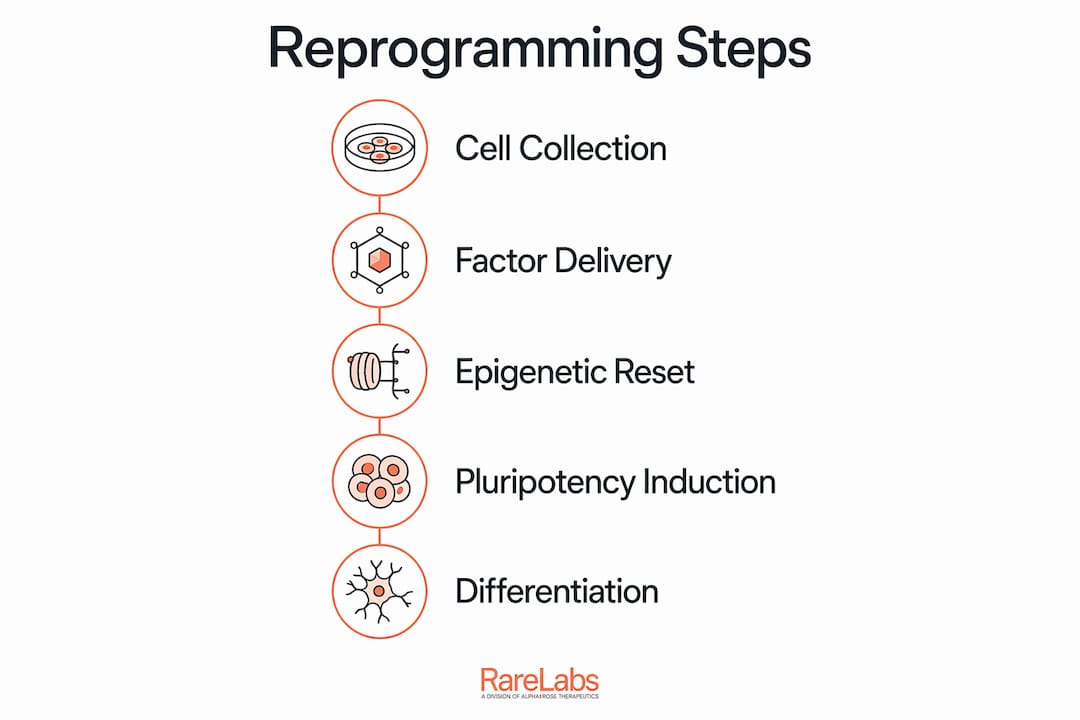
For physical delivery, nucleofection outperforms standard electroporation. Nucleofection yields higher efficiency and better cell viability, but requires precise optimization of voltage, pulse duration, and buffer composition for each primary cell type.
Pro Tip: When using electroporation-based methods, titrate pulse parameters on a small pilot batch before scaling. A 10% variation in pulse duration can shift viability from 80% to below 40% in primary fibroblasts.
How do computational tools improve reprogramming outcomes?
Selecting the right transcription factors for a given cell conversion is not intuitive. The number of possible TF combinations is enormous, and wet-lab screening of every candidate is prohibitively expensive. Computational gene regulatory network (GRN) modeling solves this problem by predicting which TF combinations are most likely to drive a successful phenotype conversion before any experiment begins.
Platforms like DiReG and CARDAMOM model the attractor landscape of gene regulatory networks, identifying TF combinations that can shift a cell from one stable state to another. DiReG and CARDAMOM integrate curated literature databases with network validation tools, increasing the reliability of TF predictions beyond what manual literature review achieves.
The practical advantages of GRN modeling for reprogramming research include:
- Reduced trial-and-error costs: Computational modeling predicts effective TF combinations before lab work begins, cutting experimental cycles significantly.
- Timing optimization: Models predict not just which TFs to use, but when to apply them during the reprogramming window.
- Avoiding black-box protocols: Researchers understand why a given TF set works, enabling rational troubleshooting when protocols fail.
- Accelerated rare disease modeling: For genetic disease modeling, GRN tools help identify the minimal TF set needed to generate patient-specific cell types efficiently.
The integration of computational design into reprogramming workflows is no longer optional for groups working at clinical scale. It is the difference between a protocol that works reproducibly and one that works occasionally.
What are the current applications and challenges of cell reprogramming?
The applications of cellular reprogramming now span disease modeling, regenerative therapy, aging research, and drug screening. Each application domain faces its own set of technical and regulatory hurdles.
Disease modeling and drug discovery represent the most mature application area. Patient-derived iPSCs carry the exact genomic background of the donor, making them ideal for modeling monogenic rare diseases. Researchers can differentiate iPSCs into disease-relevant cell types, observe pathological phenotypes, and screen therapeutic compounds in a patient-specific context. This is precisely the approach Hopeatrarelabs uses to develop personalized models for ultra-rare and undiagnosed genetic diseases, combining iPSC technology with CRISPR gene editing and parallel drug screening platforms.
Regenerative medicine applications include generating replacement cell populations for conditions such as Parkinson's disease, type 1 diabetes, and heart failure. The challenge here is achieving sufficient differentiation fidelity. iPSC-derived neurons or cardiomyocytes often retain fetal-like characteristics rather than fully mature adult phenotypes.
Partial reprogramming for rejuvenation is the most rapidly evolving application. Rather than driving cells to full pluripotency, partial reprogramming00011-0) reverses epigenetic aging marks while preserving cell identity. This approach avoids the tumorigenesis risk associated with full iPSC induction and is now a central focus of longevity biotechnology.
The numbered list below summarizes the primary obstacles researchers must address:
- Low efficiency: Even optimized protocols convert only a fraction of starting cells, creating selection pressure and population heterogeneity.
- Safety: Insertional mutagenesis from viral vectors00011-0) and oncogenic risk from c-Myc remain unresolved for viral delivery systems.
- Scalability: Scaling safe iPSC production for clinical use is a major cost and manufacturing challenge.
- Maturation fidelity: Differentiated derivatives often lack the functional maturity of primary adult cells.
- Tissue-specific delivery: Chemical reprogramming agents face pharmacokinetic barriers when applied in vivo.
Pro Tip: For therapeutic applications, balance pluripotency induction depth against differentiation potential. Cells driven to deep pluripotency are harder to direct toward specific lineages. Titrate OSKM expression levels rather than maximizing them.
Key takeaways
Cell reprogramming requires precise control of transcription factor delivery, epigenetic remodeling, and metabolic state to reliably convert cell identity for research or therapeutic use.
| Point | Details |
|---|---|
| Core definition | Reprogramming resets gene expression and epigenetic state to change or rejuvenate cell identity. |
| Delivery method matters | Non-integrative methods like synthetic mRNA and small molecules are preferred for clinical safety. |
| Partial reprogramming is safer | Avoiding full pluripotency induction reduces tumorigenesis risk in rejuvenation applications. |
| Computational tools accelerate design | GRN platforms like DiReG reduce trial-and-error by predicting effective TF combinations before experiments. |
| Scalability remains the bottleneck | Cost, efficiency, and genomic safety are the primary barriers to clinical iPSC translation. |
Why partial reprogramming deserves more attention than it gets
Most researchers entering this field focus on full iPSC induction because the protocols are well-documented and the endpoint is clear. That is understandable. But the most clinically relevant work happening right now is in partial reprogramming, and it does not get proportional attention in training programs or review articles.
Full pluripotency induction is a blunt instrument. You erase the cell's identity entirely and then try to rebuild it. Every step in that rebuild introduces error. Partial reprogramming sidesteps that problem by resetting only the epigenetic aging signature while leaving the cell's functional identity intact. The risk profile is fundamentally different, and for aging-related applications, the therapeutic logic is stronger.
My observation from following this field closely is that researchers underestimate how much protocol timing matters. The intermediate plastic state is where most reprogramming failures occur, not at the initiation or endpoint. Groups that instrument this window carefully, tracking metabolic markers and chromatin accessibility in parallel, consistently outperform those that treat it as a black box.
The other underutilized resource is computational GRN modeling. Researchers still design TF combinations empirically far too often. Tools like DiReG exist precisely to reduce that waste. Integrating them at the protocol design stage, before ordering reagents, is the single highest-leverage change most labs can make. For groups working on gene therapy approaches for rare diseases, this is especially true because patient cell availability is limited and every failed experiment has a real cost.
The field is moving toward chemical reprogramming and partial induction for good reasons. Researchers who build expertise in these areas now will be positioned well as clinical translation accelerates over the next decade.
— John
Explore reprogramming resources at Hopeatrarelabs
Hopeatrarelabs applies iPSC technology and CRISPR gene editing to build patient-specific disease models for ultra-rare and undiagnosed genetic diseases. If your research involves cellular reprogramming for rare disease modeling or treatment discovery, the resources at Hopeatrarelabs are built for exactly that context.

The RareLabs Knowledge platform offers curated insights on iPSC applications, disease modeling workflows, and treatment screening approaches relevant to researchers working at the intersection of reprogramming and rare disease. For groups looking to translate reprogramming protocols into parallel drug screens or gene therapy evaluations, the treatment search platform provides structured access to FDA-approved compounds, ASO candidates, and gene therapy options tested against patient-derived cell models.
FAQ
What is cell reprogramming in simple terms?
Cell reprogramming is the process of resetting a cell's gene expression and epigenetic state to change its identity or reverse aging-related changes. The most well-known outcome is the generation of induced pluripotent stem cells (iPSCs) from adult somatic cells.
How does the OSKM cocktail work in reprogramming?
The OSKM cocktail (Oct4, Sox2, Klf4, c-Myc) consists of four transcription factors that collectively suppress somatic gene networks and activate pluripotency circuits, driving cells toward an iPSC state. Each factor plays a distinct role in chromatin remodeling and transcriptional activation.
Can cells be reprogrammed without genetic modification?
Yes. Chemical reprogramming using small-molecule cocktails such as CHIR99021, TTNPB, and Y-27632 can induce pluripotency without inserting genetic material, offering a non-integrative approach with a stronger safety profile for clinical use.
What is the difference between full and partial reprogramming?
Full reprogramming drives cells to complete pluripotency, erasing their original identity. Partial reprogramming reverses epigenetic aging marks while preserving cell type identity, reducing tumorigenesis risk and making it more suitable for rejuvenation therapies.
Why is reprogramming efficiency still a major challenge?
Efficiency is limited by starting cell state heterogeneity, intermediate state instability, and metabolic stress during the plastic phase of conversion. Computational GRN tools and precise delivery optimization are the most effective current strategies for improving conversion rates.