

When your child receives a rare genetic diagnosis, the question that follows is almost immediate: is there anything that can actually fix this? Gene therapy has moved from science fiction to clinical reality, and for some families it represents the first real chance to address the root cause of a disease rather than just manage its symptoms. But the path from diagnosis to treatment is rarely straightforward. This guide walks you through the science, the eligibility process, the real risks, and what outcomes actually look like, so you can ask sharper questions and make more informed decisions for your child.
Table of Contents
- What is gene therapy and how does it work?
- Eligibility and requirements for gene therapy
- Risks, side effects, and considerations for families
- What to expect: The treatment process and outcomes
- A realistic perspective on gene therapy decisions
- Find support and next steps with RareLabs
- Frequently asked questions
Key Takeaways
| Point | Details |
|---|---|
| Gene therapy basics | Gene therapy replaces or repairs faulty genes to address rare diseases, often through a one-time procedure. |
| Eligibility limits | Not all children qualify due to factors like age, diagnosis, and pre-existing antibodies. |
| Risks and monitoring | Serious risks exist and long-term follow-up is needed to track effects and safety. |
| Realistic outcomes | Therapies offer improvement, not cure; ongoing care and realistic expectations are essential. |
| Seek expert guidance | Consulting with specialized centers and using trusted resources helps inform decisions. |
What is gene therapy and how does it work?
Gene therapy is not a single treatment. It is a category of approaches that all share one goal: correcting the genetic problem at its source. Traditional treatments manage symptoms. Gene therapy tries to fix, replace, or silence the faulty instruction in your child's DNA that is causing the disease in the first place.
At its core, gene therapy introduces a working gene using viral vectors like AAV (adeno-associated virus) or modifies stem cells outside the body for certain conditions. Think of AAV as a stripped-down delivery truck. Scientists remove the parts of the virus that cause illness and load it with a corrected gene. The truck drives into your child's cells and drops off the new instructions.
There are two main delivery strategies:
- In vivo: The therapy is delivered directly into the patient's body, usually through an IV infusion. This is common for diseases affecting muscles, the nervous system, or the liver.
- Ex vivo: Stem cells are removed from the patient, corrected in a lab, and then returned to the body. Ex vivo stem cell modification is commonly used for blood disorders, while in vivo AAV vectors treat muscular or brain diseases.
Here is a quick look at how key therapies map to conditions and delivery methods:
| Disease | Therapy | Delivery method | Vector |
|---|---|---|---|
| Spinal muscular atrophy (SMA) | Zolgensma | In vivo (IV) | AAV9 |
| Duchenne muscular dystrophy (DMD) | Elevidys | In vivo (IV) | AAV |
| Hemophilia B | Beqvez | In vivo (IV) | AAV |
| Sickle cell disease | Casgevy | Ex vivo | CRISPR |
| Metachromatic leukodystrophy (MLD) | Libmeldy | Ex vivo | Lentiviral |
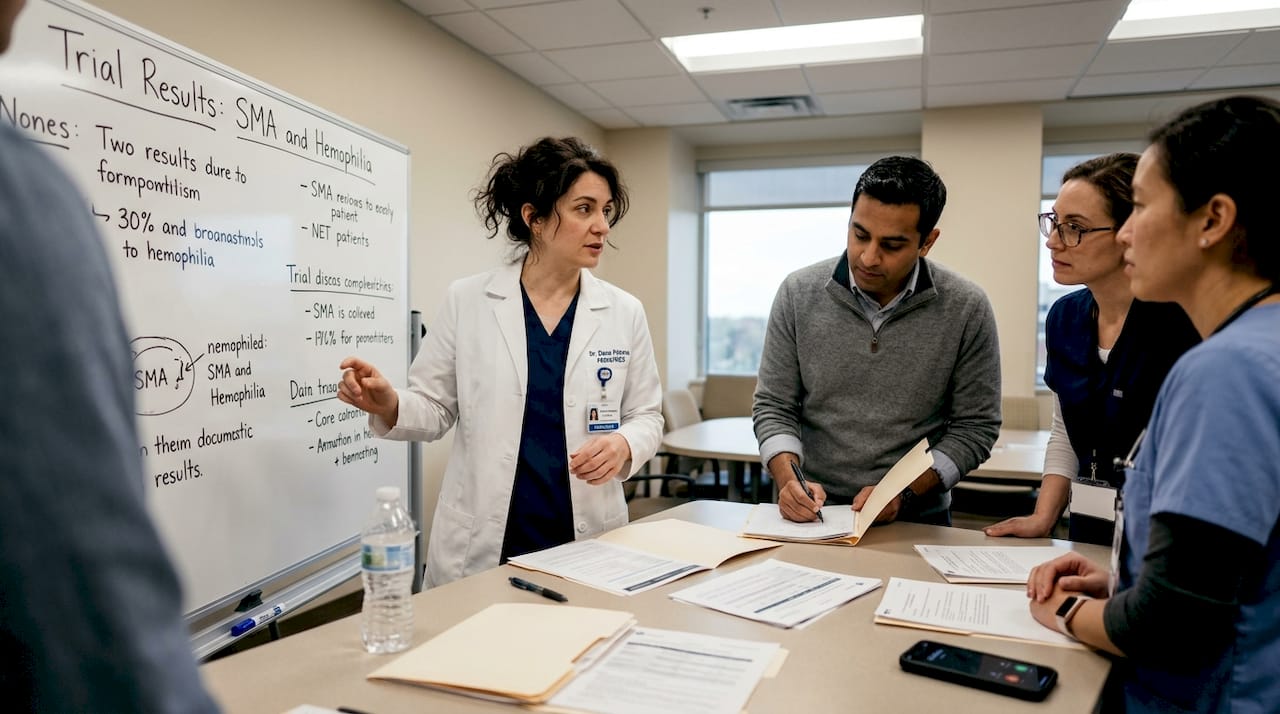
These gene therapy trial results show that real-world outcomes vary significantly by disease type, age at treatment, and individual biology. For families exploring gene therapies for rare diseases, understanding which approach applies to your child's condition is the essential first step.
Eligibility and requirements for gene therapy
Knowing that a gene therapy exists for a condition is very different from knowing your child can receive it. Eligibility is specific, sometimes frustratingly so, and it depends on multiple clinical factors that your medical team must evaluate carefully.
Pre-existing antibodies, age, specific mutations, and current disease status may all affect eligibility. For example, many AAV-based therapies require that a child has not already developed immune antibodies to the specific AAV serotype being used. If those antibodies are present, the immune system may attack the therapy before it can work.
Here is a simplified comparison of eligibility factors across several approved therapies:
| Therapy | Age limit | Key exclusions | Mutation requirement |
|---|---|---|---|
| Zolgensma (SMA) | Under 2 years | High AAV9 antibodies | SMN1 deletion/mutation |
| Elevidys (DMD) | 4 to 5 years (approved range) | Non-ambulatory in some cases | Confirmed DMD mutation |
| Casgevy (sickle cell) | 12 and older | Severe organ dysfunction | HbSS or HbSβ0 genotype |
| Libmeldy (MLD) | Pre-symptomatic or early stage | Advanced disease | ARSA gene mutation |
Before pursuing any therapy, work through these steps with your genetics team:
- Confirm the exact genetic mutation through whole genome or exome sequencing.
- Test for pre-existing antibodies to the relevant viral vector.
- Assess current disease stage and functional status.
- Review whether your child's age falls within the approved treatment window.
- Ask specifically about compassionate use or clinical trial access if approved options do not apply.
You can also find gene therapies being evaluated for ultra-rare conditions that do not yet have approved treatments. For FDA-approved therapies for children, specialized pediatric centers maintain updated eligibility criteria.
Pro Tip: Seek evaluation at a center with a dedicated gene therapy program. These teams see edge cases regularly and can identify options your local hospital may not know about.
Risks, side effects, and considerations for families
Gene therapy carries real risks, and understanding them is not optional. It is part of making an informed decision. The risks fall into several categories, and their severity depends on the specific therapy, your child's age, and their baseline health.
Common and serious risks include:
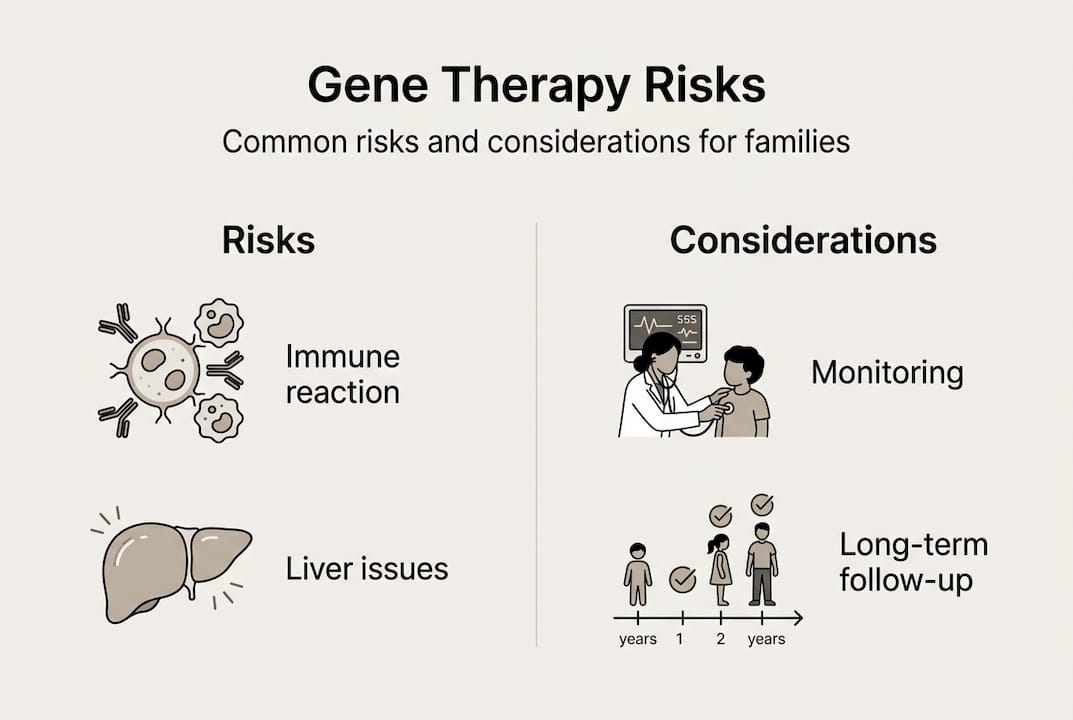
- Immune reactions: The body may mount an inflammatory response to the viral vector, requiring immunosuppression (steroid treatment) before and after infusion.
- Liver toxicity: Many AAV therapies are processed through the liver, and elevated liver enzymes are a known side effect that requires monitoring.
- Blood disorders: Risks include immune reactions, liver toxicity, blood disorders including MDS and leukemia (notably in ALD Skysona trials), and the need for immunosuppression.
- Infection risk: Immunosuppression used to protect the therapy also lowers your child's defenses against infection.
"Gene therapy is not a one-and-done with no strings attached. The monitoring that follows treatment is just as important as the infusion itself." This is a reality that experienced gene therapy teams will tell you upfront.
Long-term safety is still being studied. Most approved therapies have fewer than ten years of follow-up data. Durability, meaning how long the therapy keeps working, is an open question for many conditions. Registries and long-term follow-up studies are how researchers track outcomes over time, and enrolling your child in one is strongly encouraged.
For hemophilia B, Beqvez trial findings showed sustained factor IX levels in most patients, but also highlighted that responses varied and some patients required additional management.
Pro Tip: Before your child's infusion, ask your medical team for a written monitoring plan that includes what labs will be checked, how often, and what symptoms should prompt an urgent call.
What to expect: The treatment process and outcomes
The journey to gene therapy is not a single appointment. It is a process that unfolds over months, sometimes longer, and each stage matters.
Here is what the typical path looks like:
- Diagnosis and genetic confirmation: Whole exome or genome sequencing confirms the mutation and rules out conditions that mimic it.
- Pre-treatment evaluation: Antibody testing, liver function panels, cardiac assessments, and baseline functional scores are collected.
- Insurance and access: Many gene therapies cost over $2 million per dose. Prior authorization and patient assistance programs take time to navigate.
- Infusion: Most gene therapies are delivered as a single IV infusion over several hours in a hospital or specialized infusion center.
- Post-treatment monitoring: Frequent lab checks (sometimes weekly for the first three months), clinic visits, and functional assessments track response and catch side effects early.
Outcomes vary widely. Here is real-world data from key approved therapies:
| Therapy | Condition | Key outcome | Timeframe |
|---|---|---|---|
| Zolgensma | SMA Type 1 | Motor milestone gains | 12 to 24 months |
| Casgevy | Sickle cell | Reduced pain crises | 6 to 12 months |
| Beqvez | Hemophilia B | Sustained factor IX levels | 12 to 18 months |
| Libmeldy | MLD | Slowed neurological decline | 24 months |
SMA therapies can improve motor function, hemophilia B gene therapy sustains factor IX levels, and Casgevy reduces pain crises, but improvements are rarely instant. For most families, the first signs of benefit appear gradually over six to eighteen months.
It is also important to be honest about limits. Gene therapy is unlikely to reverse damage that has already occurred. The earlier treatment happens, the more function can be preserved. Detailed gene therapy family outcomes from patient advocacy groups show that families who entered treatment with realistic expectations reported better overall experiences.
A realistic perspective on gene therapy decisions
Every headline about gene therapy uses words like "breakthrough" or "game-changing." And sometimes those words are earned. But they do not capture what it actually feels like to sit in a genetics clinic and decide whether to pursue a treatment that costs millions, carries real risks, and may or may not work for your specific child.
Here is what we believe most guides get wrong: they present gene therapy as the obvious next step once a diagnosis is confirmed. In reality, parental decisions require careful consideration of high costs, eligibility limits, and real risks even compared to standard care. For some children, existing therapies or supportive care may offer a better risk-benefit balance than an experimental or newly approved gene therapy.
Empowered parents are not the ones who say yes to everything. They are the ones who ask hard questions, get second opinions, and use treatment search tools to understand what alternatives exist. They know that a therapy approved for one mutation may not apply to their child's variant. They understand that "approved" does not mean "proven for every patient."
The families who navigate this best are the ones who treat gene therapy as one option in a broader strategy, not the only option.
Find support and next steps with RareLabs
For parents ready to continue their journey, trusted guidance and community support can make a real difference.
At RareLabs, we work with families facing ultra-rare and undiagnosed genetic diseases where no approved treatment exists yet. Our platform builds patient-specific disease models using iPSC technology and CRISPR gene editing, then runs parallel screens across thousands of FDA-approved drugs, custom ASOs, and gene therapy candidates. We do not replace your medical team. We give them and you more to work with. If your child's condition has no clear treatment path, start your treatment search with RareLabs and find out what options may exist beyond the standard playbook.
Frequently asked questions
How long do gene therapy effects last?
Durability varies by condition and treatment, ranging from several years of observed benefit to potentially lifelong, but most therapies require long-term monitoring to track effectiveness over time.
Can any child with a rare genetic disease get gene therapy?
No. Eligibility limits such as age, mutation type, and pre-existing antibodies mean that many children do not qualify for currently available therapies, making clinical trial access or alternative approaches important to explore.
What are the biggest risks of gene therapy for kids?
Major risks include immune reactions, liver toxicity, and blood disorders such as MDS or leukemia, particularly with lentiviral-based therapies used in conditions like ALD.
Is gene therapy a cure?
Gene therapy is typically not curative but can meaningfully slow disease progression, reduce symptoms, or improve quality of life, with most children continuing to need ongoing medical care after treatment.