

Functional medicine offers real but narrowly scoped benefits for patients with ultra-rare genetic diseases: it can meaningfully improve symptom burden, metabolic health, and quality of life, but it does not alter the underlying pathogenic variant or replace molecularly targeted therapies. About 80% of rare diseases have a genetic origin, and the FDA estimates more than 10,000 rare diseases affect over 30 million Americans, most without any approved treatment. The Cleveland Clinic Center for Functional Medicine and the IRDiRC N-of-1 roadmap both confirm that supportive care and precision molecular work are complementary, not competing, priorities.
TL;DR:
- Get a molecular diagnosis first: whole-genome sequencing (WGS) is the fastest path to an etiologic answer and ends the diagnostic odyssey that averages 5–7 years.
- Use functional medicine in parallel for symptom management, metabolic optimization, and quality-of-life support.
- Ask about patient-derived iPSC modeling and drug repurposing screens when no approved therapy exists.
- Consider Hopeatrarelabs when you need a translational program built around your specific variant.
Table of Contents
- What functional medicine actually offers for rare conditions
- Where functional medicine genuinely helps rare disease patients
- What functional medicine cannot do for genetic rare diseases
- A practical roadmap: molecular diagnosis first, functional medicine alongside
- Timelines and costs: what to realistically expect
- Questions to ask before you commit to any provider
- When to consider Hopeatrarelabs for translational work
- An anonymized case: what integrated care looks like in practice
- Key Takeaways
- Why an integrated approach is the only honest answer
- Hopeatrarelabs: a translational partner for ultra-rare cases
- Primary sources and further reading
What functional medicine actually offers for rare conditions
Functional medicine is a patient-centered, root-cause model that treats the body as an interconnected system rather than a set of isolated symptoms. The Cleveland Clinic defines it as a collaborative approach that partners with conventional clinicians and prioritizes lifestyle factors: nutrition, sleep, stress, exercise, and environmental exposures.
Typical services include:
- Comprehensive intake history and timeline mapping
- Nutrition-first care plans and targeted lab panels
- Microbiome and metabolic optimization
- Sleep and stress management coaching
- Coordinated referrals to specialists
The model's inherent limit is also its defining feature: it works on modifiable contributors to disease. For a patient whose illness is driven by a single pathogenic variant causing protein dysfunction, lifestyle optimization cannot correct the molecular defect. That distinction matters for every clinical decision that follows.
Where functional medicine genuinely helps rare disease patients
Functional medicine reliably delivers benefit in four categories for patients with rare genetic diseases: symptom management, metabolic support, nutritional optimization, and sleep and stress regulation.
- Symptom management: Fatigue, pain, and gastrointestinal dysfunction often have modifiable contributors even when the root cause is genetic. Addressing those contributors reduces total symptom burden.
- Metabolic support: Mitochondrial and metabolic rare diseases are particularly sensitive to nutritional status. Targeted dietary interventions can reduce the metabolic stress that amplifies symptoms.
- Treatment tolerance: Patients undergoing experimental or off-label therapies tolerate them better when baseline inflammation, nutritional deficits, and sleep disruption are addressed first.
- Quality of life: A Cleveland Clinic retrospective study of 1,595 patients found that approximately 31% of functional medicine patients improved their PROMIS global physical health scores by 5 or more points at 6 months, a threshold the researchers defined as clinically meaningful.
The Institute for Functional Medicine reports that pilot programs using PROMIS tracking show sustained improvements in chronic disease populations, which supports using those same validated measures for rare disease patients.
Pro Tip: Ask your functional medicine clinician to document PROMIS scores or a simple pre/post functional measure at intake and every 3 months. Objective data protects you from both over-attributing benefit and missing real improvement.
Coordination with the conventional care team is non-negotiable. The IFM and Cleveland Clinic frameworks both treat functional medicine as an integrated layer within a broader care team, not a standalone practice.
What functional medicine cannot do for genetic rare diseases
Functional medicine is supportive care. It does not correct single-gene defects, restore absent or dysfunctional proteins, or alter the natural history of a genetically driven disease.
Key limits:
- Cannot fix pathogenic variants or downstream protein dysfunction
- Cannot substitute for WGS when a diagnosis is unknown
- Risks delaying access to time-sensitive molecular interventions, including gene-targeted therapies and N-of-1 clinical trials, if it becomes the primary care pathway
- Lacks evidence for modifying disease progression in monogenic rare diseases
Precision medicine tools — WGS, patient-derived iPSCs, CRISPR isogenic controls, and antisense oligonucleotides (ASOs) — are what move rare disease care from symptom management to targeted molecular intervention. The Frontiers mediKanren paper explicitly recommends shifting from symptom-based management toward molecular etiology assessment early, specifically to avoid missing treatment windows for gene-targeted options. For gene therapy feasibility and mutation-specific approaches, molecular diagnosis is the prerequisite, not an optional step.
| Care type | What it addresses | What it cannot do |
|---|---|---|
| Functional medicine | Symptoms, metabolic load, quality of life | Correct pathogenic variants or restore protein function |
| WGS / molecular diagnosis | Identifies causative variant | Does not provide therapy |
| iPSC modeling + drug screens | Tests drug responses in patient's own cells | Does not replace clinical validation |
| ASOs / gene therapy | Targets the molecular defect directly | Requires prior molecular diagnosis and modeling |
A practical roadmap: molecular diagnosis first, functional medicine alongside
The roadmap centers molecular diagnosis and places functional medicine as parallel supportive care, not a preliminary step to get through before "real" medicine begins.
- Pursue WGS through a clinical geneticist. WGS provides the highest diagnostic yield and can detect both coding and noncoding variants. Many insurers now cover diagnostic sequencing; confirm coverage before proceeding.
- Establish a multidisciplinary care team. A clinical geneticist, a metabolic or disease-specific specialist, and a functional medicine clinician should communicate directly, not operate in silos.
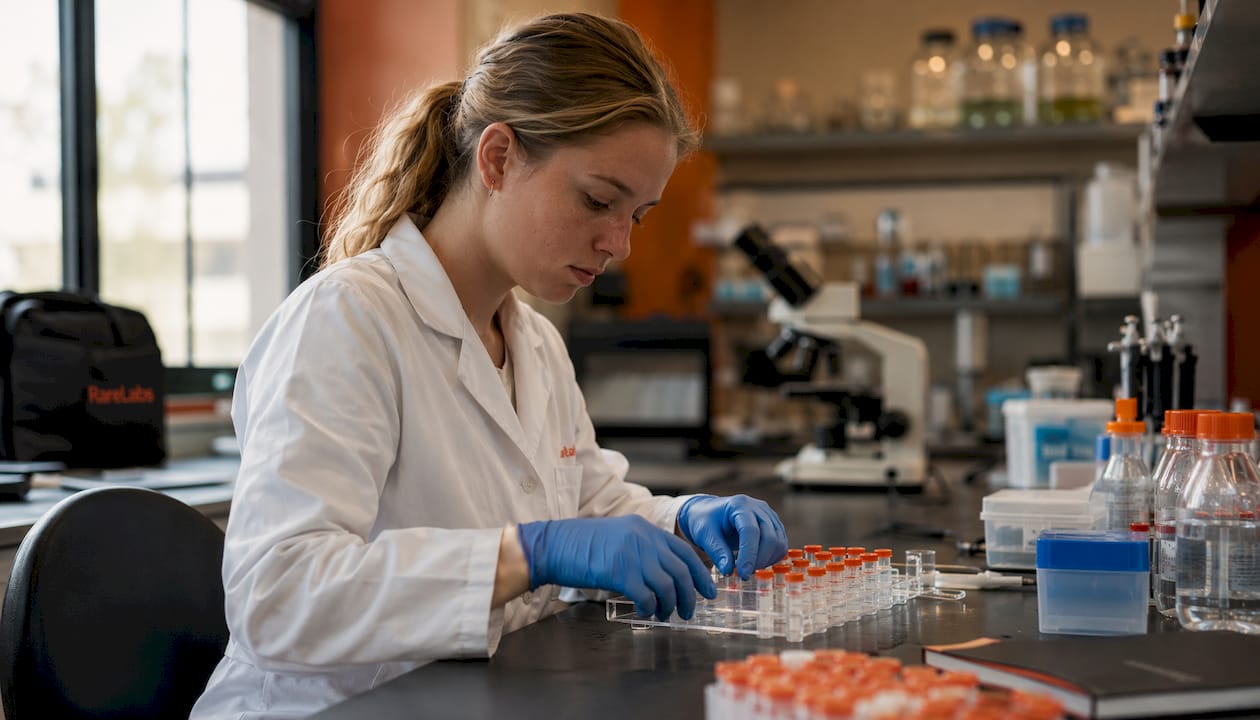
- Initiate iPSC disease modeling if indicated. Once a pathogenic variant is confirmed and no approved therapy exists, patient-derived iPSC models allow empirical drug testing tailored to that specific variant.
- Run repurposing screens and ASO feasibility assessment. AI-assisted tools like mediKanren can scale hypothesis generation and identify repurposing candidates faster than manual literature review.
- Coordinate functional medicine interventions throughout. Symptom optimization during translational work keeps the patient in the best possible condition to tolerate and respond to experimental approaches.
The IRDiRC N-of-1 roadmap frames individualized therapy development as a distinct regulatory and scientific pathway, one that requires omics data and empirical cellular testing rather than standardized wellness protocols. The Hugh Kaul Precision Medicine Institute is one of the institutional anchors for this framework in the U.S.
Pro Tip: Early enrollment in a disease registry or academic natural history study can reduce both time and cost at the modeling stage. Registries often have existing cell lines, sequencing data, and IRB frameworks that accelerate the program.
Timelines and costs: what to realistically expect
Typical timelines vary significantly by phase. WGS results typically return within a few weeks. iPSC generation requires several months, followed by additional months for drug repurposing screens and ASO assessments. Translational steps toward compassionate-use or N-of-1 trials can take significantly longer, sometimes years.
| Phase | Approximate timeline | Key milestone |
|---|---|---|
| WGS / molecular diagnosis | 2 weeks | Variant identification |
| iPSC generation and validation | 2–6 months | Confirmed disease model |
| Drug repurposing screen | 1–4 months | Prioritized candidate list |
| ASO design and preclinical work | 3 months | Lead ASO candidates |
| Translational / N-of-1 pathway | Months to years | IRB approval, compassionate use |
Cost and coverage notes:
- Diagnostic WGS is increasingly covered by major U.S. insurers, particularly for pediatric undiagnosed disease programs.
- Custom iPSC modeling, high-throughput screening, and ASO development are typically out-of-pocket or grant-funded.
- Funding sources include rare disease foundations, NIH grants, patient advocacy organizations, and philanthropic partnerships.
- Academic medical centers sometimes absorb modeling costs within research programs, particularly for novel or unpublished variants.
The diagnostic odyssey for rare disease patients commonly lasts 5–7 years and involves multiple clinicians. Starting WGS early compresses that timeline and opens access to translational programs before disease progression narrows options.
Questions to ask before you commit to any provider
Ask targeted questions that reveal whether a provider integrates with molecular and translational workflows or operates independently.
For functional medicine clinicians:
- How do you incorporate existing genetic or genomic findings into your care plan?
- Which outcome measures do you track, and how often?
- Will you communicate directly with my clinical geneticist or translational team?
- What is your experience with patients who have a confirmed rare genetic diagnosis?
For translational labs:
- Do you use patient-derived iPSCs, or do you work with existing cell lines?
- How do you generate CRISPR isogenic controls to validate your model?
- What does your drug repurposing screen cover, and how do you report results to clinicians?
- Can you support ASO design and preclinical feasibility within the same program?
Red flags to watch for:
- A functional medicine provider who discourages or delays molecular diagnostic workup
- A lab that cannot explain its variant validation methodology
- Any provider promising disease modification through lifestyle or supplement protocols alone
- Lack of written treatment plans with measurable goals and coordination agreements
Pro Tip: Request a written coordination agreement between your functional medicine clinician and your molecular/translational team before starting either program. Verbal coordination is not enough when timelines and treatment windows are tight.
For patients exploring personalized therapy pathways, the checklist above applies equally to academic centers and private translational labs.
When to consider Hopeatrarelabs for translational work
Hopeatrarelabs is the right fit when three conditions are present: a confirmed or strongly suspected pathogenic variant, no approved therapy for the condition, and a clinician willing to engage with experimental translational findings.
What the program delivers:
- Patient-derived iPSC disease modeling from the patient's own cells
- CRISPR-edited isogenic controls to validate the model against the specific variant
- High-throughput screening of FDA-approved drugs for repurposing candidates
- Custom ASO development targeting the patient's variant
- Gene therapy feasibility assessment
- Transparent, clinician-ready reports at each stage
Expected outputs include a validated disease model, a prioritized list of candidate therapeutics with supporting data, and documentation suitable for IRB submission or compassionate-use applications. The program is contracted by patients, families, foundations, advocacy groups, or biopharma partners.
- Gather your genetic test reports, variant interpretation letters, and any prior clinical workup.
- Identify a physician willing to serve as the clinical point of contact for translational findings.
- Contact Hopeatrarelabs to discuss program scope, timeline, and funding options.
- Review the program proposal and confirm consent and data-sharing agreements before cell collection.
Pro Tip: Bring a variant interpretation letter from a board-certified clinical geneticist to your initial consult. It accelerates model design and reduces the time between cell collection and first screening results.
The personalized research approach Hopeatrarelabs uses is grounded in the same empirical validation framework the precision medicine literature recommends: patient-derived models, transparent screening data, and clinician-interpretable results.
An anonymized case: what integrated care looks like in practice
Integrated functional and translational care can meaningfully change a patient's trajectory, though every N-of-1 case is its own data point and results should not be generalized.
In one anonymized program, a pediatric patient with an ultra-rare lysosomal storage variant and no approved therapy followed this sequence:
- WGS confirmed a novel pathogenic variant; functional medicine was initiated for fatigue and gastrointestinal symptom management.
- iPSC model generated from patient-derived fibroblasts over approximately 4 months.
- Drug repurposing screen identified two FDA-approved compounds with activity in the patient's cell model.
- ASO feasibility assessment initiated in parallel; one lead candidate advanced to preclinical characterization.
- Clinician-led compassionate-use application submitted based on screening data.
Symptom burden, tracked by PROMIS scores, improved during the functional medicine phase. The repurposing screen produced candidates the clinical team had not previously considered. What did not change: the underlying variant and its protein-level consequences, which only a targeted molecular therapy could address.
The value of this kind of integrated program is not that functional medicine cured anything. It kept the patient stable and functional while the translational work ran its course. That is exactly what it is supposed to do.
Key Takeaways
Functional medicine benefits for rare genetic diseases are real but limited to symptom and metabolic optimization; molecular diagnosis and patient-derived translational modeling are required for any disease-modifying outcome.
| Point | Details |
|---|---|
| Molecular diagnosis is the first step | WGS identifies the causative variant and ends a diagnostic odyssey that commonly lasts 5–7 years. |
| Functional medicine supports, not replaces | Use it for symptom management, metabolic optimization, and treatment tolerance during translational work. |
| iPSC modeling enables targeted therapy selection | Patient-derived models test drug responses against the specific variant before clinical use. |
| Ask the checklist questions | Confirm any provider integrates with molecular and translational workflows before committing. |
| Hopeatrarelabs for translational programs | When no approved therapy exists, Hopeatrarelabs offers iPSC modeling, drug screens, ASO development, and gene therapy feasibility assessment. |
Why an integrated approach is the only honest answer
Most conversations about functional medicine and rare disease fall into one of two traps: either dismissing functional approaches entirely as unscientific, or overstating what lifestyle and metabolic optimization can achieve for a patient whose illness is driven by a single broken gene. Neither position serves patients well.
The evidence supports a more specific claim: functional medicine, practiced within a coordinated care team and measured with validated tools like PROMIS, reliably improves quality of life and symptom burden. That is not a small thing for a patient waiting months for translational results. What it cannot do is rewrite a pathogenic variant, restore a missing enzyme, or replace the work that iPSC modeling, ASO development, and gene therapy feasibility assessment are designed to do.
The patients and families who navigate this best are the ones who refuse to choose between the two. They pursue molecular diagnosis without delay, use functional medicine to stay as well as possible while translational work runs, and ask hard questions of every provider they engage. That combination, not either approach alone, is what gives a rare disease patient the best shot at a meaningful outcome.
Hopeatrarelabs: a translational partner for ultra-rare cases
For families and clinicians who have a confirmed variant and no approved therapy, Hopeatrarelabs offers something most clinical settings cannot: a complete translational program built around the patient's own cells.
The program covers iPSC disease modeling, CRISPR isogenic controls, high-throughput FDA-approved drug repurposing screens, custom ASO development, and gene therapy feasibility assessment, all with transparent, clinician-ready reporting at each stage. Funding options include foundation partnerships, research collaborations, and direct family or advocacy group contracts.
To get started, gather your genetic test reports and variant interpretation letter, identify a physician point of contact, and visit the Hopeatrarelabs knowledge hub to review program details and request an initial consultation.
Primary sources and further reading
The sources below are the strongest starting points for patients, families, and clinicians who want to go deeper on any section of this article.
- Cleveland Clinic Center for Functional Medicine: Defines the functional medicine model and its scope; the foundational reference for what to expect from a functional medicine program.
- Institute for Functional Medicine (IFM): The professional body for functional medicine training and outcome research, including PROMIS-based pilot data.
- Precision medicine and rare disease pathways (PMC7709101): Peer-reviewed review of how WGS, iPSC modeling, and CRISPR enable targeted molecular interventions; essential reading for the limits and roadmap sections.
- mediKanren and AI-enabled translational discovery (Frontiers, 2022): Demonstrates how AI knowledge-graph tools accelerate drug repurposing hypothesis generation for rare disease cases.
- IRDiRC N-of-1 development roadmap: The international consortium's framework for individualized therapy development, including regulatory and ethical considerations.
- Illumina rare disease genomics overview: Explains WGS diagnostic yield, the 5–7 year diagnostic odyssey, and the case for early genomic testing.
- FDA rare diseases overview: Defines rare disease under the Orphan Drug Act, covers orphan drug incentives, and explains compassionate-use and expanded-access pathways.
- Research advances in rare disease treatment (PMC9597619): Surveys ASO drugs, gene therapy, stem cell therapy, and small nucleic acid approaches currently in development or approved.
- Hopeatrarelabs knowledge hub: Program details, translational methodology, and intake guidance for patients, families, and clinicians considering a personalized modeling program.
- Genetic testing in GI disorders: a patient's guide: Practical patient-facing explanation of where genetic testing fits relative to functional and conventional care.