
Drug repurposing is defined as the process of identifying new therapeutic indications for FDA-approved compounds that already have established safety and efficacy profiles. The role of FDA-approved drugs in repurposing is to provide validated molecular starting points that can reach patients faster and at lower cost than novel drug development, particularly for rare and undiagnosed genetic diseases where commercial pipelines are thin. The FDA, in collaboration with the NIH, has accelerated this strategy through regulatory tools including the Orphan Drug Act, Project Renewal, and a 2026 initiative targeting metabolic, neurodegenerative, and rare disease indications. Researchers and clinicians who understand this framework can identify and advance repurposing candidates with greater precision and regulatory confidence.
How FDA regulations and initiatives support drug repurposing for rare diseases
The FDA's regulatory infrastructure for drug repurposing has expanded substantially in 2026. The agency now actively solicits public input to build collaborative frameworks with the NIH, targeting diseases with little commercial interest in metabolic, neurodegenerative, and rare disease categories. That shift signals a structural change: the FDA is no longer a passive gatekeeper but an active partner in identifying repurposing opportunities.
Project Renewal is the FDA's program to update drug labeling to reflect current scientific evidence. Label updates carry clinical weight that off-label use does not. When a label is revised to include a new indication, payers recognize it, providers can prescribe with legal clarity, and patients gain access through insurance coverage.

The Orphan Drug Act, enacted in 1983, created the foundational incentive structure for rare disease repurposing. It offers market exclusivity, tax credits, and priority review to sponsors pursuing indications affecting fewer than 200,000 Americans. These incentives have helped, but market-driven failures persist for diseases so rare that even orphan status does not attract sponsors.
Key regulatory pathways and tools researchers should know:
- Supplemental NDA (sNDA) and sBLA: The formal mechanism for adding a new indication to an approved drug's label. Requires clinical evidence but builds on existing safety data.
- Accelerated Approval: Available when a drug addresses an unmet need and shows effect on a surrogate endpoint reasonably likely to predict clinical benefit.
- Orphan Drug Designation: Grants seven years of market exclusivity and fee waivers for qualifying rare disease indications.
- FDA-NIH CURE ID platform: A collaborative database where clinicians report real-world use of approved drugs for novel indications, feeding evidence into regulatory review.
- Collaborative clinical trial design: The FDA's 2026 initiative specifically targets harmonized trial designs that reduce the burden on individual sponsors.
Pro Tip: When pursuing a supplemental application for a rare disease indication, apply for Orphan Drug Designation before submitting the sNDA. The designation unlocks fee waivers and exclusivity that can make the application financially viable even without a commercial sponsor.
What are the economic and scientific benefits of repurposing approved drugs?
Novel drug development costs an estimated $2.8 billion per approved compound, and timelines routinely exceed a decade. Repurposing compresses both figures by starting with a molecule whose pharmacokinetics, toxicology, and manufacturing are already characterized.
The safety profile advantage is real but conditional. It holds when the new indication uses a dosage and patient population similar to the approved use. When significant changes are required, such as a pediatric population or a substantially different dose, new clinical trials become necessary and can approach the scope of novel drug development. Researchers must assess this early to avoid underestimating the development burden.
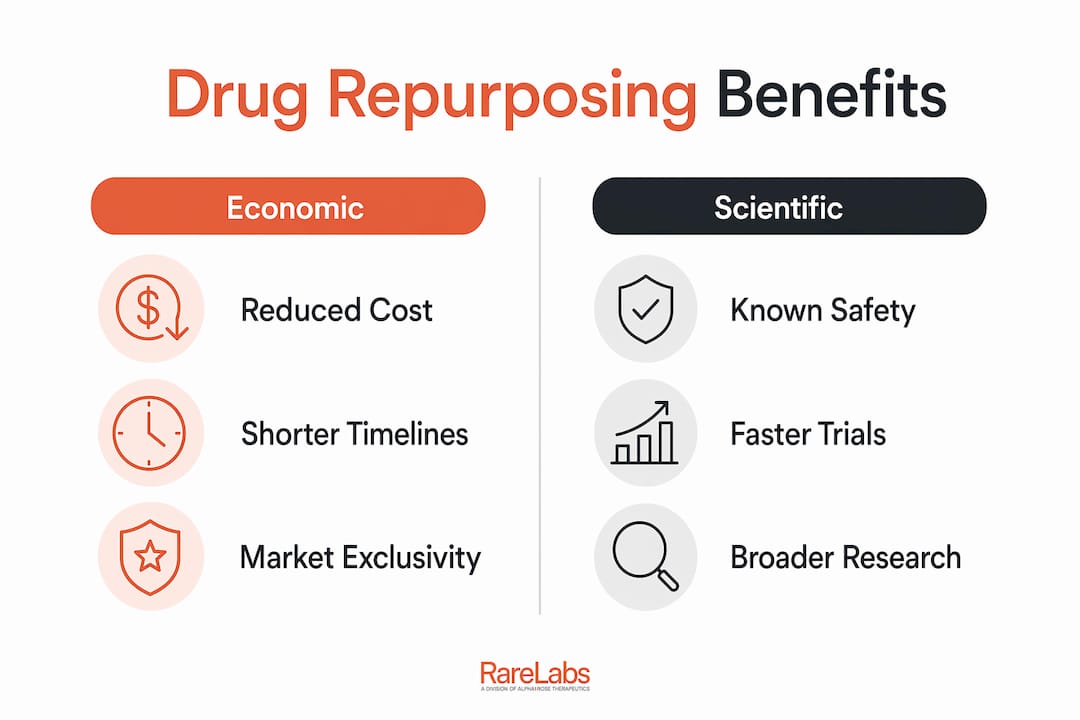
The scale of repurposing in the FDA approval record is striking. An analysis of 403 drugs approved between 1985 and 2024 showed that roughly 15% explicitly linked to repurposed mechanisms. That figure represents a floor, not a ceiling. Many more approvals reflect incremental indication expansions that do not get classified as formal repurposing. The practical implication: repurposing is not a niche strategy. It is a core driver of the pharmaceutical innovation pipeline.
| Development factor | Novel drug development | FDA-approved drug repurposing |
|---|---|---|
| Estimated cost | Up to $2.8 billion | Substantially lower; existing safety data reduces Phase I burden |
| Timeline to clinic | 10+ years typical | Shorter when dosage and population match approved use |
| Safety data | Must be generated from scratch | Available from prior approval; valid if new use is similar |
| Regulatory pathway | Full NDA or BLA | Supplemental NDA or sBLA; accelerated approval eligible |
| Rare disease incentives | Standard orphan incentives | Same orphan incentives apply; collaborative trial designs available |
For rare and undiagnosed genetic diseases, the economic argument for repurposing is even stronger. Patient populations are too small to justify the full cost of novel development. Repurposing shifts the calculus by reducing the investment required to reach a viable clinical candidate.
What are the main challenges in repurposing drugs for rare diseases?
The single largest barrier to official repurposing is sponsor identification. Filing a supplemental NDA or sBLA requires a sponsor willing to invest in the application. When commercial returns are uncertain, that sponsor is often absent. The FDA's May 2026 solicitation directly targets this gap by building collaborative models where public funding and shared trial infrastructure reduce the burden on any single entity.
Off-label prescribing fills part of this gap in clinical practice, but it is not a substitute for an official label change. Off-label use remains a clinical decision without the reimbursement framework or legal clarity that an updated label provides. For rare disease patients, who often face insurance denials for unapproved uses, this distinction is consequential.
Data quality is a persistent challenge in rare disease repurposing. Patient populations are too small for large randomized controlled trials. Researchers must build evidence from case reports, natural history studies, real-world evidence, and, increasingly, computational predictions. The FDA now accepts AI and machine learning models as preliminary data for prioritization, which opens a path for candidates that lack full clinical datasets.
Practical considerations for researchers navigating these hurdles:
- Engage FDA early: Pre-submission meetings clarify what evidence standard applies to the specific indication and population.
- Build a data package from multiple sources: Combine case reports, real-world evidence, and computational predictions to establish a credible preliminary case.
- Identify a sponsor or consortium: Academic medical centers, patient foundations, and NIH programs like the National Center for Advancing Translational Sciences (NCATS) can serve as non-commercial sponsors.
- Assess dosage alignment early: If the new indication requires a dose outside the approved range, plan for the additional clinical work before committing resources.
Pro Tip: Patient advocacy foundations for specific rare diseases are underutilized sponsors. They have regulatory experience, patient registries, and strong motivation to fund supplemental applications that commercial sponsors will not pursue.
How are AI and emerging technologies reshaping repurposing in 2026?
Computational tools have changed the speed at which repurposing candidates can be identified. Machine learning models trained on genomic, proteomic, and clinical datasets can flag approved drugs with mechanisms relevant to a target disease pathway in days rather than years. The FDA's recognition of AI and ML outputs as promising preliminary data formalizes this shift and gives researchers a regulatory pathway for computationally derived candidates.
The FDA-NIH CURE ID platform aggregates real-world clinical reports of approved drugs used for novel indications. It functions as a living evidence base, allowing researchers to identify patterns across case reports that would otherwise remain siloed in individual clinical records. For rare diseases, where any single center may see only a handful of patients, this kind of distributed data aggregation is critical.
The integration of these tools into a repurposing workflow follows a logical sequence:
- Computational screening: Use AI or ML models to identify approved drugs with mechanistic relevance to the target disease pathway.
- Real-world evidence review: Search CURE ID and published case reports for clinical signals supporting the computational prediction.
- Patient-specific disease modeling: Generate iPSC-derived cell models from patient samples to test candidate drugs in a disease-relevant system.
- Regulatory pre-submission: Present the combined computational, real-world, and in vitro evidence to the FDA to define the clinical evidence standard for a supplemental application.
- Collaborative trial design: Work with NIH and patient foundations to design a trial that meets the FDA's evidence threshold within the constraints of a small patient population.
Hopeatrarelabs applies this sequence directly, using iPSC and CRISPR-based disease modeling to screen thousands of FDA-approved drugs against patient-specific cellular models. That approach generates the in vitro evidence needed to support a credible regulatory package for rare disease indications.
Key Takeaways
FDA-approved drug repurposing is the most resource-efficient path to new treatments for rare and undiagnosed genetic diseases, provided researchers understand the regulatory, clinical, and commercial constraints that govern each step.
| Point | Details |
|---|---|
| Safety advantage is conditional | The cost and time benefits of repurposing hold only when the new indication uses a similar dose and patient population to the approved use. |
| Label updates outperform off-label use | Official FDA label changes provide reimbursement clarity and legal standing that off-label prescribing cannot offer. |
| Sponsor absence is the primary barrier | Filing a supplemental NDA requires a willing sponsor; patient foundations and NIH programs can fill this role when commercial interest is absent. |
| AI accelerates candidate identification | The FDA now accepts AI and ML outputs as preliminary data, giving researchers a regulatory pathway for computationally derived repurposing candidates. |
| Collaborative frameworks reduce burden | FDA-NIH initiatives in 2026 target harmonized trial designs specifically for rare diseases with low commercial incentive. |
Why the label update question matters more than most researchers realize
The field tends to focus on the science of repurposing, and rightly so. But the regulatory and reimbursement mechanics deserve equal attention. I have seen strong clinical evidence for a repurposed indication sit unused for years because no sponsor filed the supplemental application. The drug was being prescribed off-label, the evidence was solid, and patients were benefiting. But without a label update, insurers denied coverage, and access remained uneven.
The FDA's Project Renewal and the 2026 collaborative initiative represent a genuine attempt to fix this. The agency is acknowledging that the market will not solve the sponsor problem for rare diseases on its own. That acknowledgment matters. It creates an opening for academic researchers, patient foundations, and groups like Hopeatrarelabs to step into the sponsor role with institutional support.
My advice to researchers working in this space: treat the regulatory pathway as part of the scientific design, not an afterthought. The evidence package you build for a supplemental NDA is different from the evidence you would build for a publication. Plan for both from the start. And engage the FDA early. Pre-submission meetings are free, and they can save years of misdirected effort.
The practical guide to drug repurposing for rare diseases is a resource worth reviewing before you commit to a repurposing strategy. The regulatory landscape has shifted enough in 2026 that older frameworks need updating.
— John
Hopeatrarelabs knowledge platform for repurposing research
Researchers working on FDA-approved treatments for rare diseases need a fast, organized way to track repurposing candidates across thousands of approved compounds. The Hopeatrarelabs knowledge platform is built for exactly that purpose.
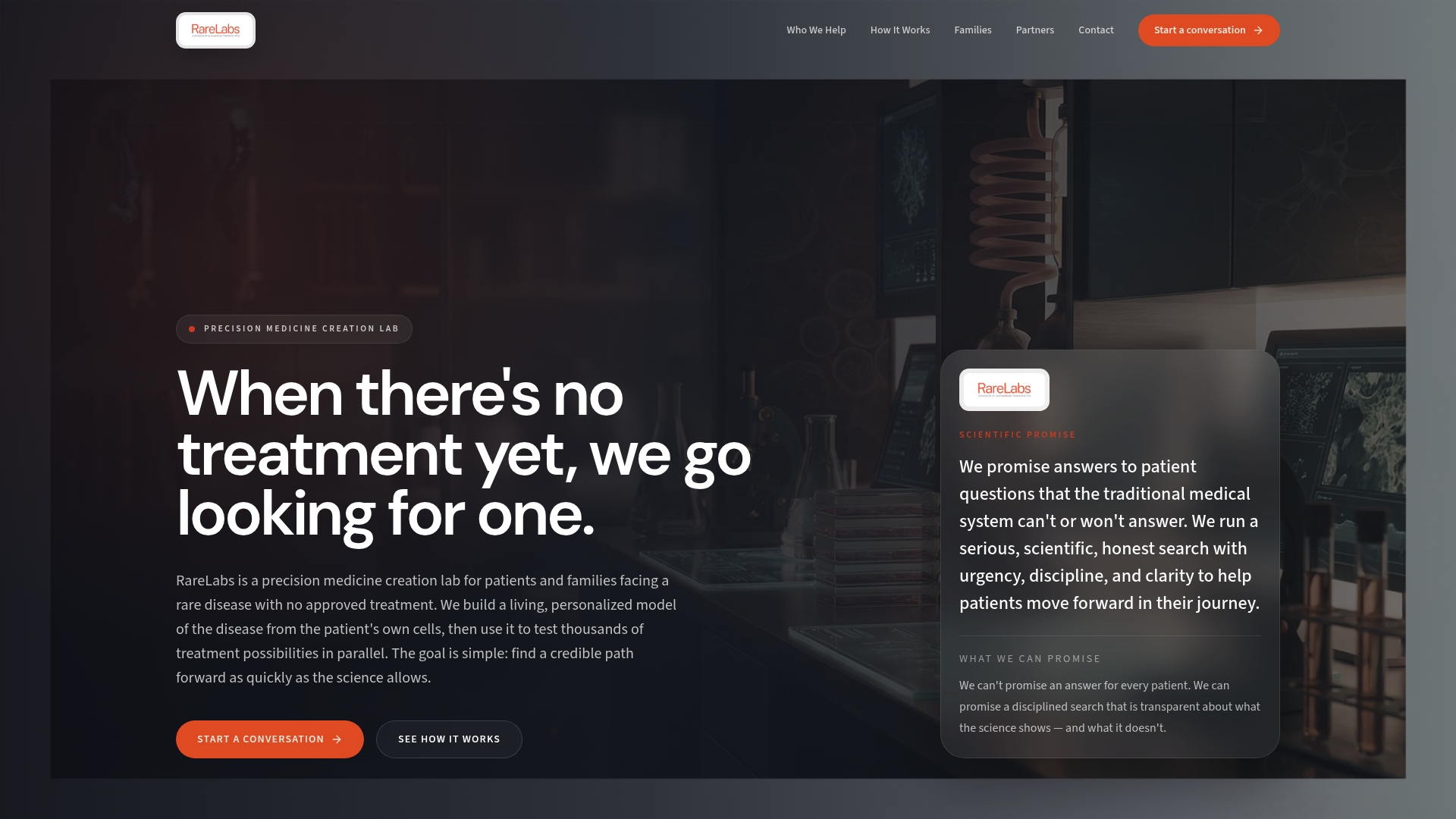
The RareLabs Knowledge portal aggregates rare disease research, repurposing candidates, and treatment evidence in one searchable database. Researchers can identify which FDA-approved drugs have been tested or proposed for specific rare genetic conditions, review the supporting evidence, and connect findings to active research programs. For clinicians and scientists working under time pressure on undiagnosed cases, this kind of structured access to repurposing data shortens the path from hypothesis to testable candidate.
FAQ
What is drug repurposing in the context of FDA-approved drugs?
Drug repurposing is the identification and development of new therapeutic indications for compounds that the FDA has already approved for a different use. It leverages existing safety and efficacy data to reduce development time and cost compared to novel drug development.
How does an official FDA label change differ from off-label prescribing?
An official label change, filed through a supplemental NDA or sBLA, provides legal and reimbursement clarity that off-label prescribing does not. Off-label use remains a clinical decision without insurance coverage guarantees, while a label update aligns payers and providers with the new indication.
What regulatory incentives support repurposing for rare diseases?
The Orphan Drug Act offers seven years of market exclusivity, tax credits, and priority review for drugs targeting conditions affecting fewer than 200,000 Americans. The FDA's 2026 collaborative initiative adds harmonized trial design support and public funding frameworks for indications with limited commercial interest.
Does repurposing always reduce clinical trial requirements?
No. The safety profile advantage applies only when the new indication uses a dosage and patient population similar to the approved use. Significant changes to dose or population can require clinical trials nearly as extensive as those for a novel drug.
How can researchers use AI tools in a repurposing regulatory strategy?
The FDA now accepts AI and machine learning model outputs as preliminary data to prioritize repurposing candidates for further study. Researchers can combine computational predictions with real-world evidence from platforms like CURE ID to build a pre-submission package that defines the clinical evidence standard for a supplemental application.