

Biopharma innovation trends 2026 are defined by four converging forces: AI-native drug discovery pipelines, in vivo CAR-T cell therapies, scalable bioprocessing, and record-breaking deal activity. These are not pilot programs or speculative roadmaps. Merck has already reported measurable cycle-time reductions from agentic AI. Eli Lilly and Insilico Medicine have committed up to $2.75 billion to AI-driven asset generation. And in a single 12-day window in March 2026, seven biopharma transactions exceeded $1 billion each. For professionals, investors, and researchers tracking the future of biopharma innovation, the signal is clear: the structural shift is underway.
1. AI-native drug discovery is rewriting R&D timelines
AI has moved from proof-of-concept to production-grade infrastructure across major biopharma organizations. The clearest evidence comes from Merck, where agentic AI reduced drug-discovery cycles by approximately 33% and accelerated marketing-material compliance reviews by 70 to 80%. That level of efficiency gain does not come from deploying a model. It comes from years of prior investment in digital infrastructure, what practitioners call the "plumbing" that makes AI deployable at scale in regulated environments.
The Lilly and Insilico Medicine partnership illustrates how this plays out commercially. The deal carries $115 million upfront with potential milestone payments reaching $2.75 billion, targeting preclinical candidates within 12 to 18 months using closed-loop AI systems. This is not a research grant. It is a structured bet on AI as a primary asset-generation engine, and it signals where large-cap biopharma is allocating capital.
The organizational challenge is just as significant as the technical one. Scaled AI in biopharma demands governance frameworks, validation protocols, and change management alongside model deployment. AI works best in biopharma as an embedded workflow system with human oversight, not as a standalone tool dropped into existing processes.
- Infrastructure first: Data pipelines, clean ontologies, and validated systems must precede AI scale-up.
- Human-as-governor model: Regulated workflows require human review checkpoints at every decision node.
- Closed-loop systems: AI platforms that generate, test, and refine hypotheses internally compress discovery timelines most effectively.
- Governance investment: Compliance and validation costs are real and must be budgeted alongside model licensing.
Pro Tip: Before evaluating AI vendors, audit your organization's data infrastructure. The ROI gap between early AI adopters and laggards in biopharma is almost entirely explained by data readiness, not model quality.
2. In vivo CAR-T therapies are changing the cell therapy equation
Ex vivo CAR-T manufacturing has always carried a structural problem: it is slow, expensive, and logistically complex. In vivo CAR-T eliminates that bottleneck by programming T cells inside the patient's body using engineered viral vectors or lipid nanoparticles to deliver the genetic payload directly. The result is a therapy that does not require cell extraction, engineering, and reinfusion in a specialized facility.
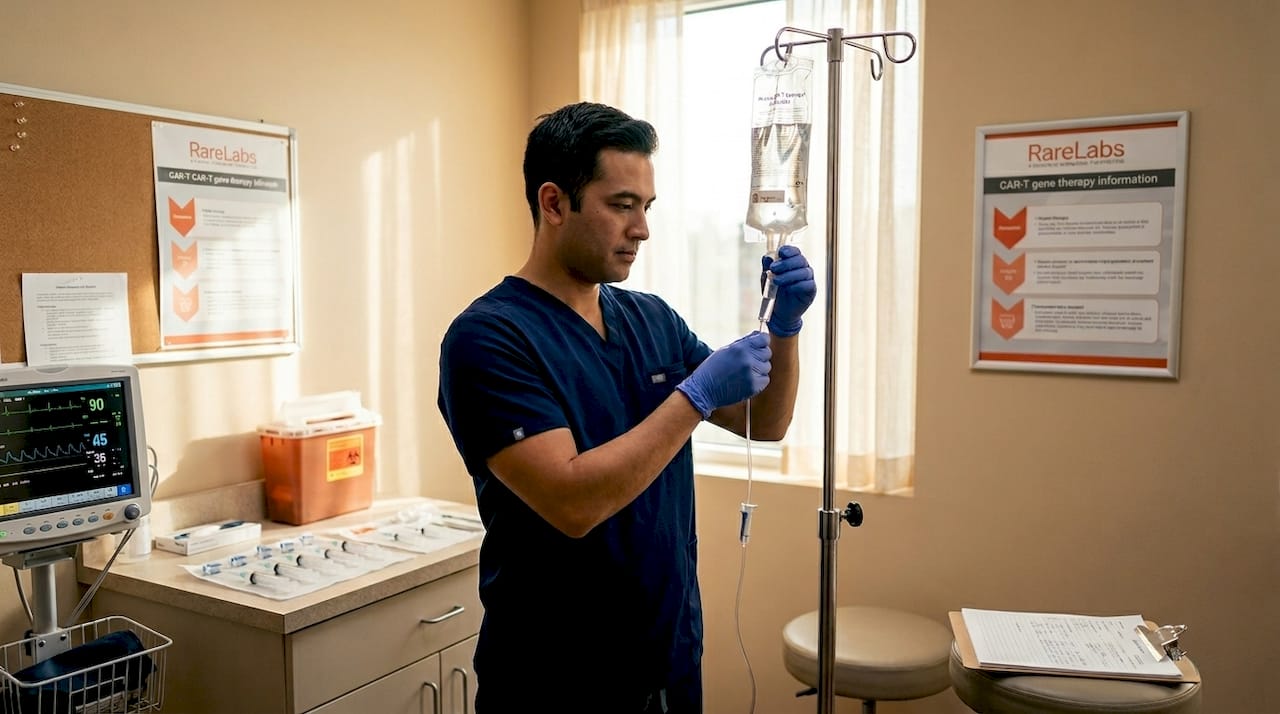
The manufacturing advantages are quantifiable. In vivo CAR-T reduces treatment timelines to 1.5 to 3 weeks and cuts costs by more than 50% per treatment course compared to ex vivo methods. That cost reduction is not marginal. It is the difference between a therapy accessible only at major academic medical centers and one that could be administered in outpatient oncology clinics globally.
The shift in risk profile is worth understanding precisely. Ex vivo manufacturing complexity is replaced by challenges in delivery targeting, dosing control, and immunogenicity management. Polypeptide-engineered lipid nanoparticles (pDLS-LNPs) address one of those challenges directly: they reduce immunogenicity on repeat dosing and outperform clinically approved PEG-LNP formulations in mRNA delivery stability and toxicity profiles. For chronic disease applications, this matters enormously.
| Feature | Ex vivo CAR-T | In vivo CAR-T |
|---|---|---|
| Manufacturing site | Specialized GMP facility | Patient's own body |
| Timeline | 4 to 6 weeks | 1.5 to 3 weeks |
| Cost per course | Very high | Reduced by 50%+ |
| Primary risk | Manufacturing failure | Delivery targeting, immunogenicity |
| Outpatient feasibility | Low | High |
Regulatory agencies are developing adaptive frameworks to balance accelerated access with safety for these novel modalities. Early engagement with the FDA and EMA is no longer optional for sponsors advancing in vivo programs. It is a prerequisite for avoiding late-stage surprises. For a deeper look at how gene therapy approaches are evolving for rare and ultra-rare diseases, the Hopeatrarelabs blog offers detailed technical context.
Pro Tip: If you are evaluating in vivo CAR-T assets for investment or partnership, prioritize programs with validated delivery platforms and published immunogenicity data. The science of the CAR construct matters less right now than the delivery vehicle.
3. Scalable manufacturing is becoming a strategic differentiator
Biopharma manufacturing is undergoing a structural redesign in 2026. Continuous bioprocessing, single-use bioreactor systems, and modular facility designs are replacing batch manufacturing models that were built for a different era of drug development. The driver is not just cost. It is supply chain resilience, regulatory compliance speed, and the ability to scale production for personalized medicines without building new fixed infrastructure.
Single-use systems eliminate cross-contamination risks between production runs and reduce cleaning validation burdens significantly. For biologics manufacturers producing multiple products in the same facility, this is a compliance advantage as much as an operational one. Continuous bioprocessing, meanwhile, allows real-time monitoring and adjustment of critical quality attributes, which aligns directly with the FDA's Process Analytical Technology framework.
The sustainability dimension is gaining traction as well. Biopharma companies facing ESG reporting requirements are finding that single-use systems, while generating plastic waste, often carry a lower overall carbon footprint than traditional stainless-steel operations when water and energy consumption are factored in. The calculus is not simple, but the direction of travel is clear.
- Continuous bioprocessing: Reduces batch failure risk and enables real-time quality control.
- Single-use bioreactors: Lower capital expenditure and accelerate facility changeovers for multi-product sites.
- Modular facility design: Enables rapid capacity scaling without major construction timelines.
- Cold chain optimization: Advances in formulation stability are reducing the temperature sensitivity of biologics, lowering distribution costs.
For researchers tracking genomic medicine breakthroughs alongside manufacturing trends, the intersection of gene therapy and scalable production is one of the most consequential areas to watch in 2026.
4. Market momentum: deal activity and investor sentiment in 2026
The biopharma deal market in 2026 is not just active. It is historically significant. Seven transactions each exceeding $1 billion closed within a 12-day window in March 2026, totaling approximately $29 billion. That single data point reframes the entire year's M&A narrative. Analysts who entered 2026 cautiously optimistic are now tracking what may be the highest-volume deal year on record.
Investor sentiment reflects this momentum. The BioPharma Sentiment Index rose to 96 in Q2 2026, up from 90 in Q1 and 78 in Q4 2025. Among respondents, 74% cited AI acceleration of drug discovery as a top driver of optimism. That is a striking alignment between technology adoption and capital market confidence.
Several factors are shaping deal strategy specifically:
- Patent cliff pressure: Large-cap companies facing revenue gaps from expiring blockbusters are acquiring AI-enabled pipelines rather than building them internally.
- Platform asset valuation: Buyers are paying premiums for platform technologies, particularly in RNA therapeutics and cell and gene therapy delivery.
- Geopolitical reconfiguration: Supply chain diversification and manufacturing onshoring are influencing where deals are structured and which assets are prioritized.
- Regulatory environment: Despite political uncertainty in some markets, the overall regulatory climate for novel modalities is assessed as moderately improving by industry participants.
The role of peptide biomarkers in validating drug discovery assets is also gaining prominence in deal due diligence, as buyers seek earlier and more precise evidence of target engagement before committing capital.
Key takeaways
Biopharma innovation in 2026 is driven by AI infrastructure maturity, in vivo delivery platform advances, scalable manufacturing redesign, and the largest M&A wave the industry has seen in years.
| Point | Details |
|---|---|
| AI requires infrastructure first | Merck's 33% cycle reduction came from prior digital investment, not model deployment alone. |
| In vivo CAR-T cuts costs by 50%+ | Reduced timelines and outpatient feasibility make this modality a genuine access expansion tool. |
| Sentiment index hit 96 in Q2 2026 | 74% of respondents cite AI as the top driver, signaling aligned capital and technology momentum. |
| Manufacturing is a strategic asset | Continuous bioprocessing and single-use systems are now competitive differentiators, not just cost tools. |
| M&A is at record pace | $29 billion in 12 days signals that platform asset acquisition is the dominant growth strategy for large-cap biopharma. |
What I actually think about where biopharma is headed
The trends covered here are real, but the gap between organizations that will benefit from them and those that will not is wider than most industry commentary acknowledges. AI is not a leveler. It is an amplifier. Companies with clean data, validated workflows, and governance structures already in place will compound their advantages rapidly. Companies still debating AI strategy at the board level will find themselves acquiring those advantages at a premium in two or three years, through M&A, not organic development.
The in vivo CAR-T story is the one I find most underappreciated by investors outside the cell therapy space. The cost and access implications are genuinely transformative, not just for oncology but for autoimmune and genetic disease applications that are still early in preclinical development. The delivery platform question, specifically which LNP or viral vector approach achieves the best targeting specificity with the lowest immunogenicity, will determine which programs advance and which stall. That is where the scientific differentiation will be won or lost.
On the deal side, I would caution against reading the March 2026 surge as a signal that valuations are rational. Record deal volume in a compressed window often reflects urgency more than discipline. The companies that use this M&A wave to acquire platform capabilities with clear regulatory paths will outperform those chasing pipeline assets at peak multiples.
For rare disease researchers and biopharma partners specifically, the convergence of AI-driven target identification, improved delivery platforms, and accelerating rare disease therapy development creates a window of opportunity that is genuinely different from prior cycles. The tools are better. The capital is available. The regulatory frameworks are adapting. What is required now is the organizational clarity to act.
— John
How Hopeatrarelabs supports your rare disease research
Hopeatrarelabs operates at the intersection of the trends covered in this article. The team builds patient-specific disease models using iPSCs and CRISPR gene editing, then runs parallel treatment screens across thousands of FDA-approved drugs, custom ASOs, and gene therapy options. For biopharma partners and researchers tracking 2026 drug development trends, that means access to a platform designed specifically for the diseases that standard pipelines do not reach.

The RareLabs Knowledge portal is the starting point for professionals who need curated, scientifically rigorous data on rare disease research and treatment development. Whether you are evaluating partnership opportunities, tracking emerging modalities, or supporting a specific patient case, the portal provides the depth and transparency that generic databases do not. Explore it to complement your understanding of where biopharma innovation is creating real-world impact for underserved patient populations.
FAQ
What are the top biopharma innovation trends for 2026?
The leading trends are AI-native drug discovery, in vivo CAR-T cell therapies, continuous bioprocessing, and record M&A activity. Each is supported by quantifiable data, including Merck's 33% cycle reduction and a $29 billion deal surge in March 2026 alone.
How does in vivo CAR-T differ from traditional CAR-T therapy?
In vivo CAR-T delivers genetic instructions directly into the patient's body using viral vectors or lipid nanoparticles, eliminating the need for ex vivo cell manufacturing. This reduces treatment timelines to 1.5 to 3 weeks and cuts costs by more than 50% per course.
Why is AI adoption in biopharma so uneven across organizations?
AI success in regulated biopharma depends on digital infrastructure, governance frameworks, and validated workflows, not just model quality. Organizations that invested in data infrastructure before deploying AI are seeing the largest efficiency gains.
What is driving the 2026 biopharma M&A surge?
Patent cliff pressure, platform asset premiums, and AI-driven pipeline valuations are the primary drivers. The BioPharma Sentiment Index reaching 96 in Q2 2026 reflects broad industry confidence, with 74% of respondents citing AI as a top optimism factor.
How are lipid nanoparticles improving gene therapy delivery?
Polypeptide-engineered LNPs (pDLS-LNPs) reduce immunogenicity on repeat dosing and outperform PEG-LNP formulations in mRNA delivery stability. This makes them particularly relevant for chronic disease applications requiring multiple treatment cycles.