

Treating a disease means taking medical action — through drugs, procedures, therapies, or lifestyle changes — to cure, control, or prevent illness from progressing. The goal isn't always a cure. Depending on the condition, success might mean full remission, stable symptoms, or simply a better quality of life. Understanding which goal applies to your situation is the first thing to sort out with your clinician.
The four core treatment goals:
- Cure: Eliminate the disease entirely (e.g., antibiotics clearing a bacterial infection)
- Remission: Suppress disease activity to undetectable or minimal levels (e.g., certain cancers, autoimmune conditions)
- Symptom control: Manage discomfort and prevent complications when cure isn't possible (e.g., insulin for Type 1 diabetes)
- Prevention: Stop disease from developing or recurring (e.g., vaccines, statins, screening programs)
What to expect at diagnosis: Your provider will take a history, run targeted labs or imaging, and sometimes refer you to a specialist before landing on a treatment plan. For common conditions, this can happen in days. For rare or undiagnosed diseases, it can take months or years.
Seek immediate care if you experience: sudden chest pain, difficulty breathing, stroke symptoms (face drooping, arm weakness, speech difficulty), severe abdominal pain, high fever with stiff neck, or any symptom that appears suddenly and feels severe.
For rare or undiagnosed genetic conditions where standard pathways haven't produced answers, specialized resources like clinicaltrials.gov, the FDA, the CDC, and organizations like Hopeatrarelabs offer additional options beyond conventional care.
Table of Contents
- How are diseases diagnosed in the U.S.?
- What are the main types of medical treatment?
- When do procedures and surgery become the right choice?
- How do vaccines and screening prevent disease?
- What is supportive care, and when does palliative care apply?
- How do clinical trials and personalized therapies work?
- What does "incurable" actually mean for your treatment plan?
- How do you choose a treatment and talk with your clinician?
- Where can you find trusted U.S. resources and specialists?
- Key Takeaways
- The case for treating rare disease differently
- Hopeatrarelabs: personalized disease modeling for ultra-rare conditions
- Useful sources
How are diseases diagnosed in the U.S.?
Diagnosis follows a stepwise path, and knowing what's coming helps you prepare for each stage rather than feel blindsided by it.
The standard diagnostic flow:
- Medical history: Your provider asks about symptom onset, duration, severity, prior illnesses, medications, and family history. This alone narrows the differential significantly.
- Physical exam: Vital signs, organ system checks, and targeted findings guide the next tests.
- Laboratory tests: Common panels include a complete blood count (CBC) to check for infection or anemia, a comprehensive metabolic panel (CMP) for kidney and liver function, blood cultures for suspected bacteremia, and PCR tests for viral or bacterial pathogens.
- Imaging: X-rays for bone and lung structure, ultrasound for soft tissue and abdominal organs, CT scans for detailed cross-sectional anatomy, and MRI for neurological and musculoskeletal detail.
- Tissue diagnosis: Biopsies confirm cancer, autoimmune conditions, and certain infections when imaging and labs aren't definitive.
- Genetic testing: Single-gene tests, multi-gene panels, or whole-exome sequencing are ordered when an inherited condition is suspected. Exome results typically take several weeks to months.
Timeline reality check: A strep throat culture comes back in 24–48 hours. A CT scan result may be available within hours to days. Genetic panels and exome sequencing routinely take weeks to months, and rare disease diagnoses sometimes stretch years before a name is attached.
Pro Tip: Bring a written symptom timeline, a complete medication list (including supplements), and a three-generation family history to every specialist appointment. Providers who see this level of preparation move faster and order more targeted tests.
What are the main types of medical treatment?
Treatment categories map roughly to the cause and mechanism of disease. No single category works for everything, and most complex conditions use more than one.
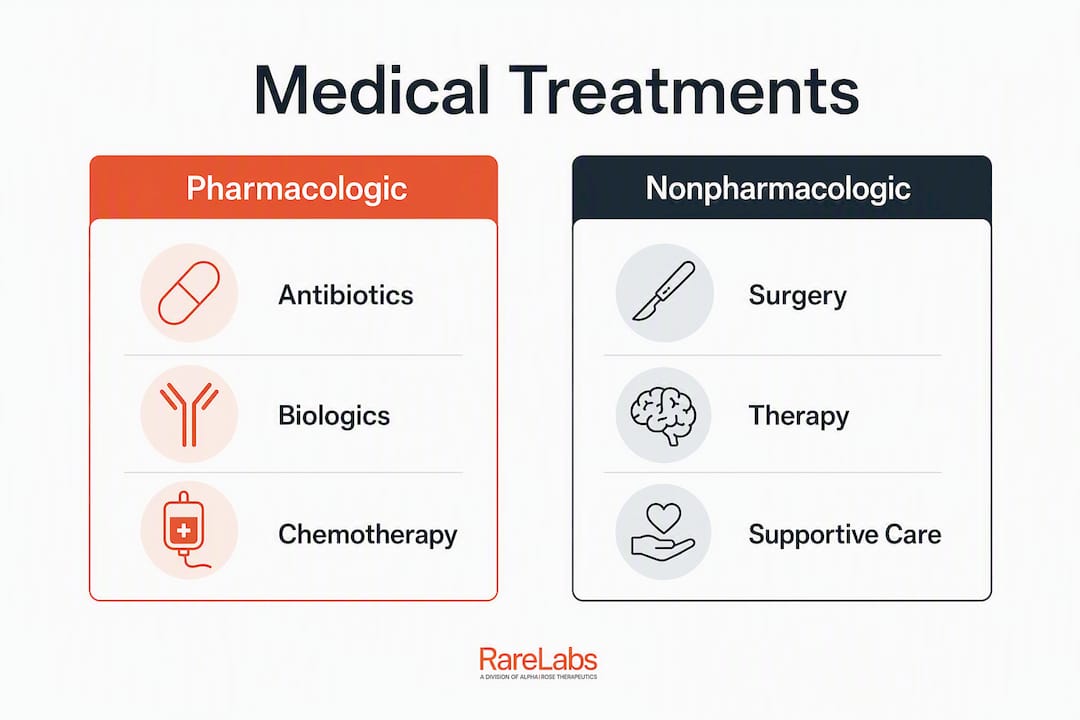
Pharmacologic agents
Antibiotics target bacterial infections; they do nothing for viral illness, which is why prescribing them for a cold is both ineffective and contributes to resistance. Antivirals like oseltamivir (Tamiflu) or antiretrovirals for HIV work against specific viral targets. Antifungals treat infections like candidiasis or aspergillosis. Antihypertensives (ACE inhibitors, beta-blockers, calcium channel blockers) lower blood pressure and reduce cardiovascular risk. Insulin replaces a hormone the pancreas can no longer produce adequately.

Biologics and immunotherapy
Monoclonal antibodies like adalimumab (Humira) block specific inflammatory pathways in rheumatoid arthritis and Crohn's disease. Checkpoint inhibitors such as pembrolizumab (Keytruda) remove the brakes on the immune system to fight certain cancers. Enzyme replacement therapies address rare metabolic disorders where a specific enzyme is missing or deficient. These agents are typically prescribed by specialists and require regular monitoring.
Chemotherapy and radiation
Chemotherapy uses cytotoxic drugs to kill rapidly dividing cells, which is why hair loss and nausea are common side effects — healthy fast-dividing cells get caught in the crossfire. Radiation therapy targets localized tumors with high-energy beams, often used alongside surgery or chemotherapy. Both require careful dosing and monitoring for organ toxicity.
Nonpharmacologic options
Surgery, physical therapy, cognitive behavioral therapy (CBT), and nutritional interventions are first-line for many conditions. Joint replacement is the definitive treatment for end-stage osteoarthritis. CBT outperforms medication for certain anxiety disorders in long-term outcomes. Dietary changes alone can reverse early Type 2 diabetes in some patients.
Pro Tip: Before starting any new prescription, ask three questions: What is this drug supposed to do, and how will we know it's working? What are the most common side effects, and which ones should prompt a call? Are there drug or food interactions I need to know about?
When do procedures and surgery become the right choice?
Medical therapy handles most diseases, but some conditions require a physical intervention that no pill can replicate.

Procedures become the preferred route when there's a structural problem (a blocked coronary artery, a ruptured appendix, a worn-out hip joint), a resectable tumor, or a tissue sample needed for definitive diagnosis. The logic is straightforward: if the problem is mechanical, the fix usually needs to be mechanical too.
Common examples and what to expect:
- Appendectomy: Laparoscopic removal typically means a 1–2 day hospital stay and 2–4 weeks to full activity.
- Coronary artery bypass grafting (CABG): Open-heart surgery with a 4–7 day hospital stay and 6–12 weeks of cardiac rehabilitation.
- Total knee or hip replacement: 1–3 day inpatient stay, with most patients walking the same day; full recovery takes 3–6 months.
- Endoscopic procedures: Colonoscopy, upper endoscopy, and bronchoscopy are outpatient procedures with same-day discharge in most cases.
- Minimally invasive vs. open surgery: Laparoscopic and robotic approaches reduce incision size, blood loss, and recovery time, though not every condition or anatomy is suitable.
Perioperative risks include infection at the surgical site, bleeding, blood clots (deep vein thrombosis), and anesthesia reactions. These risks are real but manageable with proper pre-op screening and post-op care.
Pro Tip: Ask your surgeon three things before consenting: What happens if I don't have this procedure? What is your personal complication rate for this operation? What does recovery actually look like week by week? These questions reveal far more than the standard consent form.
How do vaccines and screening prevent disease?
Prevention is the most cost-effective form of disease management, and it's consistently underused.
Vaccines work by training the immune system to recognize a pathogen before it causes illness. The influenza vaccine reduces hospitalization rates in high-risk groups. HPV vaccination, when given before exposure, prevents the majority of cervical cancers. COVID-19 vaccines reduced severe disease and death during the pandemic. Hepatitis B vaccination has dramatically cut rates of liver cancer in vaccinated populations.
Screening detects disease early, when treatment options are broader and outcomes are better. Mammography catches breast cancer at earlier stages. Colonoscopy finds and removes precancerous polyps before they become cancer. Blood pressure and cholesterol checks identify cardiovascular risk years before a heart attack or stroke occurs.
A practical prevention checklist:
- Stay current on CDC-recommended immunizations for your age group
- Complete age-appropriate cancer screenings (colonoscopy starting at 45, mammography per your provider's guidance)
- Know your blood pressure, fasting glucose, and cholesterol numbers
- Avoid tobacco in all forms; limit alcohol
- Maintain a healthy weight and regular physical activity
- Ask your provider about any family history that warrants earlier or more frequent screening
Lifestyle interventions aren't glamorous, but they prevent more disease than most drugs do. Smoking cessation alone reduces lung cancer risk by roughly 50% within 10 years of quitting.
What is supportive care, and when does palliative care apply?
Not every treatment aims at the disease itself. Supportive care and palliative care focus on the person living with the disease, and the distinction between them matters.
Supportive care manages symptoms and treatment side effects throughout the illness, regardless of whether a cure is being pursued. Pain control, anti-nausea medications, nutritional support, oxygen therapy, wound care, and mobility aids all fall here. Mental health resources, including therapy and psychiatric medication, are part of supportive care too.
Palliative care is a specialty that addresses physical, emotional, and social suffering for patients with serious illness. It can run alongside curative treatment — it's not reserved for end of life. Hospice, by contrast, is a specific program for patients who have chosen to stop curative treatment and focus entirely on comfort, typically when life expectancy is six months or less.
Chronic disease management sits in its own category. Conditions like heart failure, diabetes, and COPD require ongoing multidisciplinary teams: primary care, cardiology or endocrinology, nursing, pharmacy, and often social work. The goal isn't cure; it's preventing hospitalizations, slowing progression, and keeping the patient functional.
Pro Tip: If you or a family member has a serious diagnosis, ask your care team directly: "Can we involve palliative care now?" Studies consistently show that early palliative involvement improves quality of life and, in some cancers, survival — yet most patients wait until the final weeks to access it.
How do clinical trials and personalized therapies work?
Clinical trials are the engine of medical progress, and they're more accessible than most patients realize.
Clinicaltrials.gov is the U.S. registry for federally and privately funded trials. You can search by condition, location, age, and trial phase. Phase I trials test safety in small groups; Phase II tests efficacy; Phase III compares the new treatment to standard of care in larger populations. Reading the eligibility criteria carefully before contacting a trial site saves everyone time.
Personalized and N-of-1 approaches
For ultra-rare and undiagnosed genetic diseases, standard trials often don't exist. That's where personalized approaches come in.
Patient-derived iPSC disease modeling takes cells from a patient, reprograms them into induced pluripotent stem cells, and differentiates them into the disease-relevant tissue type. The result is a living model of that patient's disease that can be used to screen thousands of compounds. iPSC models preserve the patient's genetic background, revealing human-specific disease mechanisms that animal models routinely miss. Limitations exist: cell maturity and line variability require careful validation, including whole-genome sequencing of multiple clones to distinguish disease-causing phenotypes from culture-induced mutations.
Individualized antisense oligonucleotides (ASOs) are custom RNA-targeting molecules designed for a specific patient's genetic variant. The workflow runs from genetic diagnosis to ASO design to in vitro testing to IND-enabling safety studies. Practical guidelines recommend focusing on monogenic, severe disorders where the patient still retains treatable function — because if irreversible organ damage has already occurred, an ASO cannot restore what's gone.
Regulatory context: The FDA has established frameworks for individualized therapies that emphasize rigorous clinical planning, manufacturing controls, and tailored safety data. Sponsors must define clear outcome measures before initiating a single-patient program.
| Reference Point | Detail |
|---|---|
| Approved oligonucleotide therapies | 19 approved across major agencies, including 10 ASOs |
| Typical individualized ASO timeline | The development timeline from design to initial clinical use for an individualized ASO is roughly two years |
| iPSC model validation requirement | Multiple clones + whole-genome sequencing recommended |
| Trial search resource | Clinicaltrials.gov (searchable by condition, phase, location) |
Pro Tip: When contacting a clinical trial coordinator, ask: What is the primary endpoint, and how is it measured? What happens to my care if the trial ends early? Is there a compassionate use or expanded access pathway if the trial closes?
What does "incurable" actually mean for your treatment plan?
"Incurable" doesn't mean untreatable. It means the disease cannot be fully eliminated with current medicine, but meaningful treatment goals remain.
Cleveland Clinic defines treatment goals as a spectrum: cure (eliminate disease), remission (suppress activity), management (control symptoms and slow progression), and palliative care (maximize comfort). Most chronic diseases fall in the management category. Type 1 diabetes isn't curable, but insulin therapy keeps patients alive and functional for decades. HIV isn't curable, but antiretroviral therapy suppresses viral load to undetectable levels and prevents transmission.
Clinicians measure success differently depending on the goal. For cancer, overall survival and progression-free survival are standard endpoints. For autoimmune disease, disease activity scores and quality-of-life scales matter. For rare genetic diseases, functional milestones, biomarker changes, or stabilization of decline may be the most realistic targets.
Questions to ask your team when cure isn't the goal:
- What is the realistic best outcome with treatment, and how is that measured?
- What complications are we trying to prevent, and how will we monitor for them?
- At what point would you recommend involving palliative care?
- Are there clinical trials or experimental options I should know about?
Early referral to specialty care matters more for progressive diseases than for stable ones. If a condition is likely to worsen, getting to the right specialist before function is lost opens more options.
How do you choose a treatment and talk with your clinician?
The best treatment decision is one you understand and actively participate in. Here's a sequential approach to get there.
- Confirm the diagnosis. Before committing to a treatment plan, make sure the diagnosis is solid. Ask what tests confirmed it and whether a second opinion is warranted.
- List all available options. Ask your provider to walk through every option, including watchful waiting, if it's appropriate.
- Weigh benefits against risks. For each option, ask: What is the expected benefit, and how certain is that estimate? What are the most likely side effects?
- Consider quality-of-life outcomes. A treatment that extends life by months but causes severe disability may not align with your priorities. That's a legitimate medical conversation.
- Seek a second opinion when uncertain. Major academic medical centers and disease-specific centers of excellence often see patterns that community providers don't. A second opinion is standard practice, not an insult.
- Address cost and insurance upfront. Ask for a financial navigator or social worker if cost is a barrier. Many pharmaceutical companies offer co-pay assistance programs. Pre-authorization denials can often be appealed successfully with the right documentation.
Pro Tip: Before a treatment decision meeting, write down your top three priorities (e.g., staying functional at work, avoiding hospitalization, minimizing side effects). Hand that list to your provider at the start of the appointment. It changes the conversation. For families navigating rare disease, a step-by-step guide to finding rare disease treatments can help structure that process.
Where can you find trusted U.S. resources and specialists?
The quality of health information online varies enormously. These sources are reliable starting points.
Authoritative U.S. resources:
- CDC: Disease surveillance, vaccination schedules, outbreak updates, and public health guidelines. Best for prevention and population-level data.
- FDA: Drug approvals, safety alerts, and guidance on individualized therapies. Essential for understanding what's approved and under what conditions.
- Clinicaltrials.gov: The definitive registry for U.S. and international trials. Search by disease, drug, phase, and location.
- Mayo Clinic: One of the leading academic medical centers in the U.S., with disease-specific care teams, research programs, and patient education resources.
Finding specialists:
Patient advocacy organizations for specific rare diseases often maintain trial registries, fund research, and connect families with others navigating the same diagnosis. Organizations like the National Organization for Rare Disorders (NORD) and disease-specific foundations are worth contacting early.
Evaluating online health information: Look for content authored by named clinicians or researchers, published on institutional or government domains (.gov, .edu, major medical centers), and citing primary sources or clinical guidelines. If a site is selling something, read its health claims with extra skepticism.
Key Takeaways
Treating a disease requires matching the right intervention to the right goal — cure, remission, symptom control, or prevention — and that match depends on accurate diagnosis, honest prognosis, and active patient participation.
| Point | Details |
|---|---|
| Treatment goals vary widely | Cure, remission, symptom control, and prevention each require different strategies and success metrics. |
| Diagnosis drives treatment choice | Labs, imaging, biopsies, and genetic testing narrow options; bring a symptom timeline and family history to every specialist visit. |
| Personalized therapies exist for rare disease | iPSC disease modeling and individualized ASOs are real options for monogenic disorders, with roughly a two-year development timeline. |
| Palliative care improves outcomes | Early palliative involvement improves quality of life and should be requested before the final stages of serious illness. |
| Hopeatrarelabs offers personalized programs | For ultra-rare and undiagnosed genetic diseases, Hopeatrarelabs provides iPSC modeling, CRISPR controls, drug repurposing screens, and ASO feasibility work. |
The case for treating rare disease differently
The conventional model of drug development assumes enough patients exist to run a randomized trial. For the roughly 300 million people worldwide living with a rare disease, that assumption fails most of the time. The majority of rare diseases have no approved treatment, not because the science is impossible, but because the economics of traditional drug development don't support it.
What's changed in the last decade is the emergence of tools that make single-patient programs scientifically credible. iPSC disease modeling, CRISPR-edited isogenic controls, and individualized ASO design have moved from theoretical to practical. The milasen case, where a custom ASO was designed and administered to a single child with Batten disease, demonstrated that the N-of-1 model can work within regulatory frameworks when the science is rigorous and the clinical planning is thorough.
The part most families don't hear soon enough is that timing matters enormously. For ultra-rare disorders, irreversible organ damage forecloses options that would otherwise be available. Early referral to a specialized program, before function is lost, is not a last resort. It's a strategic decision that expands what's possible. The families who move fastest tend to get the most options. That's not a comfortable truth, but it's an accurate one.
The gap between "no approved treatment" and "no treatment possible" is where personalized research accelerates cures for rare diseases. Filling that gap requires scientific rigor, regulatory literacy, and a team willing to work at the pace the patient's disease demands.
Hopeatrarelabs: personalized disease modeling for ultra-rare conditions
For patients and families who have exhausted standard pathways, Hopeatrarelabs offers something the conventional system rarely provides: a personalized, scientifically rigorous program built around a single patient's disease.
The core services include iPSC disease modeling from patient-derived cells, CRISPR-edited isogenic controls to isolate disease-specific effects, high-throughput drug repurposing screens across thousands of FDA-approved compounds, custom ASO feasibility assessment, and translational support from in vitro findings to clinical next steps. Every program is fee-for-service, contracted by patients, families, foundations, or biopharma partners, with transparent timelines and scientific reporting throughout.
This is not a substitute for clinical management. Hopeatrarelabs works alongside your medical team, not instead of it. If you're navigating an ultra-rare or undiagnosed genetic disease and want to understand what a personalized program could look like for your specific case, start with the RareLabs Knowledge hub to explore the research process and request an initial consultation.
Useful sources
-
Clinicaltrials.gov: The U.S. registry for federally and privately funded clinical trials. Search by condition, phase, location, and eligibility criteria. Best first stop for any patient exploring experimental options.
-
FDA Drug Information: Approvals, safety communications, and guidance documents on individualized therapies. Essential for understanding the regulatory status of any treatment under consideration.
-
Cleveland Clinic: What Is a Cure?: A patient-facing explainer on the spectrum of treatment goals, from cure to palliative care. Useful for framing conversations with clinicians about realistic outcomes.
-
Preparing for N-of-1 Antisense Oligonucleotide Therapy — PMC: A peer-reviewed overview of the regulatory, financial, and logistical challenges in developing single-patient ASO therapies. Recommended for families and physicians exploring this pathway.
-
Practical Recommendations for Individualized Splice-Switching ASO Treatments — PMC: Clinical guidelines on patient selection, eligibility criteria, and development steps for individualized ASO programs. The most practical reference for understanding who qualifies and when to start.
-
iPSC-Derived Cells for Disease Modeling and Drug Development — MDPI Cells: A peer-reviewed review of iPSC utility, strengths, and limitations for disease modeling and drug screening. Good scientific depth for families and physicians evaluating this approach.
-
Mayo Clinic Research and Clinical Trials: One of the leading U.S. academic medical centers for complex and rare disease care. Use to identify disease-specific research programs and specialist teams.
-
CDC Vaccines and Immunizations: Official U.S. immunization schedules by age group. The authoritative source for prevention planning.
-
Hopeatrarelabs Knowledge Hub: Explains the RareLabs research process, disease-modeling services, and how to initiate a personalized program for ultra-rare or undiagnosed genetic conditions.
This article is general health information, not medical advice. Confirm current treatment guidelines and options with a qualified clinician or specialist before making any medical decision.