

Rare disease trial best practices are not a refinement of standard clinical trial methodology. They are a fundamentally different discipline. When your patient population numbers in the hundreds globally, when phenotypic variability is extreme, and when patients may travel thousands of miles to participate, the conventional randomized controlled trial framework collapses under its own assumptions. Rare disease drug development has become a laboratory for clinical research innovation precisely because standard tools routinely fail here. This article cuts through the noise and delivers the specific design, recruitment, and regulatory strategies that actually work in 2026.
Table of Contents
- Key takeaways
- 1. Understand the essential criteria for rare disease trial design
- 2. Choose trial designs built for small, heterogeneous populations
- 3. Build a patient recruitment strategy that matches your population
- 4. Compare key methodologies and recruitment strategies
- 5. Apply situational recommendations based on your specific context
- My honest take on where rare disease trials actually go wrong
- How Hopeatrarelabs supports your rare disease research
- FAQ
Key takeaways
| Point | Details |
|---|---|
| Tailor design to population | Adaptive, crossover, and single-arm trials outperform RCTs when patient numbers are small and dispersed. |
| Registries are foundational | Real-world registry data informed 57% of clinical questions in rare disease guidelines, making them a primary evidence source. |
| Patient advocacy drives recruitment | Partnering with disease foundations and advocacy groups is the single most effective tactic for finding and retaining eligible participants. |
| Regulatory dialogue is non-negotiable | Early and ongoing agency engagement unlocks pathways like single pivotal trials and accelerated approvals unavailable to late-stage applicants. |
| Adaptive designs need active management | Sponsors who design adaptations but never invoke them miss the entire benefit of flexible trial methodology. |
1. Understand the essential criteria for rare disease trial design
Before selecting a trial methodology, you need a clear picture of the disease's natural history, phenotypic range, and the patient community's real-world priorities. These are not soft prerequisites. They are the structural foundation that every downstream decision rests on.
A thorough understanding of natural history tells you what trajectory untreated patients follow, which in turn defines your comparator data strategy and endpoint selection. Without it, you cannot tell whether observed changes in a single-arm study reflect treatment effect or natural variation. Well-characterized natural history data is something regulatory agencies specifically emphasize when evaluating individualized rare disease therapies.
Key criteria to evaluate before finalizing your protocol:
- Natural history and phenotypic variability: Define the spectrum of disease presentation and its impact on endpoint selection and patient stratification.
- Patient-centric outcomes: Engage patient advocacy groups early to identify outcomes that are meaningful to patients, not just measurable in a lab setting.
- Trial burden assessment: Evaluate visit frequency, travel requirements, and procedure load against what patients can realistically sustain.
- Registry and real-world data availability: Identify existing disease registries that can supply baseline data or serve as external comparators.
- Regulatory pathway selection: Determine whether your disease qualifies for orphan designation, breakthrough therapy, or accelerated approval pathways before writing the protocol.
Traditional evidence hierarchies are frequently unworkable in rare diseases. Integrating real-world evidence with structured expert consensus is not a compromise; it is the methodologically rigorous approach for these settings.
Pro Tip: Bring your patient advocacy partners into the protocol development phase, not after it. Their insight on what participants will actually complete versus what sounds feasible on paper will save you costly amendments later.
2. Choose trial designs built for small, heterogeneous populations
The single biggest structural mistake in rare disease research is forcing a small, heterogeneous population into a design built for large, uniform cohorts. Rare disease trials require tailored designs like adaptive, crossover, or single-arm structures rather than traditional randomized controlled trials. Each has a specific use case.
Adaptive designs allow pre-specified modifications to sample size, dosing, or patient allocation based on interim data. They are powerful in theory and underutilized in practice. The critical insight here is that sponsors often treat adaptive designs as paper exercises, writing in adaptation rules they never actually invoke. That defeats the purpose entirely. You need a team empowered and prepared to act on interim analyses when the data calls for it.

Single-arm trials make sense when a placebo control is ethically or practically untenable, which is common when disease is severe and no standard of care exists. The tradeoff is a heavier reliance on natural history data and external comparators to contextualize results.
Crossover designs work well for stable, chronic conditions where each patient serves as their own control. They reduce sample size requirements substantially but require careful washout period planning and are inappropriate for conditions with irreversible progression.
"The shift from two pivotal trials to one is not just a regulatory concession. It reflects a genuine re-evaluation of what constitutes sufficient evidence in populations where running two large trials is ethically and practically impossible." — Drug Target Review, 2026
FDA now accepts single pivotal trials for rare disease drug approval, which changes your statistical powering and risk calculus significantly.
Additional methodological tools worth incorporating:
- Digital patient profiles and digital twins: These allow you to simulate trial scenarios and test protocol assumptions before committing to a design. See how disease modeling unlocks better treatments in practice.
- Biomarker-driven endpoints: Composite endpoints anchored by validated biomarkers can capture multi-dimensional treatment effects in small samples.
- Bayesian statistical frameworks: These let you formally incorporate prior knowledge, including natural history data and earlier trial results, into your primary analysis.
3. Build a patient recruitment strategy that matches your population
Recruitment is where most rare disease trials quietly fail. The patients exist, but finding them, reaching them, and keeping them enrolled requires a completely different approach than standard trial recruitment.
Patient advocacy organizations are your most important recruitment partner. They have existing relationships with patients and families, credibility that clinical teams take years to build, and direct access to registries that sponsor teams cannot touch independently. This is not optional outreach. It is a core recruitment channel.
Practical recruitment tactics that consistently outperform standard approaches:
- Disease registry partnerships: Work directly with condition-specific registries to identify eligible patients and facilitate outreach through trusted channels.
- Decentralized and hybrid trial models: Reduce geographic barriers by allowing remote visits, local lab work, and telehealth check-ins. Reserve in-person visits for procedures that genuinely require site attendance.
- Travel support and in-home care options: Offering reimbursement for travel, lodging, and caregiver costs is not a benefit. It is a retention strategy. Patients who face financial pressure from participation drop out.
- AI-driven trial matching: Technology can identify candidates from electronic health records and genomic databases far faster than manual chart review. However, transparent communication about AI use is non-negotiable. Rare disease communities are small and closely connected, and opaque AI practices erode trust quickly.
- Plain-language communication: Every consent document, protocol summary, and patient-facing material should be written for patients and families, not for regulatory reviewers.
Pro Tip: When using AI matching tools, tell participants explicitly how their data is being used. In small rare disease communities, word travels fast. One trust breakdown can close off an entire patient network to your trial.
4. Compare key methodologies and recruitment strategies
Choosing between design and recruitment options requires weighing tradeoffs honestly. This table gives you a side-by-side view of the most commonly used approaches in rare disease study design.
| Approach | Best use case | Key advantage | Primary limitation |
|---|---|---|---|
| Adaptive design | Uncertain dose or population | Mid-trial flexibility reduces waste | Requires active management; complex to implement |
| Single-arm trial | Severe disease, no standard of care | Feasible with very small N | Relies heavily on external comparator data |
| Crossover design | Stable, chronic conditions | Each patient acts as own control | Inappropriate for progressive or irreversible disease |
| Registry-based comparators | Diseases with established registries | Reduces need for control arm | Data quality variability across registries |
| Advocacy-led recruitment | Any rare disease with active community | Access to trusted patient networks | Dependent on organizational capacity |
| Decentralized trial model | Geographically dispersed patients | Reduces dropout from travel burden | Requires robust digital infrastructure |
| AI-assisted matching | Diseases with genomic or EHR data | Speed and scale of candidate identification | Trust and transparency risks in small communities |
5. Apply situational recommendations based on your specific context
No two rare disease trials face the same constraints. A gene therapy trial for a condition affecting 200 patients globally demands a different approach than a repurposing study for a disease with 5,000 patients and an active registry. The overarching rare disease research guidelines all point to the same principle: fit the design to the disease and the population, not the other way around.
For ultra-rare conditions with fewer than 100 patients globally, the priority is maximizing data richness per participant rather than increasing sample size. This means deep phenotyping, longitudinal data collection, and extensive biomarker profiling at every visit. Review the genetic disease research process for a practical framework tailored to ultra-rare cases.
For rare diseases with more established patient communities, you have more design flexibility. Here the focus shifts to reducing participant burden, improving retention, and building the kind of long-term patient relationships that support follow-on studies. The GRADE framework enhanced with registry data and structured expert consensus gives you a method to generate robust clinical guidelines even when primary trial data is sparse.
Across all contexts, regulatory engagement should begin before the protocol is finalized. Agencies want to help rare disease programs succeed, and early dialogue gives you the opportunity to align on endpoints, evidence standards, and the acceptability of novel designs before you are committed to a specific approach.
Pro Tip: Request a Type B meeting with FDA before IND submission for any ultra-rare condition. The feedback you get on natural history data requirements and endpoint acceptability can save 12 to 18 months of redesign work.
My honest take on where rare disease trials actually go wrong
I've worked through enough of these studies to say this plainly: the most common failure mode is not a flawed hypothesis. It's a protocol that was designed for a different kind of trial.
I've seen sponsors spend months building an adaptive design, complete with elaborate statistical rules and interim analysis triggers, and then watch their teams hesitate to invoke a single adaptation when the data clearly warranted it. The design was real. The courage to use it was not. Active management of adaptive designs is a learned organizational behavior, and most teams need to deliberately build it.
What I've also found is that patient advocacy organizations are perpetually underused. Sponsors often treat them as a recruitment vendor of last resort rather than a scientific partner. The groups that lead with collaboration, including advocates in endpoint selection and protocol review, consistently run trials with better retention and more meaningful outcomes.
The regulatory piece surprises people. Most agencies dealing with rare diseases are not adversaries. They are often genuinely invested in finding a path to approval. The sponsors who treat regulatory dialogue as a continuous relationship rather than a submission event reach the finish line faster.
My advice: lean into the tools that rare disease research has developed on its own terms. Digital twins, Bayesian statistics, real-world comparators. These are not workarounds. As drug development innovation confirms, they are the methods that generate the most credible evidence from small populations.
— John
How Hopeatrarelabs supports your rare disease research
If your team is working through the design and execution challenges described in this article, Hopeatrarelabs offers resources and expertise built specifically for this space.
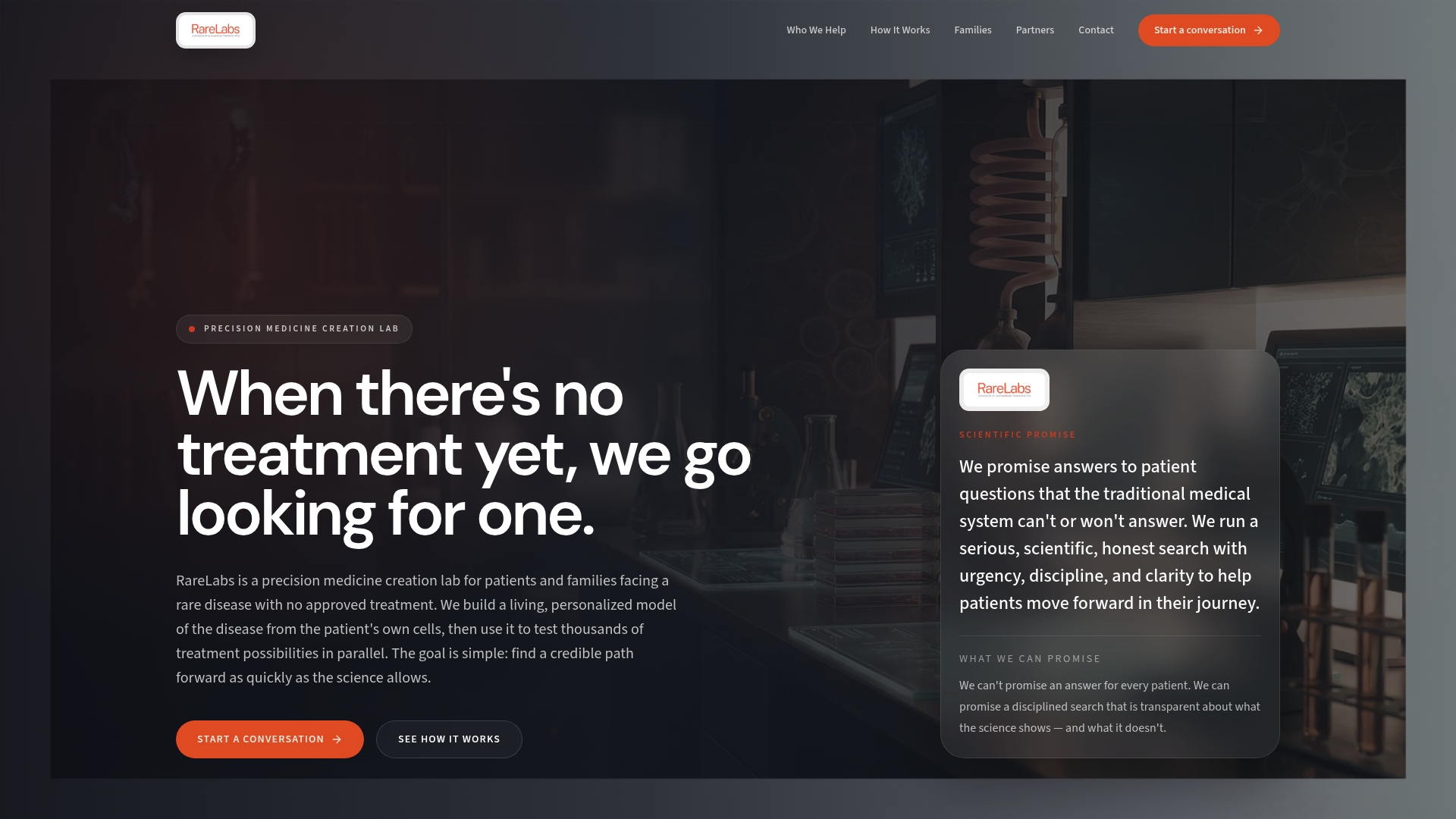
The Hopeatrarelabs Knowledge platform gives researchers, clinicians, and families access to curated rare disease research data, treatment options, and trial information in one place. Whether you are planning a study or looking for existing evidence on a specific condition, it is a practical starting point that saves significant search time. Hopeatrarelabs also works directly with physicians, foundations, and biopharma partners to develop personalized disease models using iPSC technology and CRISPR gene editing, accelerating the identification of viable treatment candidates. If you are navigating an ultra-rare or undiagnosed condition, connect with the Hopeatrarelabs team at hopeatrarelabs.com to explore what a tailored research approach could look like for your case.
FAQ
What makes rare disease trial design different from standard trials?
Rare disease trials work with very small, geographically dispersed, and often genetically heterogeneous populations, making traditional randomized controlled trials impractical. Adaptive, single-arm, and crossover designs are typically more appropriate and are accepted by regulators in these settings.
How many pivotal trials does the FDA require for rare disease drug approval?
The FDA now allows drug approval based on a single pivotal trial in rare disease settings, reflecting a shift in how regulators weigh evidence when running two large trials is ethically or practically impossible.
What is the most effective patient recruitment strategy for rare diseases?
Partnering with patient advocacy organizations and disease-specific registries consistently outperforms standard recruitment channels by providing direct access to trusted patient networks. Combining this with decentralized trial models and transparent communication about any AI tools used further improves enrollment and retention.
How should real-world data be used in rare disease clinical trials?
Real-world data from disease registries serves as the primary source for natural history baselines, external comparators, and endpoint validation. Registry-derived evidence contributed to 57% of clinical questions in rare disease guideline development, making it a legitimate and often necessary evidence source.
When should adaptive trial designs be used in rare disease research?
Adaptive designs are best suited for rare disease trials where there is genuine uncertainty about dose, population response, or sample size. They require active, planned management. Sponsors must be prepared to actually invoke pre-specified adaptations based on interim data, not simply include them in the protocol and set them aside.