

Precision therapeutics is defined as medical treatment tailored to a patient's unique genetic and molecular profile, designed to correct the root cause of disease rather than manage its symptoms. The NIH describes this approach as delivering the right drug at the right dose at the right time, based on each person's biology. For families navigating rare or undiagnosed genetic diseases, this distinction matters enormously. An estimated 25 to 30 million Americans live with a rare disease, and most have no approved treatment. Precision therapeutics, also called precision medicine or personalized medicine in clinical settings, represents the most direct path toward therapies that actually fit the patient.
What is precision therapeutics and how does it work?
Precision therapeutics is built on four scientific pillars: genomic and proteomic intelligence, molecular targeting, advanced therapeutic platforms, and AI-driven patient modeling. Each pillar addresses a different layer of the problem. Together, they shift treatment from broad, one-size-fits-all drugs to interventions designed around a specific patient's biology.
Genomic and proteomic intelligence means reading a patient's DNA and protein activity to identify the exact molecular fault driving the disease. This is the diagnostic foundation. Without it, clinicians are guessing.
Molecular targeting uses that information to select or design a therapy that blocks the faulty pathway or repairs the broken protein. The goal is precision, not power. A targeted therapy hits one specific mechanism rather than flooding the body with a broad agent.
Advanced therapeutic platforms include tools like CRISPR gene editing, mRNA treatments, monoclonal antibodies, and antisense oligonucleotides (ASOs). Each platform works differently, but all aim to intervene at the molecular level. Gene therapy for rare diseases is one of the fastest-growing areas within this category.
AI-driven modeling predicts how a specific patient will respond to a given therapy and at what dose. This reduces the trial-and-error cycle that families in rare disease communities know all too well.
Pro Tip: Ask your specialist whether your loved one's genomic data has been analyzed for known molecular targets. Many families do not realize this step can happen before any treatment decision is made.
What are the main types of precision therapeutics?
Precision therapeutics covers several distinct therapy categories, each working through a different biological mechanism. Understanding these categories helps families ask better questions and evaluate what options may apply to their situation.
Small-molecule drugs are chemically synthesized compounds small enough to enter cells and block disease signals from inside. They are often taken orally and are among the most established forms of targeted therapy. In oncology, drugs like kinase inhibitors block the growth signals that cancer cells depend on.
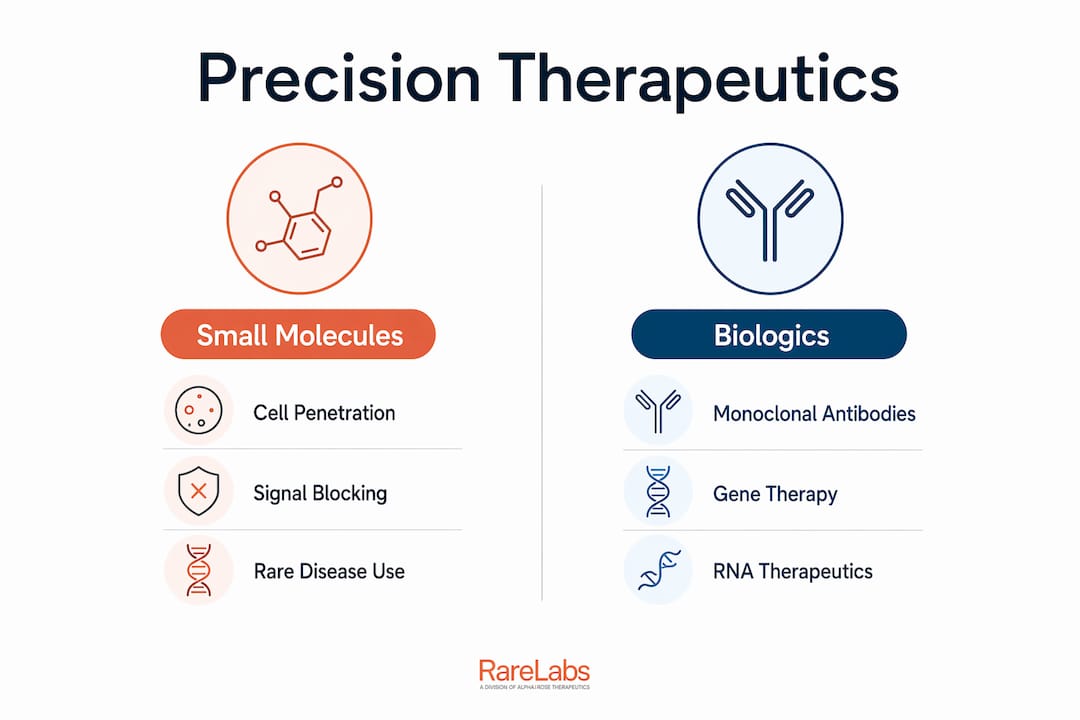
Monoclonal antibodies are lab-made proteins that bind to specific targets on the surface of diseased cells. They flag those cells for destruction by the immune system or block signals the cells need to survive. Targeted therapy drugs attack molecules involved in cancer cell growth with fewer side effects than traditional chemotherapy.
Gene therapies and RNA-based therapeutics correct the problem at the genetic level. Gene therapy delivers a functional copy of a faulty gene into the patient's cells. RNA-based approaches, including ASOs and mRNA treatments, adjust how genes are read or expressed without permanently altering DNA. These are particularly relevant for rare genetic diseases where a single mutation causes the entire condition.
Precision therapeutics increasingly applies beyond cancer. Rare disease applications now use "n-of-1" models, meaning therapies designed for a single patient based on their specific mutation. Patient-derived stem cells are used to test thousands of compounds to identify what works for that exact genetic variant. This is where the field is moving fastest.
| Therapy type | Mechanism | Common application |
|---|---|---|
| Small-molecule drugs | Block disease signals inside cells | Cancer, metabolic disorders |
| Monoclonal antibodies | Bind targets on cell surfaces | Cancer, autoimmune disease |
| Gene therapy | Deliver functional gene copies | Rare single-gene disorders |
| ASOs and mRNA | Adjust gene expression | Rare genetic diseases, some cancers |
| Cell-based therapies | Use patient-derived cells as treatment | Rare and ultra-rare diseases |
How does precision therapeutics benefit families with rare genetic diseases?
The most significant benefit for families is the shift from symptom management to addressing the actual cause of disease. Traditional medicine often treats what a patient feels. Precision therapeutics treats why they feel it. That difference can mean the gap between a therapy that slows decline and one that stops it.
-
Higher treatment effectiveness. Because therapies are matched to a patient's molecular profile, they are more likely to work. Targeted therapy can achieve up to 80% response rates in patients who are suitable candidates. That figure reflects cases where biomarker testing confirmed a match before treatment began.
-
Fewer side effects. Precision therapies hit specific targets rather than attacking healthy tissue broadly. Side effect profiles vary by therapy but generally show lower toxicity than traditional chemotherapy. Families report that patients maintain better quality of life during treatment.
-
Active family participation. Families are not passive in this process. Sharing molecular data is critical to pivot from symptom management to root-cause treatment. That means contributing genomic records, clinical histories, and ongoing monitoring data to the research and care team.
-
Personalized dosing. AI modeling uses a patient's specific biology to predict optimal drug doses. This reduces the risk of under-treatment or toxicity from doses calibrated for an average patient who does not exist.
Pro Tip: Keep a centralized digital file of all genomic test results, clinical notes, and specialist reports. Coordinated records are one of the most practical things a family can do to speed up therapy identification.
Challenges remain real. Precision medicine barriers include heavy data requirements, economic costs, technical expertise needs, and patient data privacy concerns. Access is not equal across all health systems. Families in rural areas or without specialist referrals often face longer timelines. Knowing these barriers exist helps families advocate more effectively for the resources they need.
What is the process for developing and accessing precision therapeutics?
The path from diagnosis to a precision therapy follows a defined sequence, though timelines vary significantly by disease complexity and available research.
-
Genomic and proteomic sequencing. This is the starting point. Whole-genome or whole-exome sequencing identifies the specific mutation or molecular fault. Proteomic analysis adds a layer by showing which proteins are behaving abnormally. Together, these create the molecular blueprint the care team works from.
-
Computational modeling. Once the blueprint exists, AI and bioinformatics tools predict which therapies are most likely to work and at what dose. This step enables prediction of drug responses and reduces the time spent on therapies unlikely to help.
-
Clinical trial and research participation. For many rare disease patients, clinical trials are the primary access route to precision therapies not yet approved. Families should ask their care team about active trials and rare disease treatment pathways that may apply to their specific mutation.
-
Multi-disciplinary coordination. Effective precision therapeutics requires coordinated multi-disciplinary teams managing genomic data, clinical responses, and therapeutic adaptation. This typically includes a geneticist, a specialist in the affected organ system, a genetic counselor, and a research coordinator.
| Step | What happens | Who is involved |
|---|---|---|
| Genomic sequencing | Identify mutation or molecular fault | Geneticist, lab |
| Computational modeling | Predict therapy response and dosing | Bioinformatics team |
| Therapy selection | Match patient to available treatments | Specialist, genetic counselor |
| Clinical trial access | Enroll in research programs | Research coordinator, family |
| Ongoing monitoring | Adapt therapy based on response | Full care team |
The process is iterative. Precision therapeutics requires multiple rounds of sequencing and modeling. Single-solution outcomes are rare. Families who understand this going in tend to navigate the process with more patience and purpose. A step-by-step treatment search can help organize this process practically.
Precision medicine in oncology offers a useful parallel for rare disease families. Skin cancer mapping uses biomarker analysis to identify optimal therapies before treatment begins. The same logic applies to rare genetic diseases: identify the target first, then select the tool.
Key Takeaways
Precision therapeutics works because it matches treatment to the patient's specific molecular fault rather than applying a standard protocol to everyone with the same diagnosis.
| Point | Details |
|---|---|
| Definition is specific | Precision therapeutics targets disease root causes using genomic and molecular profiling, not symptom patterns. |
| Four pillars drive the science | Genomic intelligence, molecular targeting, advanced platforms, and AI modeling form the foundation of every precision approach. |
| Multiple therapy types exist | Small-molecule drugs, monoclonal antibodies, gene therapies, and ASOs each address different molecular mechanisms. |
| Families are active participants | Sharing genomic data and clinical records directly accelerates therapy identification and adaptation. |
| Access requires coordination | Multi-disciplinary teams and centralized records are the practical requirements for navigating precision therapeutics successfully. |
What I've learned watching families navigate precision medicine
Families often arrive expecting precision therapeutics to mean a fast answer. The science is genuinely extraordinary. But the timeline rarely matches the urgency families feel, and that gap causes real harm if no one prepares them for it.
What I have seen work is families who treat themselves as research partners, not just patients. They organize their records. They ask about clinical trials before their specialist brings it up. They engage in personalized research as an active strategy, not a last resort. That posture changes outcomes.
The other thing worth saying plainly: precision medicine is not equally accessible. The science has outpaced the infrastructure in many health systems. Families in well-resourced academic medical centers get faster access to sequencing, modeling, and trial enrollment. Families elsewhere often wait longer for the same steps. Knowing this is not pessimism. It is information that helps families advocate for referrals, second opinions, and research program enrollment.
The field is moving fast. "N-of-1" therapies, where a treatment is designed for a single patient's exact mutation, were theoretical a decade ago. They are clinical reality now for a small but growing number of rare disease patients. The families who find those therapies are almost always the ones who stayed engaged, shared their data, and kept asking the next question.
— John
How Hopeatrarelabs supports rare disease families
Families who have spent months or years searching for answers deserve a structured, science-driven approach rather than another dead end.
Hopeatrarelabs builds patient-specific disease models using induced pluripotent stem cells (iPSCs) and CRISPR gene editing, derived directly from the patient's own cells. The platform then screens thousands of FDA-approved drugs, custom ASOs, and gene therapy options in parallel, all matched to the patient's specific mutation. For families whose loved one has no approved treatment, this is a direct path to personalized rare disease treatment options grounded in real biology. Hopeatrarelabs works with patients, families, physicians, and research foundations to accelerate what would otherwise take years.
FAQ
What is the definition of precision therapeutics?
Precision therapeutics is medical treatment designed around a patient's unique genetic and molecular profile to correct disease causes rather than manage symptoms. The NIH defines this approach as delivering the right drug at the right dose at the right time.
Are precision therapeutics the same as targeted therapies?
Targeted therapies are one category within precision therapeutics. Precision therapeutics is the broader field that includes gene therapies, RNA-based treatments, monoclonal antibodies, and AI-driven drug matching, not just targeted drugs.
Is precision medicine effective for rare diseases?
Precision medicine is effective when a clear molecular target is identified and a matched therapy exists or can be developed. For rare diseases, "n-of-1" approaches using patient-derived cells have accelerated therapy discovery for patients with no other options.
What are the side effects of precision therapeutics?
Side effects vary by therapy type. Targeted therapies can cause fatigue, skin rash, diarrhea, high blood pressure, and elevated liver enzymes, but generally show lower toxicity than traditional chemotherapy because they avoid broad off-target effects.
How do families access precision therapeutics for undiagnosed diseases?
Access typically begins with whole-genome sequencing to identify the causative mutation, followed by specialist referral, computational modeling, and enrollment in clinical trials or specialized research programs like those offered by Hopeatrarelabs.