
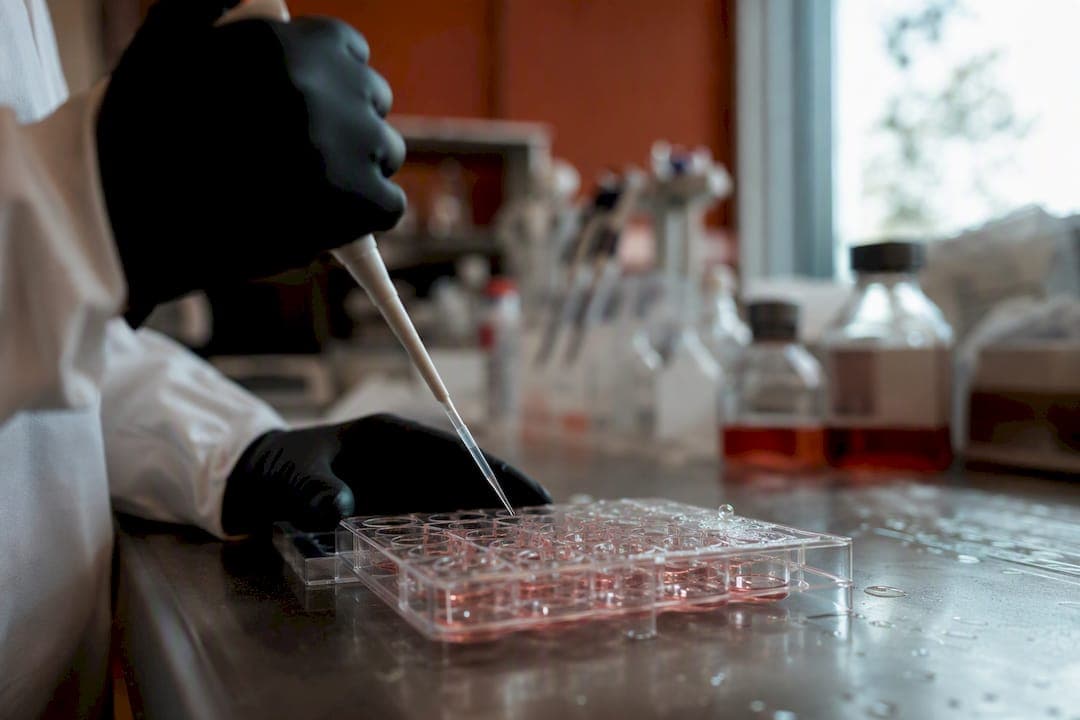
A personalized in-vitro treatment-screening report tells you two things: which candidate therapies show patient-specific efficacy in your loved one's own cells, and which ones raise safety flags worth ruling out before anyone talks about a clinic. The single best next step is to ask the lab for replication data and CRISPR/isogenic evidence before you rank anything as a real "hit." Look for three markers of a credible report: hiPSC-CMs behaving consistently across replicates, clean EC50/IC50 dose-response curves, and RNA sequencing paired with pathway analysis explaining why a drug worked.
Key Takeaways
Reliable treatment-screening results depend on replication across independent clones, mechanistic rescue through isogenic CRISPR controls, and full transparency around QC metrics and raw data.
| Point | Details |
|---|---|
| Check replication first | Trust a hit only after it appears across multiple patient clones or biological replicates. |
| Demand mechanistic rescue | Ask whether CRISPR-corrected isogenic controls reverse the phenotype seen in patient cells. |
| Weigh efficacy against safety | A strong EC50 signal means little if cardiotoxicity or transcriptomic stress markers appear at the same dose. |
| Request full data deliverables | Raw images, curve CSVs, and sequencing files let independent reviewers verify a lab's conclusions. |
| Commission with a clear scope | Hopeatrarelabs builds isogenic controls, QC reporting, and interpretation memos into its screening programs from the outset. |
Table of Contents
- How to analyze treatment results in a lab report
- Are these results actually reliable enough to act on?
- What do dose–response curves and EC50 actually tell you?
- How do labs check for safety and toxicity?
- Why does mechanistic rescue change everything?
- How should you rank multiple candidate therapies?
- What happens after a hit, clinically and ethically?
- What should you request when commissioning a screen?
- What we see when we review these reports
- Getting a screen interpreted, or commissioned, without guesswork
- Frequently asked questions
- Sources
How to analyze treatment results in a lab report
A personalized screening report is organized around one question: does this drug or gene therapy candidate change disease biology in this patient's own cells, safely? Most reports from labs like Hopeatrarelabs follow a similar map, even when the underlying disease model differs.
Expect these components, usually in this order:
- Sample provenance: which cell line, biopsy, or reprogrammed iPSC clone the data came from, and how it was verified against the patient.
- Model type: iPSC-derived cells, patient-derived organoids (PDOs), or organ-on-chip (NOCS) platforms, depending on the disease and tissue involved.
- Assay types: multi-electrode array (MEA) recordings for electrical/functional readouts, CellTiter-Glo for viability, and high-content imaging for morphology.
- Primary readouts: dose-response curves, percent viability, and any functional rescue compared to untreated cells.
- Omics layer: RNA sequencing run through Ingenuity Pathway Analysis or a similar pipeline to explain the mechanism behind a response.
Raw data should accompany the summary: microscopy images, curve-fitting CSVs, and sequencing files (FASTQ or processed counts). If a lab only hands you a slide deck with conclusions and no underlying files, that's a gap worth flagging immediately.
Are these results actually reliable enough to act on?
Not every "hit" deserves the same weight. Before you move a candidate forward, check the quality controls behind it the way you'd check a lab's credentials, not just its conclusions.
Ask for these specifics:
- Culture success rate and viability baselines, since a low starting success rate undermines everything built on top of it.
- Assay Z' score or equivalent QC metric, which tells you how cleanly the assay separates a real signal from noise.
- Replicate counts, both biological (different cell batches) and technical (repeated measurements on the same batch).
- Predictive concordance, a figure some organoid and iPSC pipelines report in the 70–90% range when the model has been validated against known clinical outcomes.
- Prespecified endpoints and blinded analysis, so results aren't reinterpreted after the fact to fit a preferred conclusion.
- Raw data and code availability, which lets an independent reviewer rerun the analysis rather than trust a summary.
Pro Tip: Insist on replication in at least one independent clone or a second cohort sample before treating any single result as decisive. A response seen once, in one clone, is a lead. A response seen across clones is a signal.
What do dose–response curves and EC50 actually tell you?
A dose-response curve plots drug concentration against effect. The EC50 (or IC50, for inhibitors) marks the concentration that produces half the maximum observed response, and it's the most common shorthand for potency in these reports. A steep, reproducible curve across multiple patient clones is far more persuasive than a single data point labeled "positive."
Functional assays add another layer. MEA recordings on hiPSC-CMs, for instance, can show whether a drug restores normal electrical rhythm, not just whether cells survive it. What matters is whether the effect size is biologically meaningful, not just statistically present.
- Emax (maximal efficacy) tells you the ceiling of benefit, even at high doses.
- Curve shape across replicates and clones tells you how reproducible that ceiling is.
- Route and dose plausibility tell you whether the effective concentration is even achievable safely in a person.
Broader translational reviews now frame this work as running "clinical trials in a dish," pairing AI-assisted image analysis with PK/PD modeling to estimate whether an in-vitro signal would plausibly translate to a real dosing regimen.
How do labs check for safety and toxicity?
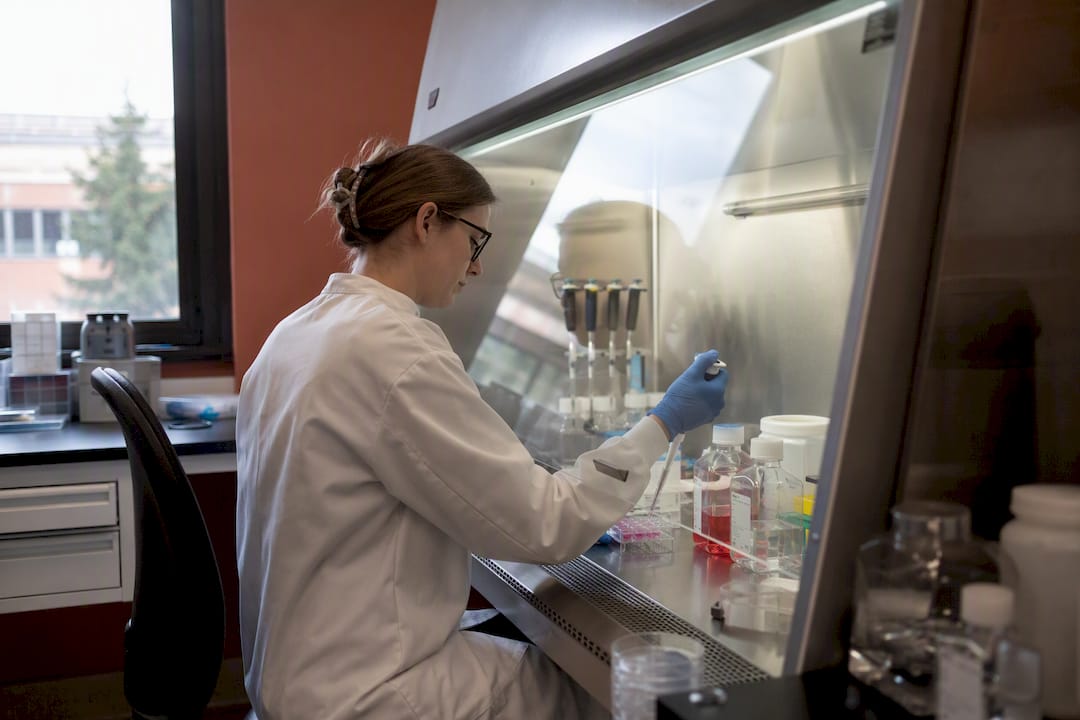
Efficacy without safety data is half a report. Legitimate labs pair every efficacy readout with a parallel toxicity screen, usually built around the same cell types used for efficacy testing.
Common safety assays include:
- Cardiotoxicity panels using hiPSC-CMs and MEA, since heart tissue is especially sensitive to off-target drug effects.
- Viability and membrane-integrity assays such as CellTiter-Glo and LDH release.
- Mitochondrial membrane potential testing, an early warning sign of cellular stress before overt cell death.
- Transcriptomic toxicology, where RNA-seq and pathway analysis flag stress-response gene signatures a simple viability count would miss.
A dose-dependent toxicity signal, or safety results that disagree across cell types from the same patient, should pause any push toward clinical translation until the lab explains the discrepancy.
Pro Tip: When a candidate shows both strong efficacy and a borderline safety signal, ask specifically whether CRISPR correction of the safety-relevant gene reverses the toxicity. That single experiment often resolves whether the risk is mechanism-driven or an assay artifact.
Why does mechanistic rescue change everything?
An efficacy signal is suggestive. A mechanistic rescue is evidence. This is the difference between "the drug seemed to help" and "the drug's benefit is tied directly to the patient's mutation."
Isogenic controls, cell lines identical to the patient's except for a CRISPR-corrected version of the disease-causing variant, are how labs prove that connection. If correcting the mutation reverses the phenotype, and the uncorrected patient line still shows the defect, that's causal evidence, not correlation.
A credible mechanistic rescue report shows three lines side by side: the patient's original cells, the CRISPR-corrected isogenic line, and an unrelated healthy control. The disease signature should appear in the patient line, disappear after correction, and stay absent in the healthy control. Anything less than that three-way comparison is incomplete evidence.
Reports built this way typically include paired response plots and rescue of the relevant gene-expression signature, not just a before-and-after summary.
How should you rank multiple candidate therapies?
Screens routinely surface several partial hits at once. Ranking them cleanly keeps a case review meeting from turning into a debate about vibes.
- Tier 1: strong, reproducible efficacy, clean safety across cell types, and confirmed mechanistic rescue.
- Tier 2: solid efficacy with a manageable or explainable safety signal, and a biologically plausible mechanism even without full CRISPR confirmation.
- Tier 3: weak or inconsistent efficacy, or unresolved safety concerns that need more preclinical work before anyone considers a patient.
- Filter every tier by route of administration, known PK/PD, whether the drug is already FDA-approved and repurposable, and realistic access or cost barriers.
- Flag Tier 1 candidates for discussion about N-of-1 trial design, compassionate use, or further dosing work; send Tier 2 back for targeted follow-up assays.
What happens after a hit, clinically and ethically?
A strong in-vitro result is a starting point for a conversation with a care team, not a prescription. Translating it into action usually follows one of a few paths: confirmatory replication, brief animal PK/PD work if the drug is unfamiliar, an N-of-1 trial, a structured off-label dosing plan, or enrollment in a formal clinical trial where one exists.
Several things need attention alongside the science:
- Informed consent that plainly states the evidence is preclinical and patient-specific, not proven in humans.
- IRB or ethics oversight for any off-label or compassionate-use pathway.
- Data privacy for genomic and raw lab files shared between the lab, physicians, and family.
- Clear language with families about uncertainty. Explaining that "cells responded" is not the same as "this will work" protects everyone from false hope built on a single dish.
What should you request when commissioning a screen?
If you're a family, foundation, or biopharma partner asking a lab like Hopeatrarelabs to run or interpret a screen, precision in the request pays off later. Vague statements of work produce vague reports.
Ask for, in writing:
- Model specification: number of patient iPSC clones, whether isogenic CRISPR controls are included, and whether organoids or PDOs are part of the plan.
- Assay list: MEA, viability panels, high-content imaging, and RNA-seq, with the specific readouts each will produce.
- QC reporting commitments: culture success rate, Z' scores, and replicate counts, stated upfront rather than after results come back.
- Full data deliverables: raw images, curve CSVs, sequencing files, and an interpretation memo with a prioritized next-steps section.
Pro Tip: Ask for a realistic turnaround range before signing anything. Timelines shift with the number of clones, whether CRISPR editing is required, and how many omics layers are included, so get that range in writing rather than assuming a fixed date.
What we see when we review these reports
We built Hopeatrarelabs' screening process around this exact checklist because we've watched families and physicians struggle to separate a genuine mechanistic signal from noise in a 40-page report. In practice, the cases that move fastest toward a clinical decision are the ones where isogenic correction data and replicate consistency were built into the plan from day one, not requested after the fact.
Getting a screen interpreted, or commissioned, without guesswork
Reading a report like this is one hurdle. Getting one built correctly in the first place, with isogenic controls, replicate design, and QC reporting baked in from the start, is the harder problem most families and foundations actually face. Hopeatrarelabs runs personalized iPSC modeling and parallel drug, ASO, and gene-therapy screens with that exact interpretation framework attached, so the report you receive already answers the reliability questions this article walks through.
That means fewer follow-up requests to the lab and a clearer path from "interesting result" to a conversation with your care team. If you're weighing whether to commission a program for a specific diagnosis, the Hopeatrarelabs knowledge and commissioning page walks through intake, statement-of-work scope, and what a realistic timeline looks like once a program starts. Reach out there to begin an intake conversation and get a scoped plan back before committing to a full screen.
Frequently asked questions
What does a "hit" mean in a personalized treatment screen? A hit is a candidate drug, ASO, or gene therapy approach that produces a measurable, reproducible effect on the patient's own cells compared to untreated controls. It's a lead worth investigating further, not a confirmed treatment.
How long does interpretation of a screening report usually take? Turnaround varies with the number of clones, assays, and whether CRISPR editing or omics layers are involved. Reported culture and assay pipelines in the field often run in the range of a few weeks once cell lines are established, though CRISPR isogenic controls add time upfront.
Can these results be used for off-label treatment decisions? Sometimes, after discussion with a treating physician and, in many cases, an ethics or IRB review. The strength of the evidence, especially mechanistic rescue data, heavily influences whether a care team will consider it.
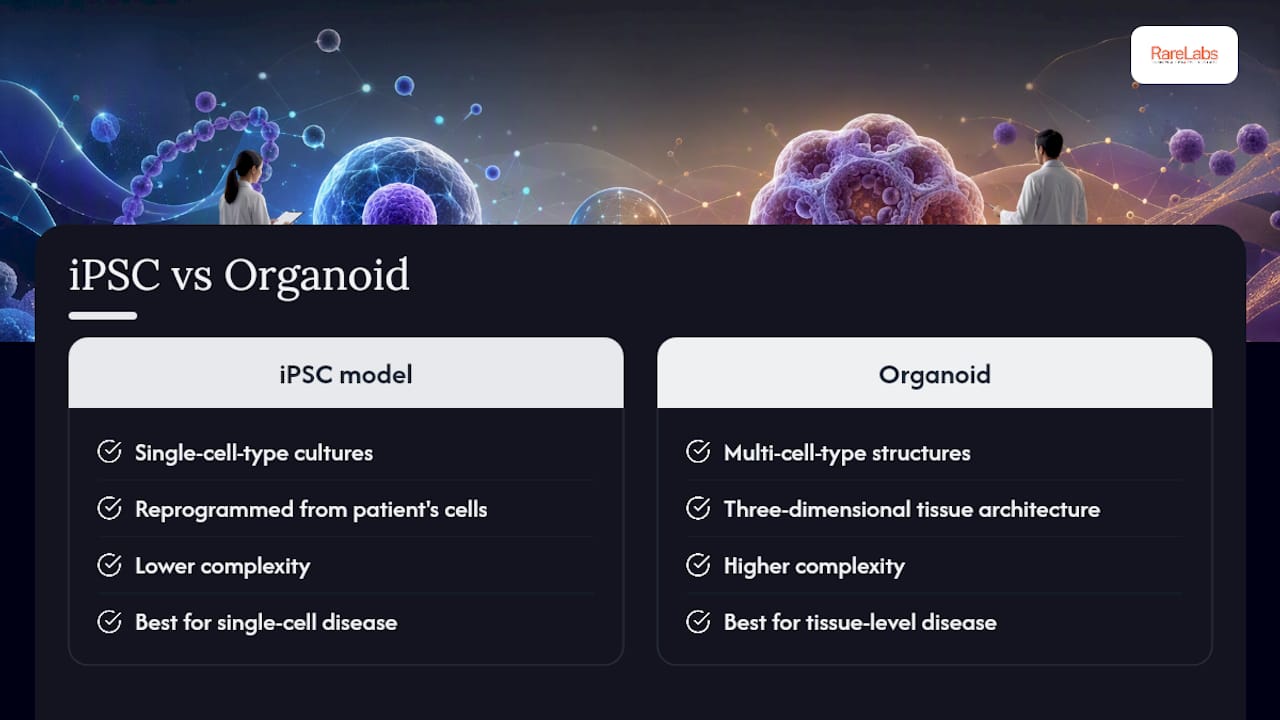
What's the difference between an iPSC model and an organoid? iPSC models are typically single-cell-type cultures (like cardiomyocytes or neurons) reprogrammed from a patient's cells. Organoids are three-dimensional, multi-cell-type structures that better mimic organ architecture, useful when a disease affects tissue-level function rather than a single cell type.
Why do labs use CRISPR-corrected controls instead of just healthy donor cells? A healthy donor's cells differ from the patient's in countless background ways unrelated to the disease. A CRISPR-corrected isogenic line is genetically identical to the patient except for the disease-causing mutation, which isolates that one variable and makes the comparison far more precise.
This article is general information, not a substitute for advice from a qualified doctor. Consult a qualified healthcare professional about your own circumstances before acting on anything here.
Sources
These sources back the specific claims in this guide, from concordance benchmarks to mechanistic rescue evidence.
- Next‑Gen Therapeutics: Pioneering Drug Discovery with iPSCs, Genomics, AI, and Clinical Trials in a Dish
- Harnessing induced pluripotent stem cells and organoids for disease modeling and precision medicine