

Cell-based assay types are laboratory techniques that use living cells to measure biological responses critical to drug discovery, toxicity testing, and therapeutic development. These in vitro methods span a wide range from cell viability assays like CellTiter-Glo and AlamarBlue to functional cell assays measuring apoptosis, cytotoxicity, and cell signaling. Choosing the wrong assay format costs time, reagents, and interpretive accuracy. This guide covers the major assay categories, their mechanisms, protocol considerations, and the decision logic that separates a well-designed screen from one that generates noise.
1. What are ATP-based luminescent cell viability assays?
ATP-based luminescent assays are the gold standard for high-throughput cell viability screening. They detect intracellular ATP as a direct proxy for metabolic activity in viable cells. When cells die, ATP degrades rapidly, so the luminescent signal correlates tightly with live cell number.
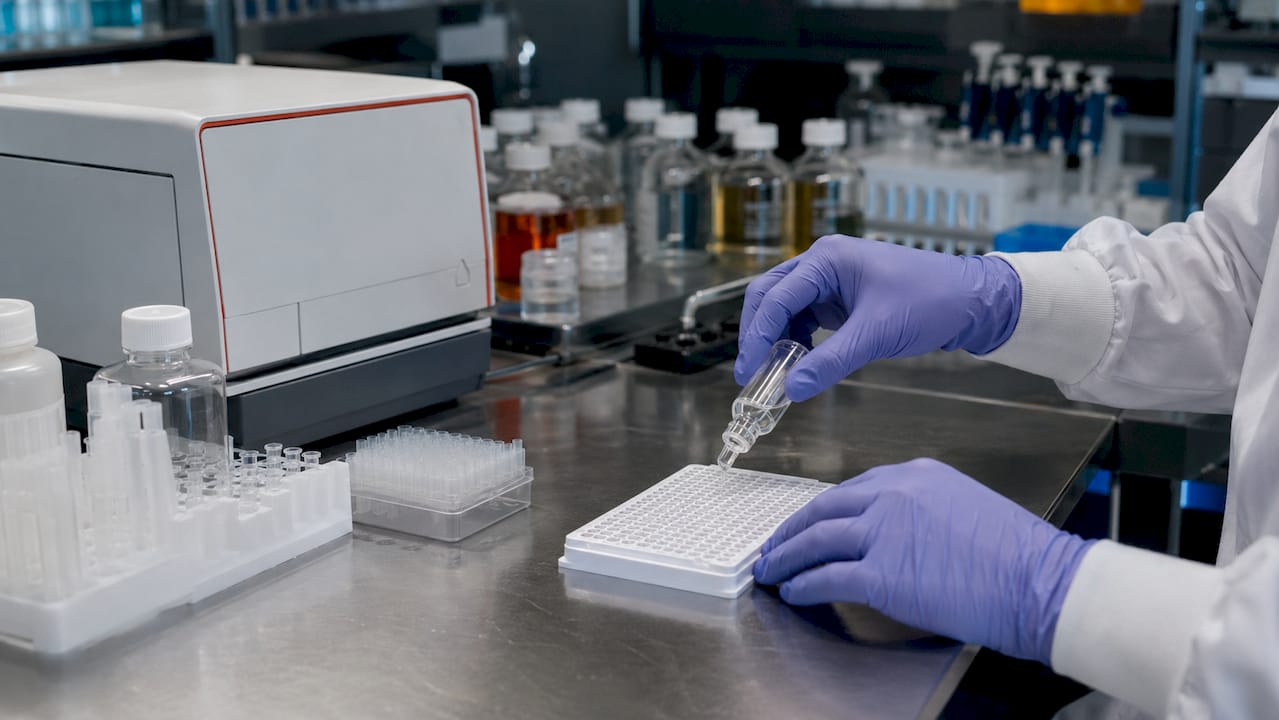
The most widely used product in this category is CellTiter-Glo (Promega), which uses a luciferase reaction to convert ATP into a measurable light signal. The workflow is homogeneous: add reagent, mix, read. No wash steps. No aspiration. That simplicity is what makes it the preferred format for automated liquid handling systems in high-throughput screening (HTS) environments.
Key advantages of ATP luminescence assays:
- Detection sensitivity: detects as few as 15 cells, making them ideal for low-density screens
- Dynamic range: linear signal across several orders of magnitude
- Z-factor performance: homogeneous format maximizes assay quality metrics in automation
- Speed: results in under 30 minutes from reagent addition
The glow-type kinetics of CellTiter-Glo are worth noting specifically. The signal is stable for 30 minutes or longer after the initial read. That stability allows batch processing of large plate sets without signal decay distorting results across a run.
Pro Tip: If you are running a 384-well plate screen with more than 50 plates per day, glow-type ATP assays let you stagger plate reads without losing data quality. This is not possible with flash-type luminescence formats.
2. How do Resazurin-based assays work as live-cell alternatives?
Resazurin-based assays measure metabolic activity through a reduction reaction. Viable cells convert the non-fluorescent blue dye Resazurin into Resorufin, a pink fluorescent compound. The fluorescence intensity is proportional to the number of metabolically active cells.
The two dominant products in this category are AlamarBlue (Thermo Fisher Scientific) and PrestoBlue (also Thermo Fisher Scientific). They share the same biochemical principle but differ in protocol speed and cost profile.
Here is how the two compare in practice:
- PrestoBlue incubation time: 30–60 minutes, suited for fast turnaround screens
- AlamarBlue incubation time: 1–4 hours, better for slower-metabolizing cell lines
- Cost per assay: AlamarBlue is typically more economical at scale
- Reagent format: both are water-soluble, requiring no organic solvents
- Cell compatibility: both are non-toxic, allowing the same cells to be used in follow-up experiments
That last point is the defining advantage over MTT. Because Resazurin reagents do not kill cells, you can read viability, return the plate to the incubator, and run a secondary assay on the same well. This is particularly valuable when working with patient-derived iPSC lines or primary cells where sample availability is limited.
Signal saturation is a real risk in Resazurin assays if incubation runs too long. Cells that have fully converted all available Resazurin produce a plateau signal that no longer reflects live cell number accurately.
Pro Tip: Use the read-incubate-re-read method: take a fluorescence reading at the minimum incubation time, return the plate to the incubator, then read again at the maximum time. This brackets your optimal window and prevents saturation from distorting your data.
Choose PrestoBlue when speed matters most, such as in same-day compound screening. Choose AlamarBlue when you are running a cost-sensitive multi-day proliferation study.
3. Why is the MTT assay still widely used despite its limitations?
The MTT assay measures cell metabolic activity through a colorimetric reaction. Viable cells reduce the yellow tetrazolium salt MTT to insoluble purple formazan crystals. The crystals are then dissolved in DMSO and read by absorbance at 540–550 nm. Viability is calculated as (Absorbance Sample / Absorbance Control) × 100.
MTT remains prevalent for several practical reasons:
- Established literature base: decades of published data make it the reference format for legacy comparisons
- Low equipment barrier: requires only a standard plate reader, no fluorescence or luminescence modules
- Validated protocols: widely available for hundreds of cell lines across academic and industrial labs
- Cost: reagent cost is low, and the assay does not require specialized instrumentation
The critical limitation is the solubilization step. Formazan crystals are insoluble and must be dissolved with DMSO before reading. That manual step introduces variability, limits automation, and prevents downstream use of the same cells. The DMSO solubilization requirement increases the coefficient of variation in HTS settings, which is why most modern drug discovery labs have moved away from it for primary screens.
Water-soluble tetrazolium alternatives like WST-1 and WST-8 (used in the CCK-8 kit) solve this problem directly. They produce water-soluble formazan, enabling add-and-read workflows without solubilization. For labs still committed to tetrazolium chemistry, WST-8 is the logical upgrade from MTT.
MTT remains the right choice when you need to match historical data, when your cell line is poorly compatible with fluorescent or luminescent reagents, or when budget constraints rule out more expensive formats.
4. What other assay types assess cytotoxicity, proliferation, and apoptosis?
Cell viability assays tell you how many cells are alive. They do not tell you how cells died, whether they are actively dividing, or whether they are undergoing programmed death. These questions require a separate category of functional cell assays.
Cytotoxicity assays measure cell death through membrane integrity loss. The LDH (lactate dehydrogenase) release assay is the most common format. When the plasma membrane ruptures, LDH leaks into the culture medium. LDH release assays quantify extracellular enzyme activity as a direct indicator of membrane damage and necrotic or late-stage apoptotic death. This is mechanistically distinct from metabolic viability assays, which detect living cells rather than dead ones.
Cell proliferation assays measure active DNA synthesis. EdU (5-ethynyl-2'-deoxyuridine) incorporation is the current standard, replacing the older BrdU method. EdU is incorporated into newly synthesized DNA and detected via click chemistry, which is faster and less harsh than the antibody-based BrdU detection protocol. Proliferation assays are the right tool when you want to distinguish cytostatic compounds (which stop growth without killing cells) from cytotoxic ones.
Apoptosis assays detect programmed cell death at specific stages:
| Assay type | Target | Detection method |
|---|---|---|
| Annexin V binding | Phosphatidylserine externalization | Flow cytometry or fluorescence |
| Caspase 3/7 activity | Executioner caspase activation | Luminescence or fluorescence |
| TUNEL assay | DNA fragmentation | Fluorescence microscopy |
| Cytochrome c release | Mitochondrial outer membrane permeabilization | Immunofluorescence |
Migration and invasion assays round out the functional panel. Scratch assays and Boyden chamber formats measure how cells move in response to compounds, which is relevant for oncology and wound healing research.
Combining metabolic viability and cytotoxicity assays gives you a more complete picture of cell health than either assay alone. A compound that reduces ATP signal but shows no LDH release is likely cytostatic. One that reduces ATP and increases LDH is cytotoxic. That distinction matters enormously in early-stage drug screening.
5. How to choose the right assay for your experimental goals
Defining clear experimental objectives is the first step in assay selection. The question is not which assay is best in general. The question is which assay answers your specific biological question with the throughput, sensitivity, and downstream flexibility your protocol requires.
Use this decision framework:
| Assay type | Best for | Key limitation |
|---|---|---|
| ATP luminescence (CellTiter-Glo) | HTS, automation, high sensitivity | Endpoint only; destroys cells |
| Resazurin (AlamarBlue, PrestoBlue) | Live-cell monitoring, follow-up assays | Saturation risk with long incubation |
| MTT | Legacy comparisons, low-cost labs | Solubilization step limits automation |
| LDH release | Cytotoxicity, membrane integrity | Measures dead cells, not live ones |
| EdU incorporation | Proliferation, cytostasis detection | Requires fixation; no live-cell read |
| Annexin V / Caspase | Apoptosis mechanism | Requires flow cytometry or imaging |
Three additional factors shape the final choice. First, consider whether your cell line is metabolically atypical. Some cancer lines have altered mitochondrial function that distorts Resazurin or MTT readings. ATP assays are more reliable in those cases. Second, assess your automation infrastructure. If you are running 384-well plates on a liquid handler, homogeneous formats like CellTiter-Glo or PrestoBlue are the only practical options. Third, plan for edge effects. Plates incubated without humidity control show higher evaporation at the perimeter wells, which skews readings. Using dummy wells along the plate border and maintaining incubator humidity above 95% are standard mitigations.
Pro Tip: For drug screening in rare disease models, run an ATP viability assay alongside an LDH cytotoxicity assay in parallel wells. The two-assay combination resolves ambiguous viability signals and gives you a cytostatic versus cytotoxic classification without adding a separate experimental day.
For complex therapeutic evaluations, including gene therapy screening, assay selection becomes even more nuanced because the cellular models themselves are often patient-derived and irreplaceable.
Key takeaways
The most effective cell-based assay selection strategy combines a primary viability format with at least one functional endpoint assay to distinguish cytostatic from cytotoxic effects.
| Point | Details |
|---|---|
| ATP assays lead in HTS | CellTiter-Glo detects as few as 15 cells and requires no wash steps, maximizing automation performance. |
| Resazurin assays preserve cells | AlamarBlue and PrestoBlue are non-toxic, enabling follow-up experiments on the same well. |
| MTT has a clear niche | Use MTT when matching legacy data or when fluorescence and luminescence readers are unavailable. |
| Combine assay types | Pairing LDH cytotoxicity with ATP viability resolves ambiguous signals and improves mechanistic interpretation. |
| Context drives selection | Cell line metabolism, throughput requirements, and downstream needs determine the optimal assay format. |
Why I think most labs are still underusing assay combinations
The field has spent years debating which single assay is best. ATP versus Resazurin. MTT versus WST-8. That framing misses the point. In my experience reviewing screening data from drug discovery programs, the most informative datasets always come from labs that ran two complementary assays rather than one optimized one.
The transition away from MTT is well underway, and rightly so. The scientific consensus now favors less labor-intensive, more reproducible formats that meet automation requirements. But the bigger missed opportunity is not the assay format. It is the failure to pair a viability readout with a mechanistic one.
A compound that reduces CellTiter-Glo signal by 50% is interesting. A compound that reduces CellTiter-Glo signal by 50% while showing zero LDH release and elevated caspase 3/7 activity is a story. That story tells you the compound is inducing apoptosis, not necrosis, which has direct implications for therapeutic index and selectivity.
The practical barrier is usually plate real estate and reagent cost. Both are solvable. Running parallel wells for LDH adds one column per compound concentration. The cost per data point is marginal compared to the interpretive value gained.
The assay types I see most underused are live-cell imaging assays. Platforms like the Incucyte (Sartorius) generate kinetic proliferation and death data over days without disturbing the culture. For patient-derived iPSC models or primary cells where you have limited passage windows, that temporal resolution is worth more than a single endpoint read.
The bottom line: pick your primary assay based on throughput and sensitivity requirements, then add one functional endpoint. The combination is almost always more informative than either assay alone.
— John
How Hopeatrarelabs supports your assay strategy
Hopeatrarelabs builds patient-specific disease models using iPSCs and CRISPR gene editing, then runs parallel treatment screens across thousands of FDA-approved drugs and custom therapeutic candidates. The assay selection decisions described in this article are central to how those screens are designed and interpreted.

The RareLabs Knowledge platform is a dedicated resource hub covering rare disease research, assay design, and treatment screening methodology. If you are designing a cell-based screen for a rare or undiagnosed genetic disease, the platform provides protocol guidance, assay selection frameworks, and case-based insights drawn from real patient programs. Explore the knowledge base to find resources matched to your experimental stage and therapeutic focus.
FAQ
What is the most sensitive cell viability assay type?
ATP-based luminescent assays like CellTiter-Glo are the most sensitive, detecting as few as 15 cells per well. Their homogeneous workflow also makes them the top choice for high-throughput screening.
Can Resazurin assays be used for long-term proliferation studies?
Yes. AlamarBlue and PrestoBlue are non-toxic and water-soluble, allowing repeated measurements on the same cells over multiple days without terminating the culture.
What is the difference between a viability assay and a cytotoxicity assay?
Viability assays like ATP or Resazurin formats detect living cells through metabolic activity. Cytotoxicity assays like LDH release detect dead cells through membrane damage. Running both together gives a complete picture of cell health.
When should I still use the MTT assay?
Use MTT when your experimental design requires matching published historical data, when your lab lacks fluorescence or luminescence plate reader capability, or when your cell line is poorly compatible with other reagent formats.
How do I prevent edge effects in cell-based assays?
Use dummy wells filled with media along the outer perimeter of your plate, maintain incubator humidity above 95%, and equilibrate plates at room temperature before seeding. These steps reduce evaporation-driven variability at plate edges.