

If you or someone you love is living with a genetic disorder, the genomic medicine breakthroughs list you find today looks nothing like it did even three years ago. Gene therapies that once existed only in research papers now carry FDA approval. AI tools are catching diagnoses that experienced clinicians miss. Sequencing technology that used to take weeks now delivers answers in days. These recent advancements in genomic medicine are not just scientific milestones. For people navigating rare disease diagnoses, they represent real, tangible possibilities for treatment and hope.
Table of Contents
- Key takeaways
- 1. The genomic medicine breakthroughs list starts with 2026 gene therapy approvals
- 2. AI and machine learning are changing how genetic diseases get diagnosed
- 3. Advanced sequencing technology is closing the diagnostic gap faster
- 4. Emerging trends in rare disease genomics shaping the next decade
- 5. Understanding why diagnosis itself remains the hardest part
- My perspective on what these breakthroughs actually mean for you
- How Hopeatrarelabs can support your search for answers
- FAQ
Key takeaways
| Point | Details |
|---|---|
| Gene therapies now approved | The FDA approved five first-in-class therapies in early 2026, including the first-ever gene therapy for genetic hearing loss. |
| AI improving rare disease diagnosis | AI models like RareDAI show 10 to 20% improvements in genetic test selection accuracy for rare disease patients. |
| Faster sequencing, faster answers | Illumina's TruPath Genome processes 16 whole genomes per day, reducing the time from question to diagnosis. |
| Pediatric rare disease pipeline growing | Rare disease therapy approvals are projected to rise 14% by 2033, with $10.7 billion in additional spending expected. |
| Equity gaps remain | Population-scale multiomic approaches are addressing diagnostic disparities across ethnic groups, but significant gaps persist. |
1. The genomic medicine breakthroughs list starts with 2026 gene therapy approvals
The first five months of 2026 delivered something the genetic disease community has been waiting years for. The FDA approved five first-in-class therapies, one of which is Otarmeni, the first gene therapy ever approved specifically for genetic hearing loss. This therapy restores neurosensory function to normal levels, a result that was considered science fiction just a decade ago.
"First-in-class" is not just regulatory language. It means no other approved therapy works through that same mechanism. For patients, it signals that entirely new biological pathways are now being targeted, which expands the treatment universe beyond what traditional drugs can reach.
Key features of these 2026 gene therapy approvals include:
- New delivery mechanisms targeting previously inaccessible tissues like the inner ear
- Restoration of function rather than just slowing disease progression
- Expanded eligibility criteria covering patients who previously had no options
- New modalities including RNA-based therapies alongside traditional viral vectors
If you want a deeper look at what these approvals mean for day-to-day patient care, the FDA-approved drugs guide from Hopeatrarelabs covers the real-world implications in detail.
Pro Tip: Set up a free FDA drug approval alert through the FDA's official notification system and filter by "gene therapy" to receive real-time updates when new therapies relevant to your condition receive approval.
2. AI and machine learning are changing how genetic diseases get diagnosed
The diagnostic side of genomic medicine has seen some of the most striking recent advancements in genomic medicine. The model RareDAI, evaluated in a May 2026 study, showed a 10 to 20% improvement in diagnostic accuracy when guiding clinicians on which genetic tests to order for rare disease patients. That margin is enormous in a field where ordering the wrong test can cost months or years of delay.
What makes this particularly meaningful is how RareDAI works. It integrates medical ontologies and patient symptom profiles to generate ranked recommendations for genetic testing strategies. Rather than replacing the clinician, it acts as a highly informed second opinion available at the moment of decision.
Researchers at Stanford University have also highlighted how AI large language models can generate novel biomedical hypotheses, shifting medicine from reactive treatment toward proactive, genetics-based disease prevention. That is a different category of capability entirely. It is not just finding the right answer faster. It is asking questions no one thought to ask.
Separately, a team at Cleveland Clinic developed an AI joint testing framework that identifies driver genes in genomic regions so dense and complex that previous analysis methods simply could not parse them. This opens up drug target discovery for brain disorders that have been genetically intractable until now.
A few important realities to keep in mind:
- AI tools assist clinicians but do not replace expert clinical judgment
- Results depend heavily on data quality and how well a patient's symptoms are documented
- Not all clinical settings have adopted these tools yet
Pro Tip: When meeting with a geneticist or specialist, ask directly whether AI-assisted diagnostic tools are part of their workflow. If not, ask what criteria they use to select genetic tests. The question itself signals you are an informed advocate.
For more on how AI platforms are shaping clinical diagnostics in 2026, the AI healthcare diagnostics guide offers a practical clinical perspective.
3. Advanced sequencing technology is closing the diagnostic gap faster
One of the most consequential current trends in genetic breakthroughs involves sequencing itself. Illumina's TruPath Genome, launched in 2026, eliminates the traditional sample preparation steps that used to slow everything down. The platform delivers 16 whole genomes per day with accuracy and variant detection that exceeds prior generation technology. It also phases up to 98% of genes, which means it can resolve complex genomic regions that previously returned ambiguous or incomplete results.

Here is how it compares to traditional sequencing workflows:
| Feature | Traditional whole genome sequencing | TruPath Genome (2026) |
|---|---|---|
| Sample preparation | Extensive, multi-step | Simplified, reduced steps |
| Daily throughput | 4 to 8 genomes | 16 genomes |
| Gene phasing coverage | Limited, under 80% | Up to 98% of genes |
| Complex region resolution | Frequently ambiguous | Substantially improved |
| Turnaround time | Weeks to months | Faster, though still weeks clinically |
That last row deserves attention. Even with faster processing technology, actual clinical turnaround times remain longer than the raw sequencing speed suggests, because interpretation, variant classification, and clinical correlation still require significant expert labor. Managing your expectations around timeline is not pessimism. It is practical.
The real clinical value of TruPath Genome is in what it resolves. Regions of the genome that were previously too complex to sequence reliably, including areas linked to rare neurological and metabolic diseases, are now readable. For patients who received "negative" or "inconclusive" results from earlier sequencing, re-testing with updated platforms like this one is worth discussing with your care team.
4. Emerging trends in rare disease genomics shaping the next decade
The top genomic medicine innovations are not only happening in laboratories today. They are shaping the pipeline for years ahead. A May 2026 market analysis found that the rare disease therapy pipeline for pediatric-onset conditions is projected to increase approvals by 14% by 2033, with $10.7 billion in additional spending expected. That represents a substantial commitment of resources toward diseases that were, until recently, considered untreatable.
There is also a meaningful conceptual shift underway in how genomic medicine is practiced. The field is moving beyond looking for single causative variants and toward understanding complex, polygenic heritability. Many conditions once assumed to have a single genetic cause turn out to involve interactions between dozens of variants, environmental factors, and gene expression patterns.
Alongside this, researchers are now developing population-scale multiomic approaches that map genetic, epigenetic, and proteomic data across diverse ethnic populations. This matters because the genomic reference data used for diagnosis has historically skewed toward patients of European ancestry. Addressing that imbalance is not only a scientific priority. It is a matter of diagnostic equity for patients from underrepresented groups who have faced systematically higher rates of ambiguous results.
The most promising directions to follow right now include RNA-based therapies, antisense oligonucleotides for single-gene disorders, and gene editing approaches for conditions where the causative variant is well-characterized. The gene therapy access guide from Hopeatrarelabs gives a useful breakdown of how to evaluate which of these may apply to a specific diagnosis.
5. Understanding why diagnosis itself remains the hardest part
Even with everything on this genomic medicine breakthroughs list, diagnosis remains the most painful bottleneck for most patients. Over two-thirds of children with rare diseases remain undiagnosed after genomic testing. Diagnostic odysseys average five years. Those are not abstract statistics if you are the parent sitting in a clinic waiting room.
The core problem is that genomic testing opens a door, but walking through it requires expert interpretation, access to current databases, and often re-analysis as science evolves. A negative whole exome result from 2021 may look very different when re-examined with 2026 databases and AI-assisted analysis.
This is where understanding how genomic medicine is changing healthcare becomes personally relevant. The technology is advancing faster than most clinical systems can integrate it. Patients who understand what questions to ask, and who know that re-analysis of prior results is a legitimate clinical option, tend to navigate this system more effectively.
My perspective on what these breakthroughs actually mean for you
I've spent years watching this field move from incremental to genuinely transformative. What I find most striking is not any single therapy or technology on this list. It is the compounding effect. Gene therapies targeting new mechanisms. AI tools catching what clinical pattern recognition misses. Sequencing platforms resolving regions of the genome that were previously black boxes.
But I've also seen how the gap between what science can do and what patients can access remains brutally wide. A therapy approved by the FDA does not automatically reach the patients who need it. An AI diagnostic tool does not help if your specialist has never heard of it. Knowing this does not diminish the breakthroughs. It frames what your job is as a patient or caregiver: stay informed, ask for re-analysis of older tests, and connect with specialists who work at the frontier rather than behind it.
The patients I've seen navigate this best are not necessarily the ones with the rarest or most manageable conditions. They are the ones who treat their diagnosis as a research problem and themselves as the most motivated expert in the room.
— John
How Hopeatrarelabs can support your search for answers
If reading through this list has raised more questions than it answered, that is exactly the right response. The science is moving fast, and knowing which breakthroughs apply to your specific situation requires more than a general overview.
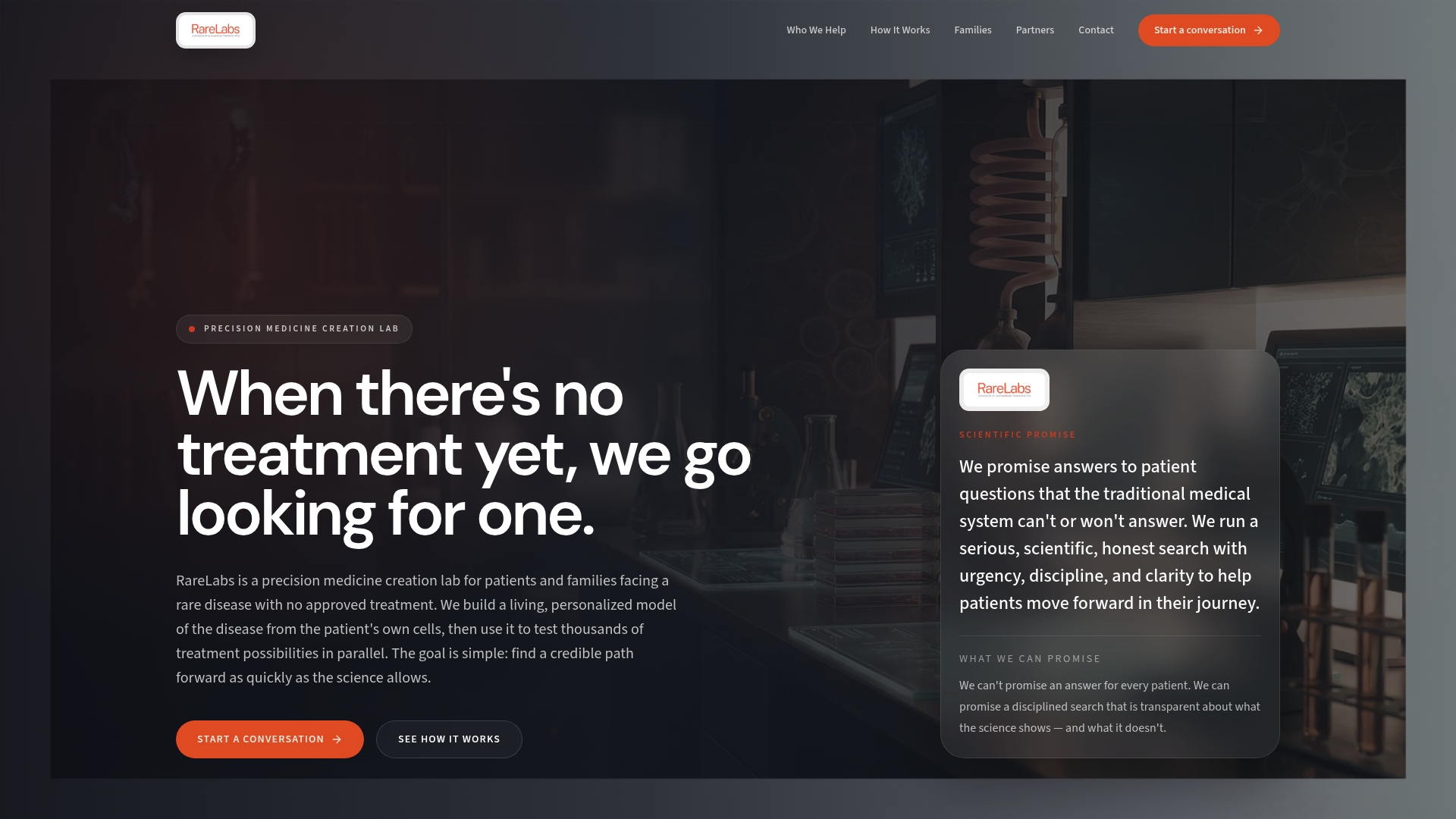
Hopeatrarelabs was built for exactly this moment. Their platform uses iPSC modeling and CRISPR-based tools to create patient-specific disease models, then screens thousands of FDA-approved drugs and custom therapies against those models to find what might work for your condition, not a statistical average. If you want to go deeper than general articles can take you, the RareLabs Knowledge hub is where personalized rare disease research and treatment discovery actually begins. It is a practical starting point for patients and families who are done waiting for answers to find them.
FAQ
What is the most recent gene therapy approval in genomic medicine?
As of 2026, Otarmeni is the first FDA-approved gene therapy for genetic hearing loss, restoring neurosensory function to normal levels. It was among five first-in-class therapies approved in the first five months of 2026.
How does AI improve rare disease diagnosis?
AI models like RareDAI improve the accuracy of genetic test selection by 10 to 20%, helping clinicians order the right tests faster. These tools assist rather than replace clinical experts, and they work best when integrated with detailed patient symptom data.
What should I do if my genomic test came back negative or inconclusive?
Ask your specialist about re-analysis using updated databases and newer platforms. Genomic knowledge evolves rapidly, and a negative result from prior years may be re-evaluated differently with 2026 tools and reference data.
How is genomic medicine changing healthcare for rare disease patients?
Genomic medicine is shifting care from symptom management toward mechanism-targeted therapies, faster diagnosis, and personalized treatment modeling. The combination of AI diagnostics, advanced sequencing, and new gene therapies is shrinking the average diagnostic odyssey for many conditions.
Where can I track new genomic medicine breakthroughs relevant to my condition?
The FDA's drug approval database, ClinicalTrials.gov, and specialized resources like the RareLabs Knowledge hub offer condition-specific tracking. Setting up alerts for your gene or disease category is the most efficient way to stay current.