

Effective foundation leadership is defined by intentional governance, proactive talent development, and systems that sustain mission impact over time. The best practices for foundation leaders go well beyond board meetings and grant cycles. They require a deliberate shift from reactive management to structured, evidence-based leadership. Recent surveys of U.S. foundations confirm that the highest-performing organizations treat governance as a continuous improvement tool, not a compliance checkbox. This guide covers the frameworks, strategies, and operational habits that separate thriving foundations from stagnant ones.
1. Best practices for foundation leaders start with governance
Strong governance is the foundation of effective leadership. 92% of foundation boards conduct self-assessments to measure overall effectiveness, and 79% evaluate committee effectiveness as part of intentional governance. Those numbers show that high-performing boards treat evaluation as a built-in practice, not an occasional exercise.
Nanci Hibschman of C3 Nonprofit Consulting Group states that high-performing boards build data-informed governance cultures that use self-assessment as a tool for continuous improvement. That means governance reviews feed directly into board composition decisions, committee restructuring, and leadership development plans.

Boards should meet at minimum once annually, with quarterly meetings recommended for oversight, budget approval, and IRS Form 990-PF compliance. Quarterly cadence keeps strategy and operations aligned without creating meeting fatigue.
Core governance best practices include:
- Conduct annual board self-assessments and share results with all members
- Evaluate committee effectiveness separately from full board reviews
- Maintain a board composition matrix to identify skill gaps
- Schedule quarterly meetings with a standing agenda for compliance and strategy
- Document all governance decisions with clear rationale and follow-up timelines
Pro Tip: Use self-assessment data to drive your next board recruitment cycle. If your matrix shows gaps in financial oversight or legal expertise, fill those seats before the next fiscal year begins.
2. How to lead a foundation by shifting from doer to conductor
The most common leadership failure in foundations is the executive who cannot let go. SynerVision Leadership Foundation identifies the shift from "doer" to "conductor" as the defining transition for effective nonprofit leaders. A conductor does not play every instrument. A conductor creates clarity, assigns ownership, sets the rhythm, listens for problems, and develops the players.
This model has five core elements: clarity of roles, ownership by team members, execution rhythm, active listening, and deliberate development. Each element depends on the others. Ownership without clarity creates confusion. Rhythm without listening creates drift.
"Stop carrying the mission alone. When leaders hold everything, they become the bottleneck. The goal is to build a team that can execute without you in the room." — SynerVision Leadership Foundation
Execution rhythms are the practical engine of this model. Weekly check-ins track short-term deliverables. Monthly reviews assess progress against quarterly goals. Quarterly planning sessions reset priorities and surface systemic issues. These rhythms replace ad hoc firefighting with structured accountability.
Key behaviors that support the conductor model:
- Assign ownership with explicit authority, not just responsibility
- Hold weekly 15-minute standups focused on blockers, not status updates
- Run monthly reviews against measurable outcomes, not activity reports
- Invest in leadership coaching for direct reports before they need it
Pro Tip: When a delegate struggles, resist the urge to take the task back. Ask one clarifying question instead. Leadership transitions often fail when leaders rescue tasks rather than coach through difficulty.
3. Successful grantmaking tips for operational excellence
Grantmaking is where foundation values meet real-world execution. 55% of foundations use online portals for grant applications, while 18% still use paper and 14% have no formal written grant process at all. That 14% figure is a serious operational risk. Without a documented process, grant decisions become inconsistent and legally vulnerable.
The shift to online portals matters beyond convenience. Digital systems create audit trails, reduce processing time, and allow program officers to compare applications against stated criteria. Foundations still using paper or informal processes should treat migration to an online portal as a governance priority, not an IT project.
Combining general operating support with project-specific grants produces stronger grantee outcomes. General operating support gives nonprofits the flexibility to address unexpected needs. Project grants fund specific deliverables. Using both signals that your foundation trusts its grantees as partners, not just contractors.
Successful grantmaking tips for foundation executives:
- Document your grant criteria before opening any application cycle
- Use an online portal to standardize intake and reduce reviewer bias
- Build a two-stage review process: eligibility screening, then merit evaluation
- Include a site visit or call requirement for grants above a defined threshold
- Provide written feedback to declined applicants at least once per year
- Track grantee outcomes against your stated theory of change
- Review your grantmaking portfolio annually for mission alignment
4. Succession planning as a leadership development strategy
Succession planning is a proactive leadership development strategy, not a contingency plan for emergencies. Mission + Strategy nonprofit consultants identify internal candidates as the preferred pipeline for stable, culturally aligned leadership transitions. External hires bring fresh perspective but require longer onboarding and carry higher transition risk.
The most effective succession frameworks include four components: role clarity, mentorship, job rotation, and a feedback culture. Role clarity means every leadership position has a written profile of required competencies. Mentorship pairs high-potential staff with senior leaders for structured development. Job rotation exposes emerging leaders to functions outside their current role. A feedback culture normalizes candid performance conversations before a transition is imminent.
Transparency accelerates trust during succession. When leaders communicate openly about development pathways, staff invest in their own growth. When succession is treated as a secret process, it creates anxiety and attrition.
| Succession Element | Outcome |
|---|---|
| Written role competency profiles | Reduces ambiguity during candidate evaluation |
| Formal mentorship program | Accelerates readiness of internal candidates |
| Cross-functional job rotation | Builds organizational knowledge and adaptability |
| Regular feedback culture | Normalizes performance conversations before transitions |
| Transparent communication | Reduces staff anxiety and voluntary turnover |
Succession planning is most effective when it is tied to intentional leadership development and communicated openly across the organization. Foundations that treat succession as an ongoing process, rather than a one-time plan, build lasting organizational resilience.
5. Systems building to replace crisis management
Systems building is the practice of creating documented processes, communication rhythms, and performance dashboards that allow a foundation to operate without constant executive intervention. The Nonprofit Leadership Alliance identifies systems building as the key shift that moves nonprofits from reactive crisis response to sustainable impact. Without systems, every problem escalates to leadership. With systems, most problems resolve at the team level.
Dashboards are the most visible component of this shift. A well-designed dashboard shows program progress, financial health, and team capacity on a single screen. Leaders who review dashboards weekly spend less time in emergency meetings and more time on strategy.
Rewarding prevention over response is a cultural change that reinforces systems. When staff receive recognition for catching a compliance issue early, they build habits of proactive monitoring. When only crisis response gets attention, the organization trains itself to wait for fires.
Systems-building components every foundation should implement:
- A program performance dashboard updated weekly or biweekly
- A centralized communication platform with documented protocols
- A risk register reviewed quarterly by senior leadership
- Documented standard operating procedures for all recurring processes
- A contingency fund policy with clear activation criteria
Pro Tip: Start with one dashboard covering your top three program metrics. Complexity kills adoption. Add metrics only after the team uses the first version consistently for 90 days.
6. Board composition and continuous governance improvement
Board composition directly determines a foundation's capacity to govern well. A board that lacks financial expertise cannot provide meaningful budget oversight. A board without legal representation cannot assess compliance risk. Composition gaps are governance gaps.
The most effective boards audit their composition annually using a skills matrix. This matrix maps current members against required competencies: finance, law, program expertise, community representation, and fundraising. Gaps identified in the matrix drive the next recruitment cycle. This turns board recruitment from a reactive scramble into a planned process.
Continuous governance improvement also requires term limits and rotation policies. Term limits prevent board entrenchment and create natural opportunities to refresh composition. Rotation policies for committee assignments prevent siloed expertise and build broader board capacity. Foundations that treat board governance as a living system, rather than a fixed structure, adapt faster to mission demands.
7. Fundraising best practices for foundation sustainability
Fundraising for foundations differs from fundraising for operating nonprofits, but the core discipline is the same: diversify revenue and document donor relationships. Foundations that rely on a single major donor or endowment income stream carry concentrated risk. A policy shift, a market downturn, or a donor's death can eliminate that income overnight.
Effective foundation management requires a written fundraising plan updated annually. The plan should identify revenue targets by source, assign relationship ownership to specific staff or board members, and set a timeline for cultivation and solicitation. Without a written plan, fundraising defaults to opportunistic asks rather than relationship-driven strategy.
Major gift cultivation for foundations follows a three-stage model: identification, engagement, and stewardship. Identification uses wealth screening and relationship mapping. Engagement builds trust through program updates, site visits, and impact reports. Stewardship closes the loop by showing donors exactly how their gifts produced results. Foundations that skip stewardship lose repeat donors at a predictable rate.
Key Takeaways
Effective foundation leadership requires governance discipline, leadership development, and operational systems working together to sustain mission impact over the long term.
| Point | Details |
|---|---|
| Governance drives performance | 92% of high-performing boards conduct self-assessments as a continuous improvement tool. |
| Shift from doer to conductor | Assign ownership with clear authority and build execution rhythms to replace ad hoc management. |
| Grantmaking needs documentation | 14% of foundations lack a formal grant process, creating legal and operational risk. |
| Succession planning is proactive | Internal candidates with mentorship and role clarity produce more stable leadership transitions. |
| Systems replace firefighting | Dashboards, documented processes, and contingency policies reduce crisis-driven leadership. |
What I've learned about foundation leadership that most guides skip
The governance frameworks in this article are real and they work. But the hardest part of foundation leadership is not learning the frameworks. The hardest part is changing your own behavior once you know them.
I have watched foundation executives read every governance report, attend every leadership conference, and still default to micromanagement the moment a program hits a rough quarter. The conductor model is not a technique. It is a daily practice of restraint. You have to choose, repeatedly, to coach instead of rescue.
The succession planning section is where I see the most avoidance. Leaders who are excellent at grantmaking and governance often treat succession as someone else's problem. They assume the board will handle it when the time comes. The leadership pipeline frameworks that actually work are built years before they are needed, not months.
The systems-building shift is also underrated. Most foundation leaders I have observed spend their first three years in reactive mode, then wonder why they feel burned out. The answer is almost always the absence of documented processes and performance visibility. A dashboard is not bureaucracy. It is the thing that gives you your weekends back.
My honest recommendation: pick one practice from this list and implement it fully before adding another. Partial implementation of five practices produces worse outcomes than full implementation of one.
— John
Hopeatrarelabs supports foundation leaders in rare disease philanthropy
Foundation leaders working at the intersection of healthcare and philanthropy face a distinct set of challenges. Identifying credible research partners, evaluating treatment development progress, and making informed grantmaking decisions all require access to current, reliable science.
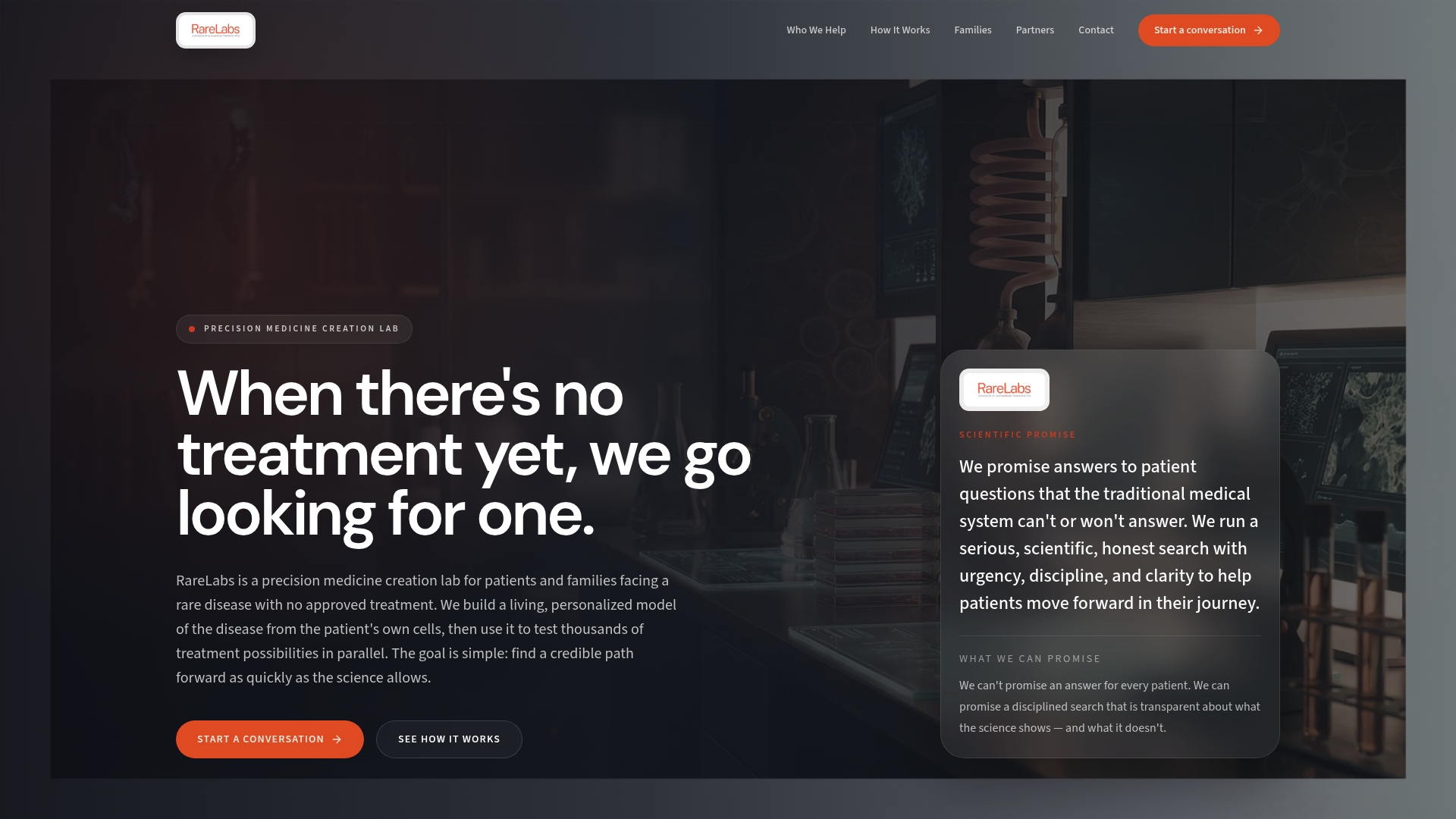
Hopeatrarelabs provides foundation executives with direct access to rare disease research and treatment development resources through the RareLabs Knowledge hub. The platform covers disease modeling, treatment screening, and therapy evaluation in language that supports informed philanthropic decision-making. For foundations funding rare disease research, Hopeatrarelabs offers the scientific context needed to govern and grant with confidence. Learn more about rare disease trial practices that inform effective foundation strategy.
FAQ
What are the most important governance practices for foundation boards?
The most important governance practices are annual board self-assessments, quarterly meetings for oversight and IRS Form 990-PF compliance, and a skills matrix to guide board recruitment. High-performing boards treat governance evaluation as a strategic tool, not a compliance task.
How often should a foundation board meet?
Boards should meet at least once annually at minimum, with quarterly meetings recommended for budget approval, strategic oversight, and regulatory compliance. Quarterly cadence keeps leadership aligned without creating unnecessary meeting burden.
What percentage of foundations use online grant application portals?
55% of foundations use online portals for grant applications. The remaining 14% with no formal written process face the greatest operational and legal risk.
Why does succession planning matter for foundation leadership?
Succession planning builds a stable leadership pipeline before a transition is needed. Internal candidates developed through mentorship and job rotation produce more culturally aligned transitions than emergency external hires.
What is systems building in nonprofit leadership?
Systems building is the practice of creating documented processes, dashboards, and communication rhythms that allow a foundation to operate without constant executive intervention. The Nonprofit Leadership Alliance identifies it as the shift that moves organizations from crisis response to sustainable impact.