

For most labs converting human peripheral blood mononuclear cells into induced pluripotent stem cells, Sendai virus or an optimized episomal (pEV) vector combination should be your default. Synthetic mRNA is worth the extra transfection labor only when integration risk must be near zero. Culture everything on E8 medium with vitronectin or Laminin-511 (iMatrix-511) to keep the line feeder-free and xeno-free from day one. Expect colonies between 7 and 21 days.
TL;DR:
- Using Sendai virus or optimized episomal vectors with E8 medium and vitronectin or Laminin-511 provides the best balance of safety and efficiency for clinical-quality PBMC reprogramming.
- Erythroblast expansion before transfection improves reprogramming success, especially in older donors, but requires an additional week and should be tested with pilot experiments.
- Colony emergence varies greatly depending on the donor, method, and substrate, with day 7 to 21 being typical; pooling early with TRA-1-60 purification speeds up workflow.
- Proper post-electroporation handling, gentle recovery media, and timing of serial plating significantly increase colony yield and cell viability.
- Confirm pluripotency and genomic stability through marker validation and karyotyping before banking or downstream differentiation.
Table of Contents
- Materials, Reagents, and Equipment for PBMC Reprogramming to iPSC
- Protocol Overview: From Blood Draw to Verified iPSC Line
- How PBMC Isolation and Preculture Choices Shape Reprogramming Success
- Comparing Sendai, Episomal, mRNA, and Electroporation for PBMC iPSC Generation
- Colony Emergence, Handling, and TRA-1-60 Purification Strategies
- Fixing Low Viability and Low Colony Yield in PBMC Reprogramming
- Quality Control Benchmarks for Confirming a True iPSC Line
- Clinical Compliance and Scaling PBMC-Derived iPSC Lines
- Practical Notes From Patient-Derived iPSC Work
- Where PBMC Reprogramming Is Headed Next
- Get Help Converting PBMCs to Clinically Compliant iPSC Lines
- Sources
- FAQ
Materials, Reagents, and Equipment for PBMC Reprogramming to iPSC
Before you draw blood, confirm the full kit is on hand. Reagent mismatches mid-protocol cost weeks, not days.
Isolation and preculture:
- Ficoll density gradient media (standard) or ACK/HES-ACK lysis buffer for red-cell-heavy preps
- Erythroblast expansion cytokines (EPO, SCF, IL-3, dexamethasone) if using the erythroid route
Reprogramming reagents:
- Sendai virus reprogramming kit (integration-free, RNA-based paramyxovirus)
- Episomal vector mix, typically EBNA1/OriP-based plasmids
- Synthetic mRNA / self-replicating RNA reprogramming kits
- Nucleofection consumables matched to a Lonza Nucleofector program for PBMCs
Culture and purification:
- E8 medium, vitronectin, and Laminin-511 (iMatrix-511) for feeder-free, xeno-free plates
- Anti-TRA-1-60 antibody conjugates for MACS or FACS purification
Core equipment: a centrifuge rated for serial plating spins, an electroporator or Nucleofector unit, a CO2 incubator, a flow cytometer, and a certified biosafety cabinet.
Protocol Overview: From Blood Draw to Verified iPSC Line
The path from a blood tube to a banked iPSC line runs through six checkpoints, and skipping the planning stage at any one of them tends to show up as a failed run two weeks later.
- Blood draw and PBMC isolation (day 0), using Ficoll or an ACK/HES-ACK protocol.
- Preculture or erythroblast expansion (days 1 to 9), which conditions the cell population before transfection.
- Reprogramming delivery (day 0 of the reprogramming clock), via Sendai transduction, episomal nucleofection, or mRNA transfection.
- Colony emergence (roughly days 7 to 21), the widest variance point in the whole workflow and dependent on donor, method, and substrate.
- Purification, either manual picking or TRA-1-60 pooled enrichment.
- Expansion and quality control, typically two to four weeks before a bankable line is confirmed.
Decision points cluster around two moments: switching from preculture medium to reprogramming medium, and deciding whether to pick individual colonies or pool them for TRA-1-60 sorting. Get those two calls right and the rest of the protocol tends to follow predictably.
How PBMC Isolation and Preculture Choices Shape Reprogramming Success
The isolation method you choose on day zero has more downstream consequence than most labs assume. Standard Ficoll density gradient separation remains the workhorse, but HES-Ficoll and ACK lysis variants have shown improved post-culture viability in optimization work on integration-free reprogramming from adult peripheral blood, likely because they leave fewer granulocyte contaminants dragging down early viability scores according to a stem cell optimization study.
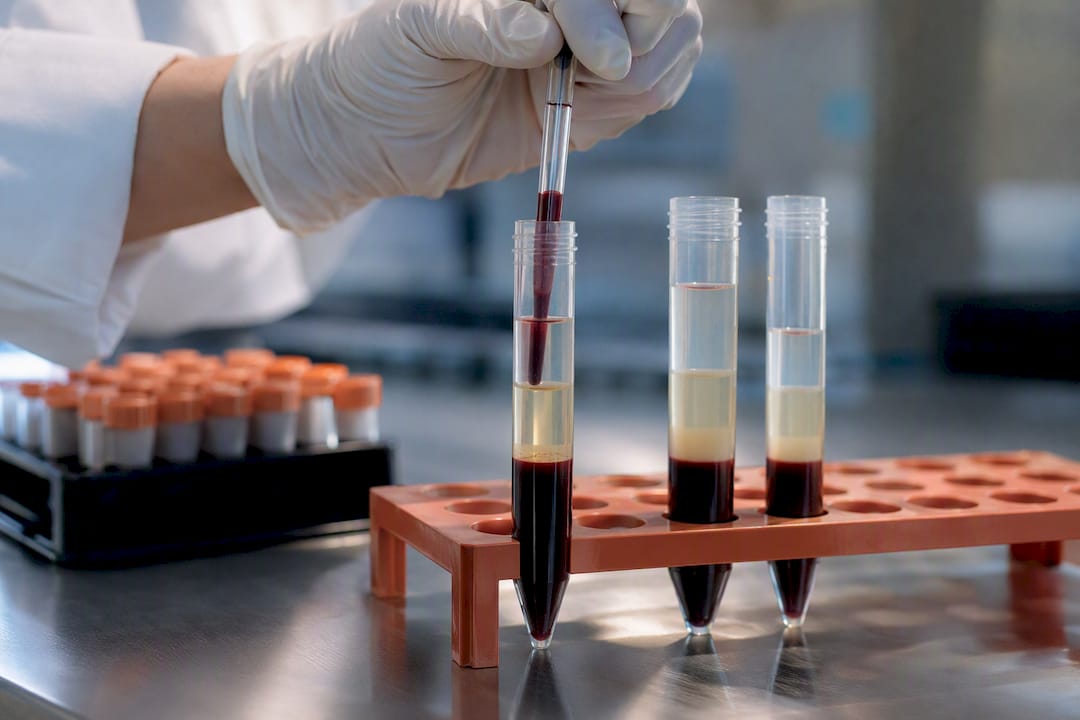
Cryopreserved PBMCs work fine as starting material, but thaw them into warm recovery medium slowly, and resist the urge to spin them hard immediately after thaw. A gentle wash step preserves the fragile subpopulations you actually need for reprogramming.
The erythroblast expansion route deserves more attention than it typically gets from labs defaulting to whole-PBMC transfection:
- Cytokine cocktails built around EPO, SCF, IL-3, and dexamethasone expand erythroid progenitors over 7 to 9 days before transfection
- This pre-expansion step often improves reprogramming efficiency in adult donor samples, where whole-PBMC pools skew older and less responsive
- It adds roughly a week to the front end of the protocol but tends to pay for itself in colony count
Pro Tip: Run a small pilot plate with both fresh and erythroblast-expanded fractions from the same donor before committing your full reprogramming run to one route. Donor-to-donor variability is large enough that a single pilot plate saves more time than it costs.
Comparing Sendai, Episomal, mRNA, and Electroporation for PBMC iPSC Generation
No single reprogramming method wins on every axis, which is exactly why picking one blind is the most common mistake in early-stage protocol design.
- Sendai virus delivers strong, reliable reprogramming efficiency in PBMCs without genomic integration, since it replicates in the cytoplasm and gets diluted out over passages. The trade-off is documentation: you need to confirm viral clearance before banking a clinically intended line, which some labs underestimate on their first attempt.
- Episomal vectors (EBNA1/OriP based) cost less per run than Sendai kits and avoid viral handling altogether. A three-vector pEV combination paired with vitronectin substrate and E8 medium boosted reprogramming efficiency substantially over earlier episomal formulations in feeder-free, xeno-free work with adult blood cells, and it supports pooled TRA-1-60 purification well.
- Synthetic mRNA / self-replicating RNA offers the cleanest safety profile of the group, with zero DNA or viral genome involvement, but demands repeated daily transfections over a week or more and triggers a stronger innate immune response in culture. Adding MDM4, a p53 suppressor, measurably improved efficiency in PBMC reprogramming experiments using synthetic RNA, though genomic safety monitoring around p53 pathway modulation stays warranted.
- Nucleofection/electroporation, generally run on a Lonza Nucleofector, is the delivery mechanism for episomal DNA and some RNA protocols. It demands specific voltage and pulse programs tuned to PBMCs, and post-pulse viability is often the single biggest yield bottleneck in the entire workflow.
For clinical-compliance goals specifically, Sendai and episomal approaches on xeno-free substrates currently offer the most practical balance between manageable hands-on complexity and the documentation trail regulators expect.
Colony Emergence, Handling, and TRA-1-60 Purification Strategies
PBMCs start as a floating, non-adherent population, which makes the first week after transfection the most fragile phase of the entire protocol.
- Coat plates with vitronectin or Laminin-511 (iMatrix-511) at manufacturer-specified concentrations before seeding, and refresh E8 medium daily once colonies appear.
- Use serial plating by centrifugation immediately after transfection, spinning the floating cell population directly onto coated wells to maximize surface contact. This technique has been shown to rescue viable colonies even from small starting blood volumes, according to a serial-plating protocol study.
- Decide between manual colony picking and pooled purification. Picking preserves clonality for genotype-specific work, but pooling many colonies and enriching by TRA-1-60 surface antigen via MACS or FACS reduces clonal variation and speeds expansion considerably compared with clone-by-clone picking, based on findings from feeder-free reprogramming work.
Pro Tip: If your project needs multiple independent lines for statistical power rather than a single hero clone, pool early and purify by TRA-1-60. Picking individual colonies under a scope is slower and adds selection bias you may not want.
Fixing Low Viability and Low Colony Yield in PBMC Reprogramming
Post-electroporation cell death is the complaint every PBMC reprogramming lab eventually raises, and it usually traces back to one of three fixable causes.
- Recovery medium matters more than voltage settings. A gentle, serum-supplemented recovery step immediately after nucleofection, paired with reduced centrifugation speed during the first 24 hours, preserves more of the fragile transfected population.
- Serial plating timing is not optional. Delaying the post-transfection plating step by even a few hours measurably reduces recovered colony counts in floating PBMC preparations, per the serial plating protocol.
- Donor variability is real and should shape your plan. Older donors or those with lower starting erythroid fractions often respond better to CD34+ selection or erythroblast expansion before transfection rather than whole-PBMC delivery.
Pro Tip: Keep a donor metadata log tracking age, starting cell count, and viability at each checkpoint. Patterns in low-yield donors emerge fast once you have five or six runs logged side by side.
MDM4 or other p53-pathway modulators can meaningfully boost reprogramming efficiency, but treat any p53 suppression step as a genomic safety flag requiring closer karyotype and sequencing follow-up before banking.
Quality Control Benchmarks for Confirming a True iPSC Line
A colony that looks like an iPSC under the microscope is not confirmation. Run a defined marker panel before you trust any line for downstream work.
- Pluripotency markers: OCT4, NANOG, SSEA4, and surface TRA-1-60, typically checked by immunocytochemistry or flow cytometry once colonies stabilize past passage 3 to 5
- Genomic integrity: karyotype analysis and SNP arrays at minimum, with targeted sequencing for patient-derived lines where a single undetected structural variant can compromise an entire disease model
- Functional validation: a trilineage or targeted differentiation assay matched to your intended downstream application, whether that is neuronal, cardiac, or hepatic
Patient-derived lines carry more genomic scrutiny than research-grade lines because a mosaic or acquired mutation can masquerade as disease-relevant biology if it slips past karyotyping.
Clinical Compliance and Scaling PBMC-Derived iPSC Lines
Translational programs live or die on documentation, not just efficiency numbers. The field has largely converged on non-integrative methods and xeno-free, feeder-free reagents as the real gatekeeper for clinical relevance, with raw reprogramming efficiency treated as a secondary concern once safety compliance is established, according to a review on iPSC translational standards.
- Standardize on E8 medium with vitronectin or iMatrix-511 rather than any feeder-dependent or animal-serum-based system
- Document Sendai vector clearance across multiple passages if using viral delivery for a clinically intended line
- Plan for miniaturized, pooled-clone workflows if scaling across many patient samples, since reproducibility across donors matters more than any single line's peak efficiency
- Consider contract services when internal capacity, GMP-adjacent documentation needs, or turnaround pressure exceeds what a research lab can sustain alone
Practical Notes From Patient-Derived iPSC Work
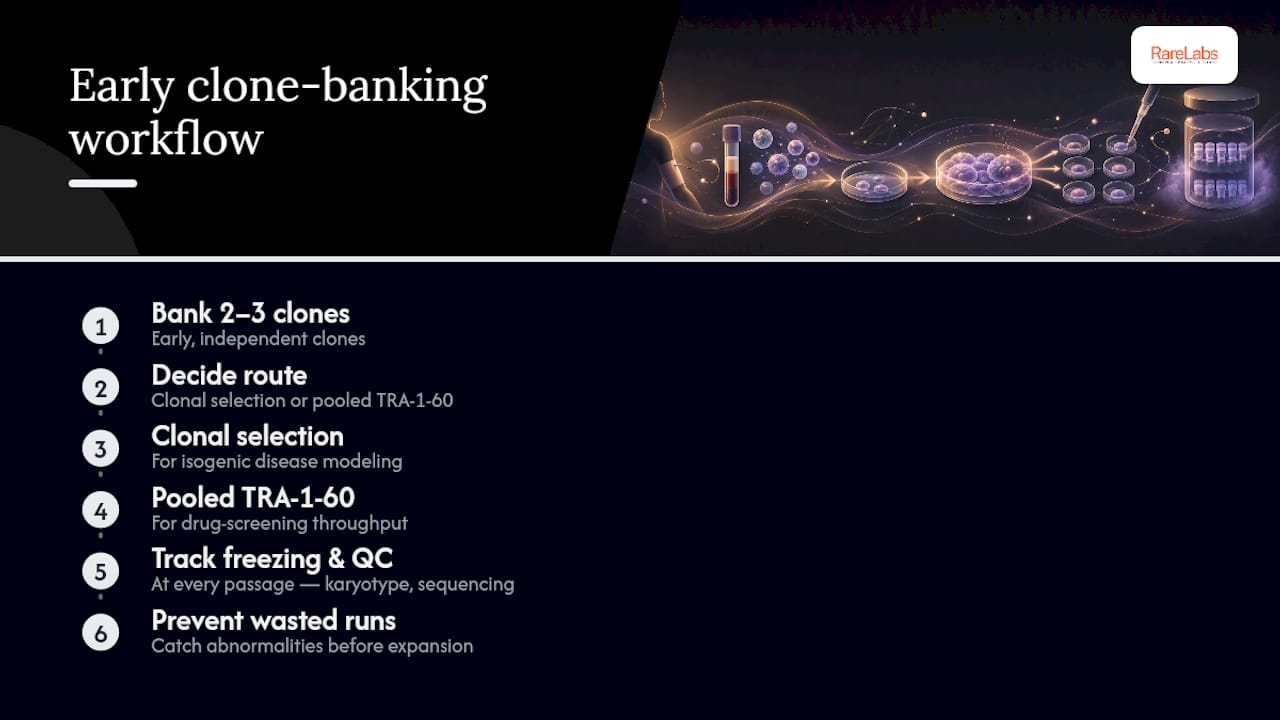
Bank two to three independent clones early rather than betting on one, even when a single colony looks flawless under the scope. Pooling versus clonal selection depends entirely on the project: disease modeling that needs isogenic comparison favors clonal lines, while drug screening throughput favors pooled TRA-1-60 populations. Track freezing metadata and QC checkpoints at every passage. That habit alone prevents wasted expansion runs when a line turns out to carry a karyotype abnormality three passages after banking. This is a workflow discipline lesson, learned through repeated patient-derived iPSC programs, not a shortcut anyone finds on the first attempt.
Where PBMC Reprogramming Is Headed Next
RNA-based and chemical reprogramming methods will keep improving, but the highest-leverage investment right now is standardized QC and non-integrative defaults. Labs publishing negative results and exact protocol parameters, not just successes, will move the field faster than any single new reagent.
— John
Get Help Converting PBMCs to Clinically Compliant iPSC Lines
Not every lab has the bandwidth to run serial plating optimizations, TRA-1-60 purification, and full karyotype QC on top of an already full bench schedule. Contracted PBMC-to-iPSC generation and downstream disease-modeling pipelines are available for teams that need documented, reproducible lines without building that capacity in-house.

If your project needs GMP-adjacent documentation, rapid turnaround across multiple patient samples, or a screening pipeline built on top of a validated line, outsourcing the reprogramming step often makes more sense than absorbing months of internal optimization. Patient-derived iPSC generation and parallel treatment screening can be managed as a single contracted program, allowing families, foundations, physicians, and biopharma partners to obtain a translational-ready line without managing the protocol variability described above. Visit the RareLabs Knowledge hub to see how a program gets scoped for your specific rare disease question.
This article is general information, not a substitute for advice from a qualified doctor. Consult a qualified healthcare professional about your own circumstances before acting on anything here.
Sources
- A Facile Method to Establish Human Induced Pluripotent Stem Cells From Adult Blood Cells Under Feeder-Free and Xeno-Free Culture Conditions
- Induced pluripotent stem cells (review) — Signal Transduction and Targeted Therapy
- Optimizing the method for generation of integration-free induced pluripotent stem cells from human peripheral blood
FAQ
What Is the Best Method for Translational PBMC Reprogramming?
Sendai virus and optimized episomal (pEV) vectors on E8 medium with vitronectin or Laminin-511 currently offer the best balance of safety documentation and reprogramming efficiency for clinically intended work.
When Should I Pick Colonies Versus Pool for TRA-1-60 Purification?
Pick individual colonies when your project needs isogenic, genotype-matched clones; pool and purify by TRA-1-60 when you need multiple independent lines quickly with reduced clonal bias.
How Do I Handle a Low Starting PBMC Count?
Use erythroblast expansion cytokines to grow the responsive fraction before transfection, and apply serial plating by centrifugation immediately after reprogramming delivery to maximize colony recovery from a small sample.
When Should Quality Control Testing Happen?
Run pluripotency marker panels (OCT4, NANOG, SSEA4, TRA-1-60) and karyotype analysis once colonies stabilize past passage 3 to 5, before committing a line to downstream differentiation or banking.
Can Hopeatrarelabs Generate iPSC Lines From Patient PBMCs Directly?
Yes. Hopeatrarelabs offers contracted patient-derived iPSC generation and downstream disease-modeling and drug-screening pipelines for families, physicians, foundations, and biopharma partners working on rare disease programs.