
Getting patient-specific disease modeling for rare or undiagnosed conditions is complicated by agency focus and unclear service details. Many options do not publish pricing, limit engagement to complex projects, or provide incomplete documentation and integration support. This comparison shows approach, transparency, and fit across four hopeandlife.net alternatives so research groups, patients, and partners can choose one before starting a project.
Table of Contents
RareLabs
At a Glance
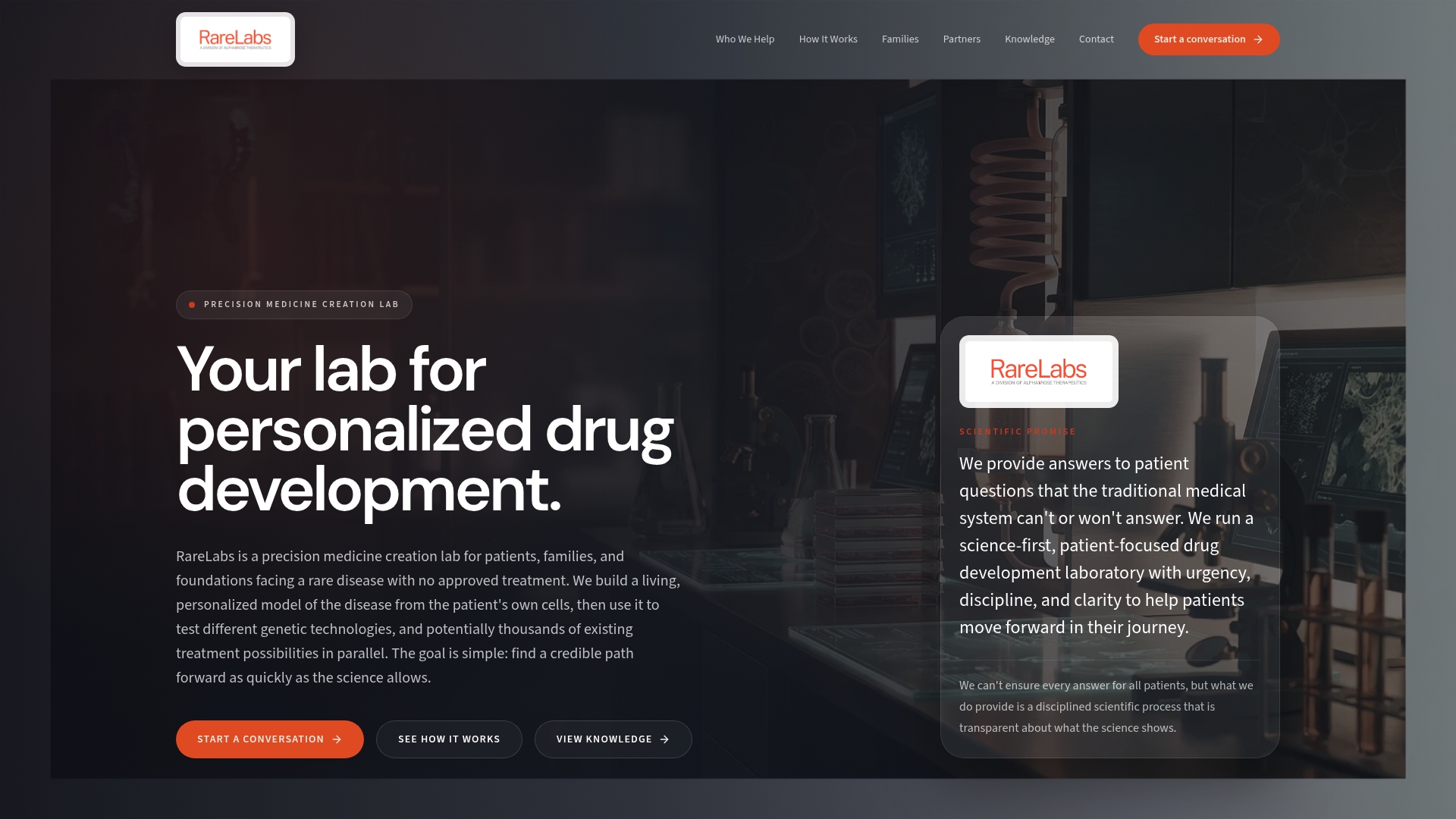
The vendor advertises testing thousands of FDA-approved drugs, custom antisense oligonucleotides, and gene therapy candidates using patient-derived iPSC models in parallel. RareLabs pairs those screens with plain-language reports for families and physicians. The lab operates as a division of AlphaRose Therapeutics and focuses on urgent, patient-centered treatment discovery.
Core Features
RareLabs builds patient-specific disease models from donated cells and runs multiple experiments at once to compare candidate therapies. The platform uses iPSC technology and CRISPR controls to validate disease biology while it screens repurposed drugs, custom ASOs, and gene therapy approaches. The product also emphasizes transparent reporting and patient ownership of data and intellectual property.
Key Differentiator
RareLabs runs true parallel treatment discovery experiments that test genetic therapies and repurposed drugs concurrently against the same patient-derived models. That architecture reduces the time wasted on serial testing and helps teams see which approaches perform best in the same biological context.
Pros
The lab combines experimental depth and clear communication. High scientific rigor and CRISPR-controlled models improve confidence in which hits are biologically relevant, and parallel testing shortens the decision window compared with serial workflows. Patient ownership of samples and intellectual property supports families and foundations seeking control over downstream options, and the platform can accept ultra-rare or undiagnosed cases that many programs will not take.
Cons
- Longer development timeline. The timeline above may not suit urgent treatment needs.
Who It's For
Patients and families chasing new options for ultra-rare or undiagnosed genetic diseases will find the offering appropriate. Physician-scientists who need disease models and matched treatment data, foundations funding individualized research, and biopharma partners seeking translational evidence also fit the profile.
Unique Value Proposition
Patient-derived iPSC models feed the platform’s parallel screens of repurposed drugs, custom antisense oligonucleotides, and gene therapy candidates. That workflow turns a single patient sample into side-by-side experimental comparisons, which lets clinical teams prioritize candidates for further validation or compassionate-use discussions.
Real World Use Case
The vendor reports that a typical engagement begins with a blood sample and ends with a treatment options report in approximately 12–15 months. A family provides cells. RareLabs creates iPSC models, runs parallel drug and genetic screens, and returns clear results that physicians can review for next steps.
Pricing
Not applicable. The site lists the service as informational only and does not publish standard pricing or tiers. Project cost and engagement model are handled case by case with families, physicians, foundations, or partners.
Website: https://hopeatrarelabs.com
Greenstone Biosciences
At a Glance
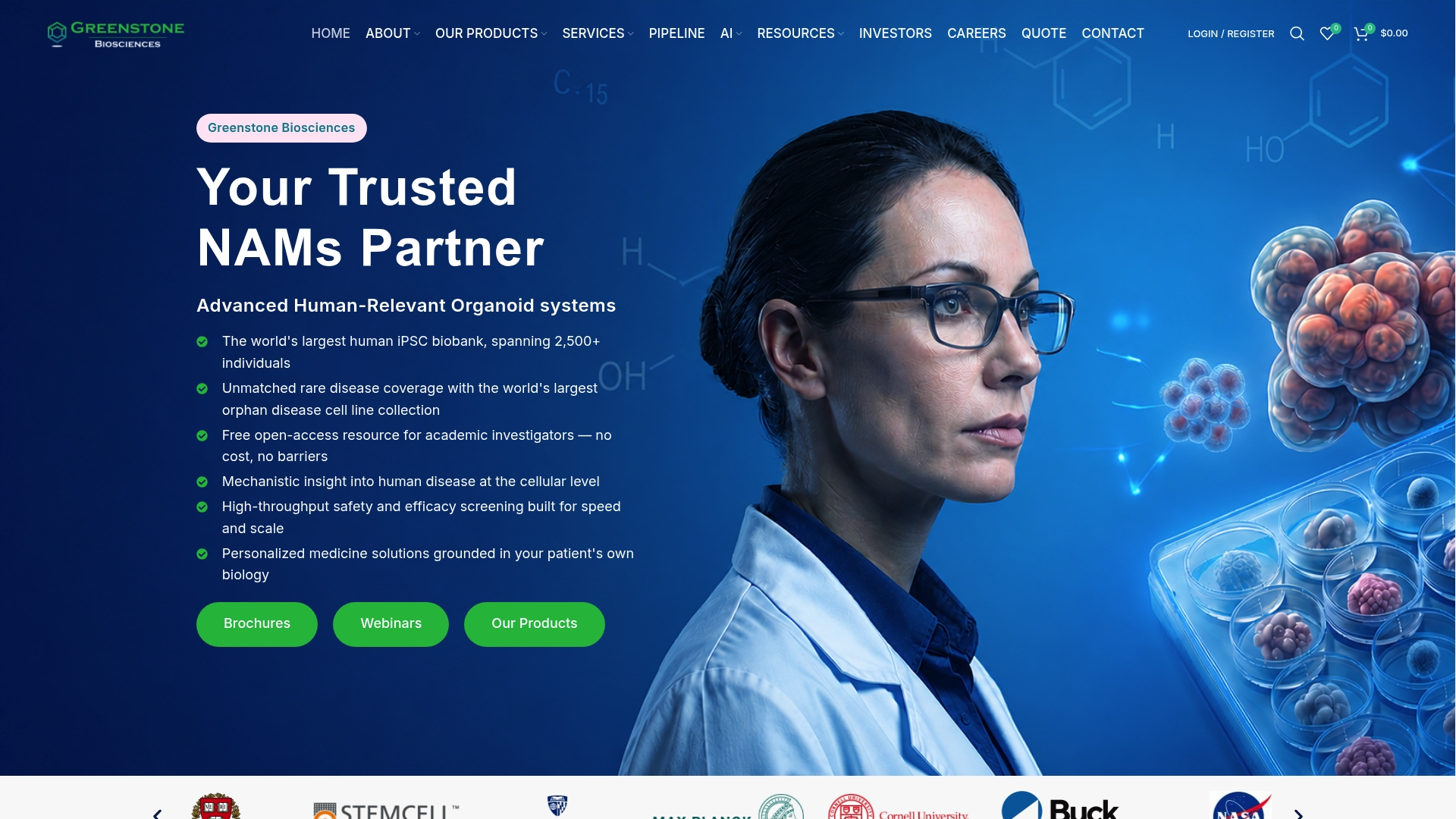
Greenstone Biosciences reports the largest human iPSC biobank, with more than 2,500 donor lines. That biobank includes many rare orphan disease samples and links directly to human iPSC biobank resources for organoid work. The platform pairs those biological assets with data tools to speed preclinical evaluation.
Core Features
The platform combines extensive iPSC collections with human iPSC-derived organoid systems and high-throughput safety and efficacy screening. It layers AI-powered platforms for target prediction, molecule optimization, and processing preclinical data. Open-access resources for academic users sit alongside services tailored to translational research and personalized assays.
Key Differentiator
According to the company, Greenstone merges its large human iPSC collection with predictive AI models to improve accuracy and accelerate development timelines. That dual focus on biological scale plus algorithmic prediction is the angle that separates it from many single-focus providers.
Pros
Greenstone pairs a wide array of patient-derived iPSC lines with organoid assays, which supports disease-specific and personalized studies. Their AI tools aim to prioritize targets and refine molecules before costly downstream testing, which can shorten iteration cycles. The vendor also provides open-access resources for academics, improving data sharing and early collaboration opportunities.
Cons
-
Commercial validation and regulatory approval status are not fully detailed. Third-party reviews call for clearer assay validation pathways.
-
Public information about active commercialization or clinical deployment routes is limited. This creates uncertainty for pragmatic translational planning.
-
Several offerings require customization and expert collaboration. Custom work can lead to longer lead times for integration into existing R&D workflows.
When It May Not Fit
If you need a turnkey, certified clinical assay with public regulatory approvals, this platform may not meet that need today. Organizations without internal cell biology or computational expertise may face a steep integration curve. Teams seeking out-of-the-box, rapid commercial deployment should plan for consultation and pilot phases.
Who It's For
Research scientists, drug developers, and biotech or pharmaceutical teams focused on human-relevant models will get the most value. The platform suits groups running disease modeling, preclinical safety screening, or personalized medicine research that can absorb collaboration and pilot work.
Real World Use Case
A pharma research group partnered with Greenstone to test cardiac safety on human iPSC-derived cardiac organoids. They used the platform's AI tools to flag molecular liabilities earlier, which reduced reliance on animal studies and informed regulatory discussions.
Pricing
Pricing is not published. The company lists services and collaboration models rather than fixed software subscription tiers. Prospective partners should contact Greenstone Biosciences for project scoping and a custom proposal.
Website: https://greenstonebio.com
Oddifact
At a Glance
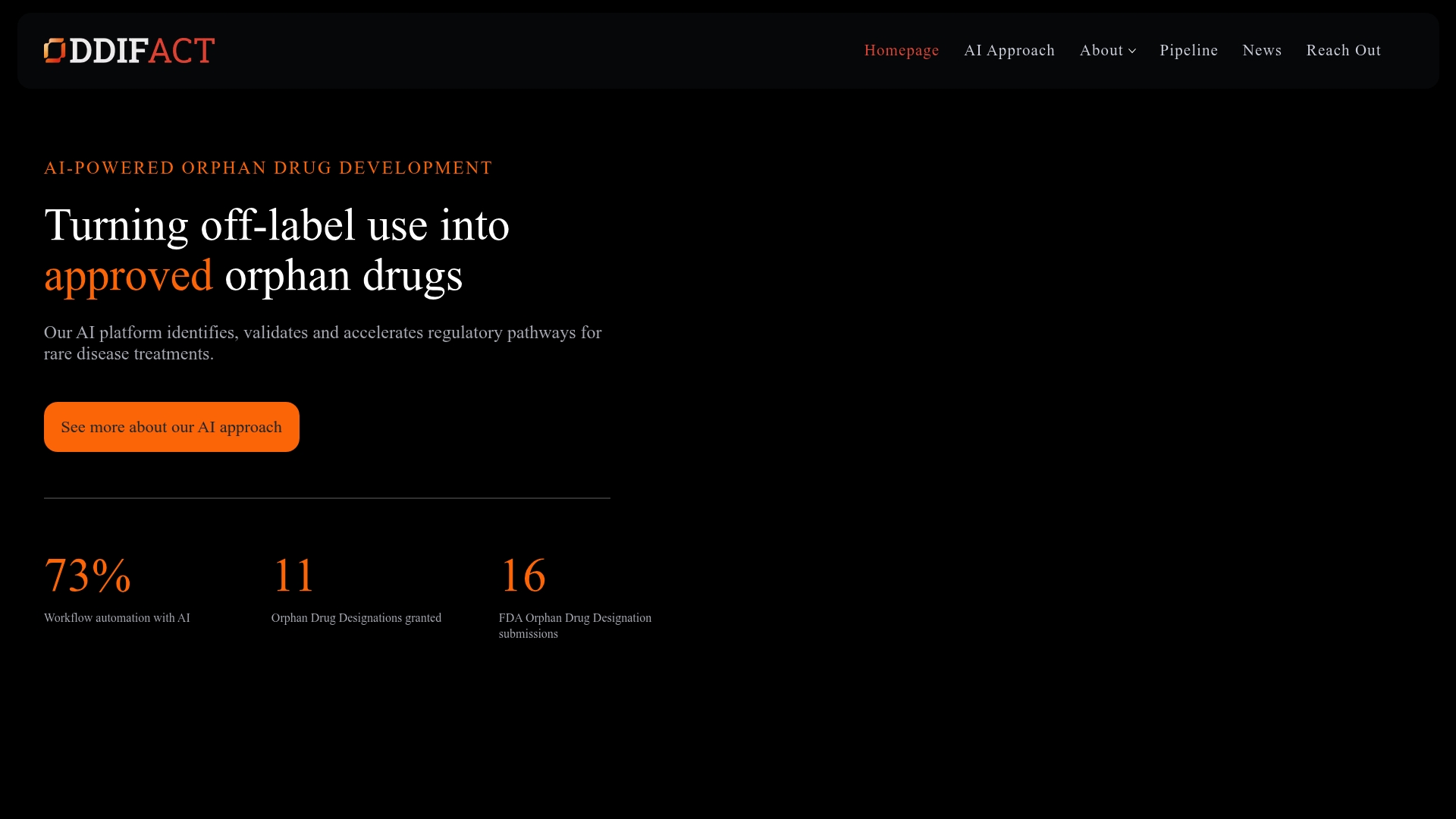
Oddifact's marketing materials state an ambition to develop 30 new drugs by 2030. As one of the hopeandlife.net alternatives, it focuses on orphan drug regulatory pathways for rare diseases. Public site pages for features and use cases reportedly return 404 errors, which limits independent verification.
Core Features
Oddifact combines AI driven identification and validation with workflow tools to map regulatory routes and track candidate progress. It supports submission pathways for FDA and EMA orphan drug designations and manages development pipelines from target selection to designation filing. The platform also lists collaboration channels with industry partners to accelerate program milestones.
Key Differentiator
The standout feature is a narrow focus on regulatory strategy for orphan drugs rather than general discovery or preclinical tools. That focus targets the often complex designation and filing steps sponsors face. This emphasis confines the product to regulatory pathway planning instead of end to end discovery workflows.
Pros
The vendor reports a patient focus covering over 300 million people with rare conditions, which helps explain product priorities. AI driven workflow automation and pipeline management reduce manual coordination and speed regulatory tasks. Support for FDA and EMA designation processes and active industry collaboration add practical, sponsor oriented value. That advertised 2030 goal signals aggressive timelines for partnership and fundraising activity.
Cons
- Public documentation is sparse. Many site pages return 404 errors, which hinders due diligence.
- Pricing is not transparent. The site lists pricing as informational only and provides no licensing details.
- Integration support is unclear. The vendor does not list connectors or compatibility with common drug development tools.
When It May Not Fit
Teams that require public API documentation, technical white papers, or clear integration matrices should look elsewhere. Organizations needing audited compliance evidence or formal vendor certifications will find public records limited. Groups that cannot accept limited site transparency risk wasted evaluation time.
Who It's For
Pharmaceutical companies and biotech firms developing orphan drug programs will find the platform relevant. Research groups and regulatory teams seeking pathway validation and filing strategy support can use Oddifact for planning. Academic labs without commercial regulatory budgets or sponsor support may struggle to justify engagement.
Real World Use Case
A biotech startup partners with Oddifact to map the fastest regulatory route for an orphan candidate. Oddifact identifies potential designation pathways and suggests filing strategies for FDA consideration. The collaboration helps the startup prioritize preclinical studies that best support a designation filing.
Pricing
Pricing is not published. The site marks pricing as informational only and shows no tiers, licenses, or consulting rates. Prospective partners must contact the vendor for engagement terms and commercial estimates.
Website: https://oddifact.com
SynaptixBio
At a Glance
SynaptixBio reports it is licensed to commercialize a gene silencing therapy for the most severe form of TUBB4A leukodystrophy and holds regulatory designations that support clinical development. The company focuses on antisense approaches aimed at stopping toxic protein production from pathogenic mutations. Public technical detail is sparse, and the program remains in clinical-stage development.
Core Features
SynaptixBio centers its work on antisense oligonucleotides to silence disease-causing transcripts and reduce toxic protein accumulation. The team targets mutations in the TUBB4A gene and focuses on leukodystrophies, including hypomyelination with atrophy of the basal ganglia and cerebellum. The company reports it is progressing toward clinical trials and has received regulatory designations that guide its development pathway.
Key Differentiator
That license and the regulatory designations concentrate SynaptixBio on the most severe TUBB4A cases rather than a broad set of neurological conditions. The narrow commercial focus channels resources into a single genetic target and its clinical path. This depth of focus sets its program apart from groups pursuing multiple targets concurrently.
Pros
SynaptixBio pursues a novel molecular approach that specifically addresses toxic transcripts produced by TUBB4A mutations. The company reports regulatory progress that shortens design and trial planning timelines relative to groups without designations. Its stated focus on pediatric and life threatening neurological disorders aligns development priorities with urgent clinical needs and investor interest in gene therapy programs.
Cons
- Limited publicly available technical and treatment detail makes independent assessment difficult.
- The program is early stage and still in clinical development, so treatment availability is not immediate.
- A very specific genetic target narrows applicability to patients with qualifying TUBB4A mutations.
When It May Not Fit
If you need a group with broad, multi-target therapeutic pipelines, this narrow focus will feel restrictive. If your priority is an off-the-shelf therapy or completed clinical data, this company will not meet that need. For software-style product teams seeking mature documentation, the public information will be insufficient.
Who It's For
Investors looking for biotech exposure in clinical-stage gene silencing programs will find SynaptixBio relevant. Academic researchers in neurogenetics who study TUBB4A pathology may find partnership opportunities. Small pharmaceutical development teams evaluating licensing options for focused ASO programs should monitor the program as it advances.
Real World Use Case
A research group studying leukodystrophy partners with SynaptixBio to move an antisense candidate from target validation toward a trial-ready dossier. The company leverages regulatory designations to refine its clinical protocol and engage pediatric neurology centers. That pathway supports transition from lab models to an investigational new drug submission.
Pricing
Not applicable. SynaptixBio presents informational company and program details rather than commercial software or product pricing. No public pricing, license fees, or subscription models are published for external partners.
Website: https://synaptixbio.com
Comparison of Alternatives for Patient-Specific Disease Modeling
Choosing the appropriate platform for patient-specific disease modeling involves evaluating features, differentiators, and limitations to align with unique needs.
| Product Name | Core Features | Key Differentiator | Best For | Notable Limitation | Pricing |
|---|---|---|---|---|---|
| RareLabs | Patient-derived iPSC models and therapy screening technologies | True parallel testing of various therapeutic options | Ultra-rare or undiagnosed genetic disease solutions | Longer timeline may not fit urgent treatment needs | Price not published |
| Greenstone Biosciences | Large biobank of 2,500+ iPSC donor lines with data-analysis tools | Integration of AI with extensive iPSC collections | Disease modeling and molecule optimization | Lacks publicly detailed regulatory approval pathways | Price not published |
| Oddifact | Regulatory workflow support for orphan drug designation | Focused on regulatory pathways for orphan drug approval | Orphan drug program development | Sparse public documentation and limited integration support | Price not published |
| SynaptixBio | Licensed to develop ASO therapy for TUBB4A leukodystrophy | Focused approach on TUBB4A mutations | Gene therapy development for specific neurogenetic disorders | Limited to TUBB4A mutations; early-stage clinical development | Price not published |
Finding Reliable Alternatives to hopeandlife.net for Rare Disease Treatment Options
Patients and families pursuing new therapies for ultra-rare or undiagnosed genetic diseases often face long waits and unclear paths. The challenge is accessing personalized disease models that test multiple treatment candidates simultaneously, helping doctors identify promising options faster. Hopeatrarelabs specializes in creating patient-specific models using iPSCs and CRISPR technology to run parallel screens of FDA-approved drugs, antisense oligonucleotides, and gene therapies side-by-side.
Hopeatrarelabs offers:
- Transparent reports designed for families and physicians
- Patient ownership of data and intellectual property
- Support for ultra-rare and undiagnosed cases other programs may decline
Learn more about how Hopeatrarelabs matches the urgent needs of patients and physicians and gain insight into personalized rare disease treatment options. See how parallel testing accelerates decisions and brings clarity to complex cases.
FAQ
What capabilities does Hopeatrarelabs offer for patient-specific disease modeling?
Hopeatrarelabs generates patient-specific disease models using donated cells to run parallel experiments. The platform employs iPSC technology and CRISPR controls to validate disease biology while screening treatments. Patients can expect comprehensive options tailored to their unique conditions.
What is the difference between Hopeatrarelabs and Greenstone Biosciences?
Greenstone Biosciences boasts the largest human iPSC biobank, which includes over 2,500 donor lines tailored for organoid work. In contrast, Hopeatrarelabs focuses on urgent, patient-centered treatment discovery by utilizing patient-derived iPSC models and parallel treatment discovery experiments. This makes Hopeatrarelabs more suitable for families in immediate need of treatment options.
How does Hopeatrarelabs support families with rare diseases?
Families can engage with Hopeatrarelabs to provide a blood sample, which then leads to a detailed treatment options report within about 12–15 months. This process allows families to access personalized results based on their unique disease models, making it a strong choice for those with ultra-rare conditions.
Which platform is suitable for urgent treatment decisions?
For urgent treatment decisions, Hopeatrarelabs is designed to expedite patient-specific treatment discovery through its parallel testing setup. This architecture significantly reduces the time spent compared to serial testing methods, which is vital for patients requiring quick solutions.
What are the implications of Hopeatrarelabs' patient ownership policy?
Patients retain ownership of their data and intellectual property when using Hopeatrarelabs, which empowers families and foundations seeking control over their treatment options. This policy supports collaborative research and ensures families are central to the treatment discovery journey.